Description
Ndunduri, Kenya
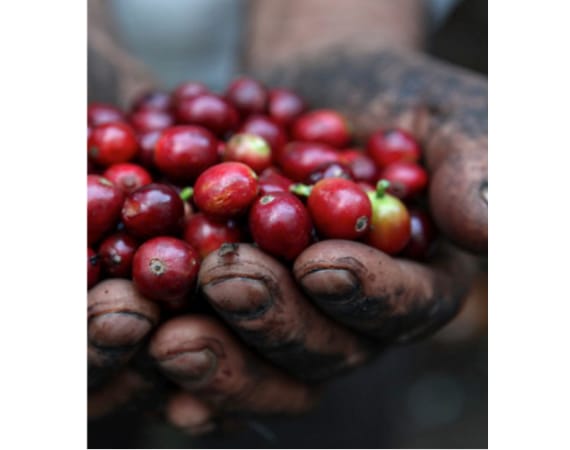
On the eastern slopes of Mount Kenya, Embu County produces some of the country's most distinctive coffees. This lot of Ndunduri grows in red volcanic soils, with regular rainfall and altitudes around 1,800 meters: the cherry ripens slowly, and that shows in the cup—lively acidity and a crisp profile.
The Ndunduri washing station was built in the early 1970s and is part of the Kibugu Farmers Cooperative Society. Six hundred and seventy-three small farmers who cultivate family plots in the surrounding area deliver their harvest there, many of them combining coffee with passion fruit, corn, or tea. None of them have the volume to export on their own; together, through the station, they do.
The process is the classic Kenyan washed method: cherry selection, pulping, an overnight fermentation, washing and soaking, and then the coffee is transferred to raised African beds where it sun-dries for seven to fifteen days, being turned by hand to ensure even moisture distribution. The facility recirculates the process water and directs it to infiltration pits.
It's a little snail, or peaberryThe round bean that appears when the cherry develops a single pit instead of two. It is separated because it roasts differently than the flat bean, and here it comes from SL28, SL34 and Ruiru 11 plantations.