Description
Finca El Principio – Colombia
Finca El Principio is located in the vereda El Carmelo, in the municipality of Palestina, at 1,750 m a.s.l. It covers a total of 4 hectares, 3 of which are planted with coffee. The project is led by Numar Erney López Gómez, a coffee grower with more than 30 years of experience who has made coffee production the centre of his life and his family's livelihood.
The farm has focused on specialty coffees, with agronomic management geared towards quality. The varieties grown are Bourbon Rosado and Caturra, the latter renewed about five years ago to improve productivity and bean quality. The harvest runs from May to December, a period in which each lot is carefully picked and selected.
More than a farm, El Principio reflects the daily effort of a family that has found in coffee a livelihood and also a way to preserve its traditions and share its origin in every cup.
Numar Erney López Gómez
Numar Erney López Gómez is a 57-year-old coffee grower, born in the department of Putumayo, who has dedicated much of his life to growing coffee. He started in coffee growing at the age of 15 and gradually gained the experience and knowledge that are reflected today in the quality of his production.
Because of the violence that affected his home region, Numar and his family moved to Huila in search of new opportunities and a place to continue their life project around coffee. Today he works alongside his wife and four children at Finca El Principio, in Palestina, where they strengthen the family's coffee tradition.
With more than 30 years of experience, Numar has focused his efforts on high-quality coffees, growing varieties such as Bourbon Rosado and Caturra under the privileged climatic conditions of Huila. His dedication has built a production that reflects the authenticity and richness of coffee growing in Huila.
Prosecution
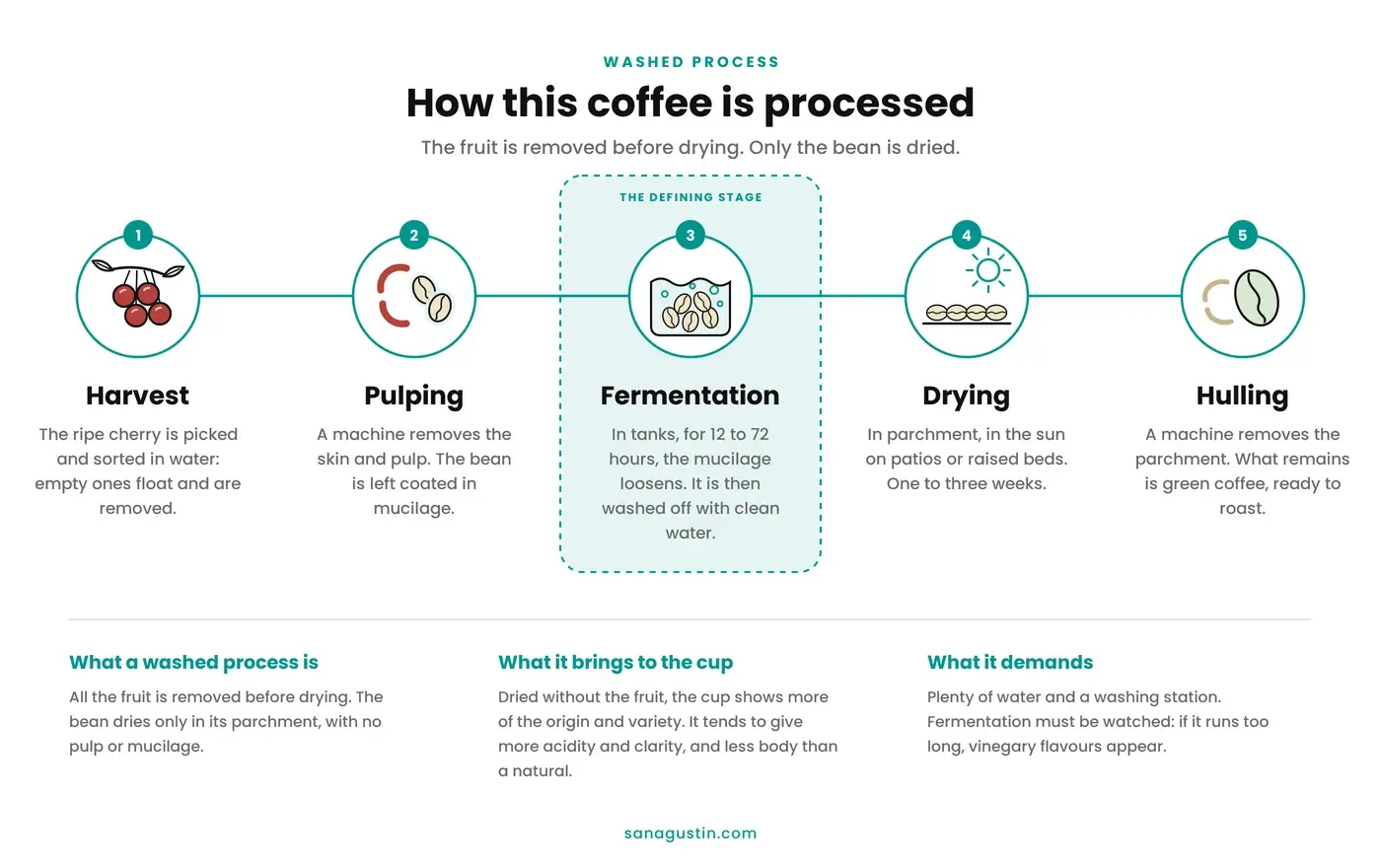
Picking is selective: only ripe cherries are harvested, and these then go through a water flotation to remove floating and defective fruit. After pulping, the coffee ferments for 24 hours in previously fermented mucilage, inside hermetically sealed barrels that give greater control over the process and favour the development of sensory attributes.
Once fermentation is complete, the coffee is dried in covered drying beds for about 15 days, until it reaches the right moisture level. The beans then rest for another 15 days to stabilise before final storage.