Posted on

Water-Coffee Ratio and Extraction Time

Water-Coffee Ratio and Extraction Time

The beverage we adore, in its most basic form, is the fusion of meticulously ground coffee beans with water. What distinguishes a sweet, balanced, and complex coffee from a bitter or acidic one lies in two fundamental pillars: the quality of the beans and water, and the alchemy with which we intertwine them. This latter aspect often involves a level of meticulous attention: grind size, precise timing, water temperature, brewing method, and other rituals that converge in our final cup.

However, we can't overlook the crucial importance of proportion in this process. The ratio of ground coffee to water plays a vital role in the strength, mouthfeel, and other nuances of our beverage. Now, let's explore in-depth how these ratios become the key to creating an exceptional coffee experience.

Why relationship is so important

The flavor of a coffee will vary depending on the recipe. Yes, the recipe: making coffee is like making a cake. The amount of each ingredient you use matters. Adding or decreasing the amount of water or coffee can alter the coffee's flavor, viscosity, and other factors.

This is why many baristas and coffee enthusiasts use scales and timers when making coffee.

Some baristas use recipes like "50 grams of coffee per liter of water for this many cups." But others will talk about ratios, such as 1:14 – 14 ml of water for every gram of coffee – or 1:16 – 16 ml of water for every gram of coffee.

Whatever the preparation ratio, what most of the baristas They try to keep it consistent. This allows them to work more effectively and efficiently. They also know that if they like how a coffee turns out, they can replicate it in the future.

Importance of Ratio in Espresso:

Flavor: The ratio determines the concentration of the espresso. A higher ratio of coffee to water will result in a stronger, more intensely flavored espresso, while a lower ratio will produce a weaker espresso.

Consistency: Maintaining a consistent ratio recipe is essential to ensuring that every cup of espresso has the same flavor and quality. This is critical in the specialty coffee industry.

Optimal Extraction: The correct ratio also influences coffee extraction. An incorrect ratio can lead to under- or over-extraction of the coffee, which will negatively affect the flavor.

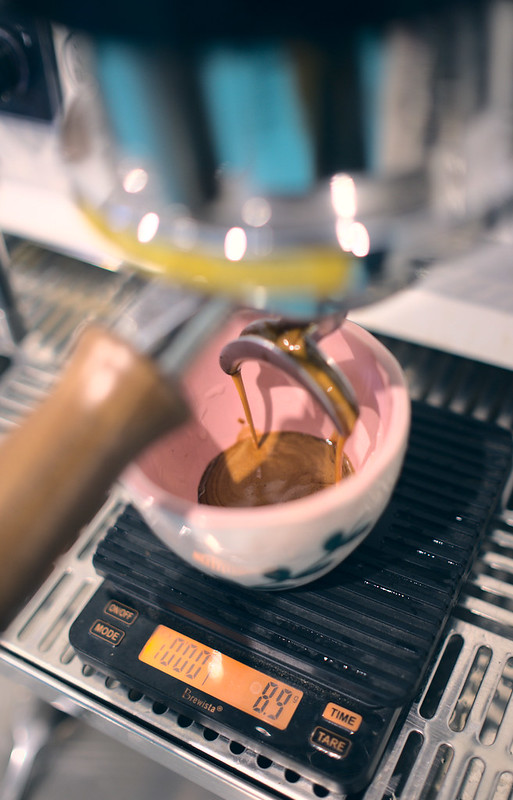
Importance of Extraction Time: Extraction time refers to the amount of time water spends passing through the ground coffee in the portafilter. This factor has a significant impact on the flavor, intensity, and overall quality of the espresso. Generally speaking, it's recommended to keep extractions within the range of 24 to 30 seconds. However, it's important to note that there are exceptions to this rule, depending on the type of coffee, the roast level, and personal preferences.
Water-Coffee Ratio and Extraction Time

Define an Espresso Ratio Recipe:

To define an espresso ratio recipe, follow these steps:

Choose a base ratioA common ratio is 1:2, which means one part ground coffee to two parts water. This is a good starting point, but you can adjust it based on your preferences and the type of coffee you're using.

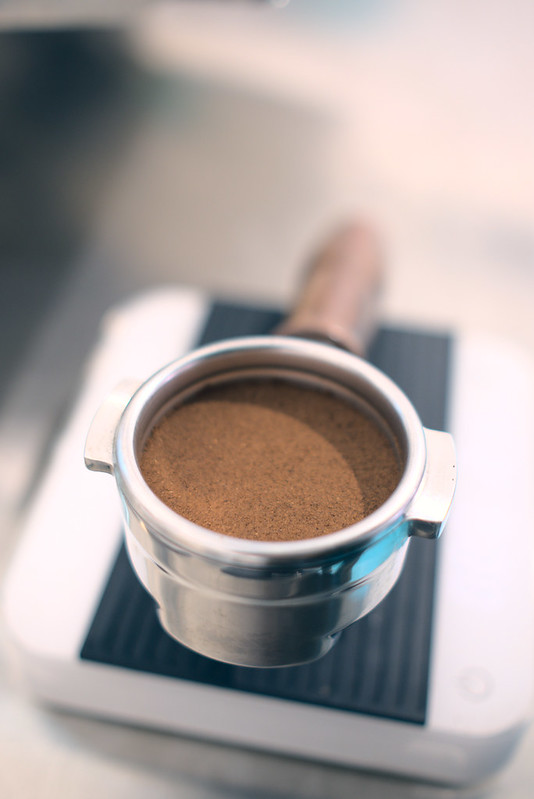
Weigh the coffee: Weigh the desired amount of ground coffee into the portafilter basket. For example, if you use 18 grams of coffee, this would be your starting point.

Weigh the water: Carefully calculate the amount of water you'll use for extraction. For example, if you're using 18 grams of coffee, you can aim for 36 grams of espresso in your cup, which is equivalent to a 1:2 ratio.

Adjust according to taste: Extract the espresso and adjust the ratio according to the flavor you get. If the espresso is too strong, you can use more water, and if it's too weak, you can use less.

Daily Maintenance and Decisions:

It's essential to maintain your recipe daily and make decisions based on the flavor and quality of your espresso. As factors such as coffee freshness, ambient humidity, and temperature change, you may need to adjust the ratio to maintain a consistent and delicious espresso. The key is balance and constant attention to detail to perfect your recipe over time.
Posted on - 1 Comment

9 reasons to drink specialty coffee

apart from the fact that it tastes great!


MeditateEven the busiest of specialty coffee lovers in their busy schedules have one or two moments a day when they just stop and let themselves go. That's basically meditation. And no, it doesn't necessarily mean doing yoga. The simple act of making a cup of coffee in the morning is a kind of silent ritual, when only you and your morning brew exist in the world. The water is heating up, the filter is washing, the first drops of this precious liquid fall into your cup, you breathe deeply, thinking of nothing, only in the moment, letting the moment happen... Congratulations, I don't know if you noticed, but you've finished your meditation, and you're ready to start the new day :)

Explore – Drink specialty coffee It means constantly exploring. Exploring coffee itself, different origins, new varieties, new processes, new regions. Coffee goes from being simply coffee to something that's always new, always exciting. Have you tried the Mundo Novo variety? Have you ever had coffee from Guatemala? What kind of Brazilian coffee do you prefer? Do you remember the time when it was "just coffee," just a regular dose of caffeine directly into your veins? 

Love – I'm not going to lie when I say that when we go to a restaurant, we expect a chef to love their job, and when we buy clothes, we expect the designer to love what they're doing? Specialty coffee, in many ways, is a product of love. At every level, people in the coffee business love what they're doing. Isn't that a perfect reason to drink it?

Get closer to the product – It's not unusual to find the producer's name on a bag of specialty coffee now. How powerful is that?! Once again, coffee, which used to be completely devoid of personality, is now a product named after the person responsible for growing it. I think this is a huge step toward appreciating the efforts of the people around us in general, and understanding that things don't just appear out of thin air; certain people produce them for us. We're all interconnected. It would be a huge impact to know the names of the people who produced the food in our refrigerator, wouldn't it? We can start with coffee.

Consume locally – Specialty coffee is best when enjoyed freshly roasted, no more than four weeks after the roast date. This is why many people prefer to find local coffee roasters and buy directly from them, ensuring that the coffee they drink will be fresh, even knowing the roast date. This isn't really the case with commercial coffee purchased at the supermarket. By purchasing locally roasted specialty coffee, we support small (or not so small) businesses and contribute to the fact that people in their communities are living better lives.

Appreciate the details – Anyone who has tried to make a “simple” espresso from scratch knows how difficult it is. I mean it. Evaluating the coffee’s potential, “building” the espresso desired in your mind, choosing the ratio, adjusting the grinder, tasting the result, measuring the TDS, adjusting the espresso to the desired extraction rate. All these steps are just to make a small, "simple" espresso. Anyone who starts drinking specialty coffee immediately understands that beauty is in the details, and every detail is important. And absolutely not just in coffee, but in life in general. Starting with your cup of coffee, you end up appreciating more and more every aspect of life that requires effort.

Community Specialty coffee has one of the most dedicated communities around it. As you begin your journey, you'll find more and more people involved in the world of coffee (or discover that some of your friends have been doing it for a while), share your preferences, your discoveries, and expand your perception. New friends, new acquaintances, new people, all centered around one simple thing called "coffee." And you thought it was just a drink, right?

Improve your tasting – in the tasting of everything. This one is simple. When we start paying attention to the coffee we're drinking, we'll want to pay attention to more of the things we're eating. You'll want to try different beers, different cheeses, you'll think about experimenting with new wines. You'll discover that whiskey can be different, bread can be made from different types of flour, and with different levels of fermentation required. You'll try sourdough. Craft beer. Natural wine. You'll expand your palate. And in this way, you'll end up eating more consciously, paying attention to the flavor of products even more than before. You'll be able to savor nuances you never knew existed.

Finding Harmony – Drinking specialty coffee brings peace and harmony to your life. Making coffee in the morning is like a meditation. It brings you closer to the local producer and roaster. It gives you an insight into what it takes to grow a product like coffee and how much love goes into a coffee bean after all the work put into bringing it to your table. Coffee ultimately becomes much more than we ever imagined. And yes, it tastes incredible!

Posted on - Leave a comment

The Importance of the Espresso Machine

The Importance of the Espresso Machine
.

«"Look! It's a good espresso machine! The coffee here should be good!"

So here comes the first and my favorite myth about specialty coffee shops.

The machine.

How often do I hear, while working as a barista, "it's a good machine." People stop and take photos of the machine. For them, the brand of espresso machine is the guarantee of the quality coffee they'll get.

And the fact that some espresso machine brands have become so famous that even people outside the industry can recognize them is a huge step forward.

But that's not all.

For me, and for the person who works with coffee, this belief, that A good espresso machine = good coffee, sounds completely crazy.

But I keep finding more and more coffee lovers who think that a well-known espresso machine brand equals good coffee. So I see a need to talk about that.

Imagine someone bought a professional chef's knife for €500. Does that make them a chef? No.

And what makes him a chef? The ability to use that knife, making efficient, fast cuts of varying difficulty. Knowing how to care for the knife and sharpen it properly. Then, It is the skill that makes him a chef, among other things (such as creativity, knowing the products, the techniques, having an idea of what you want to achieve in a final dish).

A chef may have an expensive chef's knife or a cheap one from a local store; he'll still be a chef. On the other hand, someone who just bought a chef's knife doesn't necessarily know how to use it.

The same goes for the espresso machine. It may or may not be a well-known brand; it's not the machine that makes your coffee automatically (we're not talking about super-automatic machines here). It's the skill of a person who's making coffee for you right now. 

It seems simple, but I also understand why this idea comes up. We always try to simplify things for ourselves, generalize, draw conclusions, and make quick decisions.

"Does this place serve good coffee? Probably yes, because they have that machine!" – a good quick way to decide whether or not to go into the cafe.

Often, however, the opposite happens. People who have just had a coffee come up to me and say, "That's a good espresso machine!" as if I were there just to keep that machine company...

It seems like anyone can come and make a coffee on that machine, and it will come out great, just because the machine is so good.

For me, as someone who constantly gives workshops to coffee shop owners, trying to teach them how to use their coffee equipment, both good and not so "good," the reality is quite different.

The problem, and the beauty at the same time, of specialty coffee is that it's complex. It's a set of certain conditions that must be met for a good cup of coffee to end up on the customer's table in the café or in the kitchen of a coffee lover.

The machine is one of them, yes. But to give you an idea, it's just one of many conditions on a long list.

The role of the espresso machine is basically this. It has to provide a stable flow of water at a stable/controllable temperature and pressure, and ensure that it comes into contact with the coffee as evenly as possible. That's it. Nothing more, nothing less.

The other big part of what makes a good specialty espresso at the coffee shop: quality coffee, quality roast, quality grinder, grind pattern, espresso recipe—has nothing to do with the espresso machine.

My point is, and the goal of this post, is to give you an idea that specialty coffee is a complex mechanism that depends entirely on the qualifications of the people involved (coffee producers, roasters, baristas) that is impossible to explain and reduce simply to one factor – for example, using a certain espresso machine.

It can't just be that.

It has to be everything, or nothing will work.

Posted on - Leave a comment

Once again on the water issue

Once again on the water issue

What is the right water for making coffee?
What water are you preparing it with?

I've been facing a lot of coffee superstitions lately, or some kind of beliefs, and the topics related to water for making coffee are the ones that generate the most questions.

Questions and doubts about water that are winning:

  • The battle of the "correct" coffee recipes for different methods (Coffee recipes aren't set in stone; it's good to experiment, not just repeat after someone else. They have a different coffee, different water, a different grinder – why repeat? Hoping it will work anyway?))
  •  the idea that roasting for espresso should be darker ((only if you want it that way or for some reason you got used to it, but it is definitely not mandatory),
  • and the question "Why does coffee taste salty?" (because it is under-extracted).

And yet, among all of these, the water issue continues to create a lot of confusion.


To name a few: some people defend their position that the softer the water, the fewer minerals it has, the better it is for making coffee (question: “Why not use distilled water?” It has none at all, so I guess the coffee will taste better?).


Some people opt for alkaline water, believing that a higher pH contributes positively to the flavor of coffee prepared with that water.


Maxwell Colonna-Dashwood and Christopher H. Hendon have already addressed the topic of water in coffee in their book, Water for Coffee: a must-read for those interested in the subject, focusing on how water works and what elements contribute to coffee flavor and how. Consult this book if you want to understand why low-mineralization water isn't the best choice for making coffee, and why coffee water shouldn't have a pH of around 9 or 5.

The truth is that coffee lovers around the world continue to search for the best water for making coffee.

So… What is the right water for making coffee?

I'll answer this question from the perspective of a roaster and coffee drinker, leaving aside the "coffee geek" (being a coffee geek is useless...).

The right water for brewing a particular coffee from a particular roaster is the water that roaster uses to taste their coffee when looking for the roast profile. Period.


You may ask me why.

Why can't I use water "X" because I consider it to be the best water for making coffee?

Or “Y” water which is very soft?

Or “Z” water that…


The truth is that you can.

And if you've learned enough about water and what contributes to coffee extraction, you can even make your own water with ingredients you can easily buy at the pharmacy. It's all fine, really, as long as you don't claim that only this particular water is suitable.

But there is one important detail, no matter what water you choose to use.

There is already water involved. Before you even brew the coffee you get, that coffee has already been tested. With a particular water. The roaster was cupping it with a certain water, and was guided by the results of that cupping, looking for a specific roast profile. He, intentionally or subconsciously, tuned the coffee to the particular water.

And that will be the best water to drink that coffee, whether you want it or not.

Roasted coffee is always roasted to a specific water temperature, and it would make life much easier, and coffee drinkers more satisfied, if that idea had been communicated more widely. Every bag of coffee you've ever bought was roasted to the water temperature the roaster uses at the location where they cup the coffees. Whether the coffee is from Sweden, Norway, Denmark, the United States, or Germany, each of them is water-roasted in their cupping rooms.

It's probably happened to you before. You bought a coffee from a beloved roaster, opened the bag, brewed it at home... And you weren't impressed, or rather, disappointed?

Most likely it's because the water you used and the water the coffee was roasted in were dramatically different.

The message I want to convey with this post is simple. Buying locally roasted coffee, aside from the benefit of fresh roasting, has an additional benefit, hidden from public view, but ultimately even more important. Local roasters probably roast for local water. They roast for the water you have at home.

What does this mean in practice? You can literally make your coffee with tap water and get wonderful results.

So… What water are you making your coffee with?

Posted on - Leave a comment

Searching for the Unicorn: Espresso and Filter Roasts

…is there really a significant difference between them, or is dividing roasts this way more of a remnant of the past?

I was trying to buy a coffee from a Spanish roaster This morning, I found that distinction again. They have two types of roasts, for espresso and filter, and they don't recommend using filter coffee for espresso. I didn't buy the coffee for other reasons (€10 for shipping a 250g bag, really?), but I got to thinking about it. About espresso/filter roasts, and how one can taste good only in one method, and not be recommended for the other.

I won't tell you anything new, but I will say that only in the last two or three years, due to the development of coffee roasting software, better grinders, and our growing understanding of extraction and solubility, has roasting coffee become something that can be considered a more or less repeatable process. Only now are we getting closer to being able to repeat the same roast profile over and over again. And for the coffee to taste the same. Some kind of quality, in that sense, has appeared, or is only now appearing, in the specialty coffee segment.

Just now, guys.

All that time before, roasting was surrounded by some kind of magic, and was considered a craft, for which you need to have "a feel." All that sorcery with taking out the trier, smelling the coffee beans, checking the color, when it's the right yellow, when it's not yellow enough—all of that has been completely arbitrary, and definitely completely imprecise.

I'm not even talking about the fact that nervously removing the trier means upsetting the reaction taking place in these coffee beans, and eventually making the roast even more inconsistent.

Today you have enough light, and you, with your imperfect human eye, decide this yellow is the right one. Tomorrow you're tired, you didn't sleep well, your eyes tell you something different: you make a different decision. Were the profiles the same? I doubt it.

And espresso and filter roasts existed, and were practiced, long before we had any idea what was going on inside the roasting machine.

So, which roasters were paying attention to was obvious, something that was always available, always at the forefront. Color.

So, in this way, “traditionally,” “espresso roast” is a darker roast, and “filter roast” is a lighter roast. And, of course, each roaster It has its concepts of lighter and darker. Therefore, there is more inconsistency and disorder.

Now that we've entered the era of Cropster and other similar coffee roasting programs, we know more and more objectively. Actually, here's a little secret: roasters don't need to get out the trier and visually "inspect" the coffee. Those photos you see everywhere, guys staring at the beans, pretending to look for something... There's no need for that. It's done because that's how it's been done for years and years, when there were no other ways to assess the state of the roast except using your vision.

So, why did these "espresso" and "filter" roasts appear? They made sense before, but don't anymore.

They serve to mitigate underdevelopment.

The roasts that prevailed throughout that time were "cooked." We didn't have enough knowledge to roast light and still produce a sweet coffee. The light roasts, if they succeeded, lacked sufficient sweetness, with intense and unbalanced acidity.

Imagine something like this in espresso, in the method that basically intensifies everything in the coffee. You'll get a sour liquid with no trace of sweetness whatsoever. But if you roast it a little longer… If you roast it longer, the acidity will no longer be a nuisance; the aromas in the coffee will be represented primarily by those from the dry distillation phase… You'll lose complexity, yes, you'll have a flat, lifeless coffee, yes – but the acidity will no longer be a nuisance.

There was no way, no understanding, no idea that this could actually be done—to balance acidity with sweetness, without turning the coffee into carbon. So, espresso roasting was a way to make coffee drinkable in espresso. And at the time, what they were doing was roasting to mitigate acidity and "hide" the underdevelopment behind burnt and smoky notes.

That was before.

But now we have much more control, and we can actually control the roasting process to achieve the desired levels.

And the question is, if the coffee is well developed, shouldn't it taste good using any method?

What do roasters mean by "espresso roasting" now?

What is it supposed to be?

Posted on - Leave a comment

Specialty coffee enters new markets

Call it what you will—betraying the ideals of the specialty coffee community, a lack of passion, just a general bad temper—but I'll be blatantly honest with you (as I've always been doing here, anyway).

I'm simply mesmerized by the way specialty coffee is entering new markets. And it's ironic, "mesmerizing."

I've seen it several times already.

People live in peace for centuries, pay their penny for a normal, absolutely-nothing-special-100% cup of coffee (or even tea, in some cases, by the way) – drink their coffees with their families before going to work, meet up with old friends for a drink espresso and chat about how everyone is doing, they use those old-fashioned coffee makers to make a romantic breakfast coffee for their loved ones…

In other words, people are busy doing much more important things, primarily socializing, rather than thinking about a cup of coffee.

Coffee is a small part of the whole picture, detail, not the centerIt's not the espresso that's the main hero. It's the people we meet while sipping it, or relaxing after a day's work, or having a moment of peace and time to think and be alone with their thoughts, or the magic of the moment when you walk into the bedroom with a breakfast tray on Sunday morning, and your wife/husband is waking up and looks up at you with those sleepy, grateful, surprised, loving eyes...

And then a bunch of know-it-alls come along and start terrorizing everyone about coffee. They say they've been doing it wrong all along, but now it's time to change, and the transition will be smooth and almost painless if everyone stops doing it the way they were doing it overnight and lets the coffee geeks teach them how to do it.

About something as comforting as your usual cup of coffee.

I mean, IT IS like that.

To put it more simply, I was like that a few years ago. I was trying to convince my local customers at a small Italian restaurant to drink El Salvador. Those poor customers were perfectly comfortable in every way with the Italian blend we had. And I was trying to offer them washed catuai that tasted of cherries, red apples, and brandy. The coffee itself was great, no questions asked. But all the other things—timing, focus, audience, my grasp of the whole picture—weren't.

Did I really try to do that? Hell yes, I did, and I felt I had the right to be doing it.

Was it a good idea? Not even for a moment.

Although, you know, it was actually good for me, in a way. I learned that I don't have the right to teach anyone until they ask me to. Politely suggesting something—that's as far as I can go.

I realized that the less experience you have, the more tempted you are to “teach everyone.”

Sometimes I start to think coffee geeks should be called "specialty coffee fanatics." Honestly. And I was the "geek" in that sense, so I know what I'm talking about. I mean, honestly, don't they remind you of those guys for whom it's not enough to believe in a certain "god" (coffee in this case)—they have to convince everyone else to believe in the same one?

I'm writing this to make some peace with myself from the past and to bring that problem of lack of focus (and respect) to light.

My point is… We probably don't need to push so hard for it. specialty coffee

Maybe it will be easier for everyone if we see the specialty as an exception to the rules, not as a rule.

The rule is: people like coffee simple, accessible and easy that does not distract them from life, they like it pay an affordable amount of money and they don't like it waste a lot of time doing itAs you can see, the specialty doesn't fit here. Not at all. 

If you're having trouble imagining what that might be like, think about a product you don't really care about. Something you buy, use, and don't think much about afterward. I mean, canned tuna, or ham, or cheese for sandwiches. Ready? That's how 991% of the world's population thinks about coffee.

It's not normal to feel uncomfortable with the fact that most people like dark-roasted robusta blends. They like them. And people love capsules. And robusta blends are accessible because they are. Not shocking, not challenging, just coffee that allows us to focus on other things, and it doesn't cost much. It costs almost nothing.

I'm talking about this because understanding what's happening is the necessary step that will get us out of where we're stuck and allow us to communicate better with consumers, rather than locking ourselves into a small community of "those in the know."

The specialty part is only a small part of coffee. It's a good place to be, it's a good home. We can be good hosts, we can open the door to the customer, we can show how great the interior is, what it can be like…

But whether he gets in or not is up to him, and there's no right or wrong with that. It's just coffee.

Posted on - Leave a comment

"Bad Advice": Cata

When I was a kid, one of my favorite books was Bad Advice, basically reverse psychology for kids :), where the author gave you ideas on how to do the craziest things that would annoy your parents the most: like throwing breakfast out the window, or drawing on the walls, etc.

Beautiful book, by the way.

I've had a post in mind for a while, about the tasting routine. 

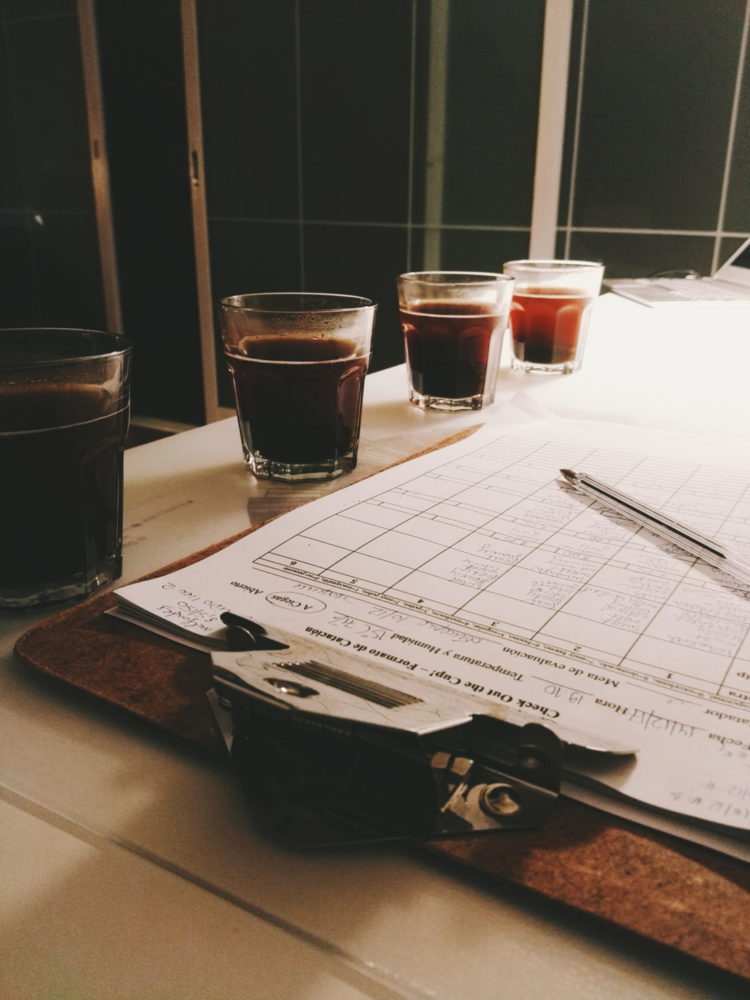
After all, cupping is a huge part of quality control in specialty coffee, whether you're a roaster, barista, or coffee shop owner, and it's also an incredible tool for self-education.

Cupping is a weekly procedure (sometimes even daily, in the best places), it is something simply necessary for the coffee shop to be considered a “specialty coffee shop”. There is no other tool that teaches you so much about the coffee you are serving and selling, that makes the baristas are more motivated and better understand customer needs.

Talking about bad advice and reverse psychology….

Here's a list of my personal tips, tested by my experience, on how to taste, but end up learning nothing from tasting:

  1. Don't weigh the water you put in the cups

That's a good one. You're very careful with the proportion while preparing a V60, so as not to pour in extra grams of water, and to make sure you are in the acceptable range (and I'm not even mentioning espresso – 43 grams and 35 grams are two different drinks!) – but of course, with cupping everything is different, and it's good to visually check that you are putting in enough water, and that way you are sure that all the coffees are in the same coffee/water ratio.

  1. Don't taste blindly

Open cupping is the best! Always try to take full advantage of the coffee information visible while cupping, so you can easily discover origins and flavor notes, and evaluate roasters and origins more highly when you have a preference. Be sure to include the beans for observation as well. If they have any visual defects, you'll be able to detect them in the flavor as well, without much trouble.

  1. Taste in a group of people, and share opinions immediately.

Cupping is best done in a group of people, preferably among coffee geeks. Discussing what you're experiencing and what you're thinking during the cupping will make you feel like you're on the same page and feel the same way about coffees as everyone else—and because of that, you're right. Eventually, you'll start to find the almond, tropical fruit, and sugarcane sweetness when you hear your friend's feelings.

  1. Don't take notes

Trust your memory completely, especially when it comes to materials like flavor descriptions. Of course, you'll remember exactly how the coffees you tasted throughout the month tasted, and you can always go back and double-check each coffee. Instead of taking notes, simply relax your mind, savor, and appreciate the moment.

  1. Avoid using numbers while evaluating parameters

It's a lot of work—trying to quantitatively formulate why this acidity is 7.5, and that body is 6.25. And after all, who really cares? No one's checking your grades, and we're not in school anymore. It's enough to note that this coffee has "good body" and "satisfactory acidity," and move on.

  1. If you are a roaster (coffee shop owner, barista, etc.): only taste your own coffees, never those of your competitors.

Why should you care? You're the best.

  1. Do not grind 2-3 grams of each coffee sample before grinding the cupping sample in order to clean the grinder.

There's no reason to do so, because, of course, there's no risk of contamination or mill retention. You can guarantee that in those 10 grams of washed Ethiopian coffee you're going to taste, all 10 grams are Ethiopian.

  1. Enter the tasting without any goal

Start the tasting without a clear goal in mind, and do it calmly, appreciating the coffees you taste one after another, their beauty and complexity, knowing that in an hour you'll forget everything and be ready to taste more tomorrow, with a clear head!

Posted on - Leave a comment

And now seriously… do we ever get to evaluate the taste of coffee?

Do we ever evaluate the taste of coffee?
Processed with VSCO with f1 preset

When I entered the coffee world—and I wouldn't say the specialty coffee world, because it was, as I see it now, low-quality coffee—when I entered, I knew nothing about varieties, origins, and processing.

And I was exploring. So I could easily try Sumatran coffee, or Indian Monsoon Malabar, or Jamaican Blue Mountain, or pay crazy money for the expensive geisha cafe, which didn't have any roasting dates. And a classic: going to Starbucks to check out their single origins.

And there was always a conflict. Because I couldn't taste the flavors written there in the tasting notes on the coffee bags.

But until recently, I pretended I could. (And I'm far from the only one who did!)

I now know that, as it was a low-quality coffee, and the roast was quite dark, it would not have been possible to taste the jasmine flowers in that old, rickety Geisha, nor the strawberries in the Monsoon Malabar.

But the labels said so. And I was insisting that I felt it. Probably, if I were more confident and honest with myself, I would have used the words "stale," "old," "paper." But no. I didn't have enough vocabulary, and I hadn't learned at that point to trust my receptors.

Only after a while did I get into the routine of tasting, begin to eat more consciously, expand my palate, and, over time, be able to taste more and more things. But it's a training process. And I'm not a "supertaster" of any kind. It's just a training process of learning how to put what you're feeling into words, and do it quickly and accurately.

And when I started getting into that tasting routine, it really made me realize how lazy my brain was. Every tasting became a battle against my brain's tremendous laziness, and it continues to be so to this day. Every time.

I realized that if I knew the roaster, or the origin, and I liked the previous experience, I tended to give higher scores. So I discovered almost immediately that it's mandatory to taste blind if you don't want your expectations to interfere.

I realized that if I like the flavor of coffee, I tend to also evaluate acidity and body more highly, and not analyze them carefully. I started to focus more on each parameter.

I realized that the packaging, the brand image, how expensive it is, my first impression of how much the company invested, will automatically make me rate the coffee higher. It will distract me from the flavor itself, because I'll make a connection between the packaging and quality. It also works the other way around: if I'm not impressed with the brand and the packaging, I may reduce the points when I'm tasting it. My brain is creating a connection that doesn't exist in reality.

And the list goes on and on; I'll write later about the tasting itself, which can be useful, as well as useless, if that topic interests you.

Right now, my questions are about something else.

I recently tasted a coffee, "X." In two different locations, the same coffee, within a one-month period. The tasting notes on the label say, let's say, "mango." But if you cup it, blind, you'll simply feel the roast. Burnt, toasty, charred, smoky—that's what I wrote on my cupping form while I was blind-tasting it. Twice.

So I'm not even saying it doesn't taste like mango, but it does taste like pineapple or hazelnut, and the tasting notes are inexact, but more or less close.

I'm saying there's no trace of specialty coffee quality in the coffee's flavor, and the only thing you can find is the flavor of the roast itself. There's not even the possibility of adding "nut" to it, because there are no nuts.

But then I saw several people writing about that particular coffee and repeating the “mango” story.

And I repeat, there is no doubt that this coffee has notes of "mango," because there is none.

So the reality is, once again, revealing. It means that many people who write about coffee, who write about food, don't take the time to taste. They're writing about flavors, but they don't trust their own sensations; they rely on someone else's misleading descriptions.

You don't have to be a real professional in sensory evaluation.

All of us, when we start tasting, start with very poor vocabulary and end up using only 6-10 descriptors.

We can't taste the "handle" yet, but we use the words "roasted," "smoky," "chocolatey," "fruity," "almondy," "citrusy," "floral": those general descriptions are enough—yes, they are ENOUGH—to make an honest assessment, in this case, of the coffee you're drinking. Yes, you won't look as smart as if you were writing "This coffee tastes of rose petals and amaretto liqueur, with some delicate notes of clementine peel"—you won't look as good, no.

But on the other hand, it's better to keep trying and give an honest description of the coffee you're drinking. Yes, it will be short, like "chocolate," "full-bodied," "balanced," but you won't put yourself in the foolish position of writing that it tastes like mango when the coffee is totally burnt.

And the descriptors will come with time. When you learn to connect what you feel with words. It will come. It always comes. You don't need any special talent for that. All you need is to keep practicing, stay connected to your sensations, and be impartial. It takes time, but it always comes.

That's all for now.

As always, I'm just trying to say that the time invested in mastering a skill is always worth it. And tasting is an essential skill in the food industry and, therefore, in specialty coffee.

In other words, don't be afraid to say, "You know, dude, I can't feel the handle."

Because chances are you're right.

Posted on - 1 Comment

On the importance of not generalizing

On the importance of not generalizing
dav

I sat down with the idea of writing about one thing, and ended up thinking about something else :)

I've been thinking a lot about crema these past few days: does color really matter? Do lines matter? I mean, we all know something about it, from old-school standards. Or how over- or under-extracted espressos probably look. I'm curious about finding out information about those that are well extracted. I'd just like to clarify my doubts regarding flavor and... TDS Mainly, if there's any connection between them and the appearance of the cream. How does this influence the flavor? I'll probably run an experiment soon, just out of curiosity. 

But in the meantime, a brief comment on the coffee-related phrases I've heard that have raised more questions than answers, and why I don't see them as making sense, at least to me. All of these have to do with precision in sensory evaluation.

Specialty coffee has a lot to do with sensory evaluation.

And funny enough, it also has a lot to do with marketing now – all those Instagram posts, all that boasting about “my specialty coffee is more specialty than your specialty,” “our coffee is the best,” espresso machines sexy and expensive, etc…

I find it important to emphasize first that these machines are still operated by people. Skills still matter.

And so – once again – specialty coffee is really about sensory evaluation.  If there is one skill that is mandatory, it is tasting.And what is cupping? It's the ability to blindly evaluate the flavor, the sensory experience, of a beverage called coffee.  Basically, it's the ability to tune out everything else (everything you're being told), trust your judgment, and be as impartial as possible. 

So, some phrases that do indeed have to do with sensory evaluation, and made me think:

“This coffee has the acidity of an Ethiopian coffee.”   

A year ago, I had a guest, who was definitely well-versed in coffee, come over for an espresso. And after drinking it, he confidently shared his assessment with my bosses. When I heard it, I was absolutely amazed. "This coffee has the acidity of an Ethiopian coffee," (incidentally, it was Mundo Novo natural pulp from Brazil).

My internal questions, which arose almost immediately, were: and what is the acidity of Ethiopian coffee like? Are all the Ethiopian coffees do they have the same acidity?

I understand that what he probably meant was “this coffee has a high and pronounced acidity and for my taste it is too prominent, and it lacks balance” – I assume that, taking into consideration the common Portuguese taste, which is still present.

But you understand me, right? Anyone who has tasted Ethiopians You can understand what I mean. One can say that Ethiopians sometimes don't have that much body, as they're more on the floral side, like lime and bergamot, sometimes spices, depending on the region and the process – but regarding acidity, even if you try really hard, you can't make it seem the same. Or am I missing something?

I don't know. The acidity of Ethiopian coffee doesn't mean anything to me, except for the fact that it's a more complicated way of saying "high acidity." Let's be more precise in our sensory evaluation. If you intend to evaluate, evaluate intensity, evaluate quality.

And the other one I've heard, which I've heard like twice in the last few weeks, and I couldn't agree then, and I've understood that I still can't:

“It tastes like coffee from Brazil

Brazil is huge. It has different types of coffee. Specialty and commercial. Usually naturally processed, or naturally pulped, but not always. There's been a lot of experimentation in recent years and many surprises. What do you mean by Brazilian coffee?

Good body? Low yield? Low acidity? Generic coffee flavor?

I understand that this is again a generalization in sensory experience, but my whole being calls for more precision.

“Coffee from Brazil” probably means catuaí, or mundo novo varieties, or acaia, widely grown there. It probably means natural pulped process. It probably means medium acidity.

Let's just be more precise, in our judgment, in our descriptions.

This is all we have left to do: agree on our vocabulary, try to be as precise as possible in our descriptions, train our palate, try to avoid generalizations, and constantly expose ourselves to different sensory experiences to expand our sensory memory.  

Because if it weren't for the flavor, we'd only be left with the image of specialty coffee as something hipster and trendy, but lacking something important at its core.

Posted on - Leave a comment

Single-basket portafilters. Is it goodbye?

Single-basket portafilters. Is it goodbye?

I mean, I gave up. I really tried, I swear. Honestly, I feel like I'm the last barista on Earth who finally started using only double portafilters, while all the other guys already did a long time ago.

This is why I admit that I knew the single-basket portafilter had been excluded from specialty coffee because the shape of its basket leads to inconsistent extraction and makes it really difficult to pull good espressos consistently.

I was aware of the issues, but we were still using them, not to make a drastic change, but rather a step-by-step change. So when we finally said goodbye to the simple basket, I wanted to make sure everyone understood why.

We all work with single-serve portafilters, and we never thought it would be a problem. It's something that theoretically makes sense. One espresso = less coffee = single basket, two espressos = double. It seems perfectly logical, and it shouldn't cause any problems at all; on the contrary, it should help us manage our workflow. That was the original idea, I suppose. And it just didn't survive the specialty coffee wave.

Nowadays, the idea of using 7 grams for a single shot and 14 for a double, like the idea that an espresso is necessarily a 30 ml beverage extracted in 30 seconds, is a thing of the past. Some of us still remember these times (in fact, I entered the coffee world at the time when David Schomer's book was a barista bible, and I'm sure I'm not the only one here); the lucky ones have only heard of them. Never mind. Things have changed dramatically in the last five years, and they're going to change even faster in the future (in the direction of greater automation, as we all understand).

Back to the simple baskets. I'll tell you what I experienced and how I decided to stop using them. I know that many baristas who came along after the "30ml days" simply didn't use them, because they were considered defective in the first place. I wasn't one of those. And there are still many people who continue to use them.

To put it simply, with all the tools in use, it became extremely difficult for me to come to work every day and strive to ensure that our single and double shots had the same ratio, the same TDS, the same flavor, and all of that consistently. One espresso after another, all day long.

As I was saying before, consistency is key. Regarding the food, regarding the service, regarding the coffee.

And now imagine that battle. Not only do you want your double portafilter espresso to be the same, every shot—you want your portafilter with the single basket to produce the same espresso. Same weight, same flavor, same TDS. With the different geometry of the baskets. With the coffee trapped in the grinder. Because even with direct grinding, without using the dosing chamber, you'll have roughly 1g of coffee there—1g that's coarser or finer than you need—when you're switching between single and double.

So, goodbye to consistency. Or not. But you grind a little coffee each time you switch between a single or double shot. Extra work, extra waste, extra time.

Many people are concerned with the question, "What should I do with the other espresso if I only have to make one?" But I started asking myself at that point: How much coffee do I waste by adjusting that portafilter with the single basket, and then constantly switching between single and double portafilters throughout the day? Could it be more than two or three wasted espressos? What is the cost of one espresso to you?

Is it probably not as big a problem as we'd like to see it? Perhaps we end up losing more by insisting on using them than by actually switching?

When I said earlier that the simple baskets didn't survive the specialty coffee era, I was partly joking, partly not. Because it's only now, when we're starting to think, first, about numbers in coffee, and second, about specialty coffee as it is (look here the definition of specialty coffee that I adhere to) we discovered that they are actually lacking. Before, everyone was very happy with them.

And now, when we have more consistent grinds, when we roast more lightly and know how to cup better, and not only that, when we finally throw away the 50 ml measuring jug and buy the scale and refractometer, we discover that the portafilter with the simple basket has been letting us down all along. We only discover it now.

Is this a time for change? And… Is this goodbye?