Posted on - 1 Comment

9 reasons to drink specialty coffee

apart from the fact that it tastes great!


MeditateEven the busiest of specialty coffee lovers in their busy schedules have one or two moments a day when they just stop and let themselves go. That's basically meditation. And no, it doesn't necessarily mean doing yoga. The simple act of making a cup of coffee in the morning is a kind of silent ritual, when only you and your morning brew exist in the world. The water is heating up, the filter is washing, the first drops of this precious liquid fall into your cup, you breathe deeply, thinking of nothing, only in the moment, letting the moment happen... Congratulations, I don't know if you noticed, but you've finished your meditation, and you're ready to start the new day :)

Explore – Drink specialty coffee It means constantly exploring. Exploring coffee itself, different origins, new varieties, new processes, new regions. Coffee goes from being simply coffee to something that's always new, always exciting. Have you tried the Mundo Novo variety? Have you ever had coffee from Guatemala? What kind of Brazilian coffee do you prefer? Do you remember the time when it was "just coffee," just a regular dose of caffeine directly into your veins? 

Love – I'm not going to lie when I say that when we go to a restaurant, we expect a chef to love their job, and when we buy clothes, we expect the designer to love what they're doing? Specialty coffee, in many ways, is a product of love. At every level, people in the coffee business love what they're doing. Isn't that a perfect reason to drink it?

Get closer to the product – It's not unusual to find the producer's name on a bag of specialty coffee now. How powerful is that?! Once again, coffee, which used to be completely devoid of personality, is now a product named after the person responsible for growing it. I think this is a huge step toward appreciating the efforts of the people around us in general, and understanding that things don't just appear out of thin air; certain people produce them for us. We're all interconnected. It would be a huge impact to know the names of the people who produced the food in our refrigerator, wouldn't it? We can start with coffee.

Consume locally – Specialty coffee is best when enjoyed freshly roasted, no more than four weeks after the roast date. This is why many people prefer to find local coffee roasters and buy directly from them, ensuring that the coffee they drink will be fresh, even knowing the roast date. This isn't really the case with commercial coffee purchased at the supermarket. By purchasing locally roasted specialty coffee, we support small (or not so small) businesses and contribute to the fact that people in their communities are living better lives.

Appreciate the details – Anyone who has tried to make a “simple” espresso from scratch knows how difficult it is. I mean it. Evaluating the coffee’s potential, “building” the espresso desired in your mind, choosing the ratio, adjusting the grinder, tasting the result, measuring the TDS, adjusting the espresso to the desired extraction rate. All these steps are just to make a small, "simple" espresso. Anyone who starts drinking specialty coffee immediately understands that beauty is in the details, and every detail is important. And absolutely not just in coffee, but in life in general. Starting with your cup of coffee, you end up appreciating more and more every aspect of life that requires effort.

Community Specialty coffee has one of the most dedicated communities around it. As you begin your journey, you'll find more and more people involved in the world of coffee (or discover that some of your friends have been doing it for a while), share your preferences, your discoveries, and expand your perception. New friends, new acquaintances, new people, all centered around one simple thing called "coffee." And you thought it was just a drink, right?

Improve your tasting – in the tasting of everything. This one is simple. When we start paying attention to the coffee we're drinking, we'll want to pay attention to more of the things we're eating. You'll want to try different beers, different cheeses, you'll think about experimenting with new wines. You'll discover that whiskey can be different, bread can be made from different types of flour, and with different levels of fermentation required. You'll try sourdough. Craft beer. Natural wine. You'll expand your palate. And in this way, you'll end up eating more consciously, paying attention to the flavor of products even more than before. You'll be able to savor nuances you never knew existed.

Finding Harmony – Drinking specialty coffee brings peace and harmony to your life. Making coffee in the morning is like a meditation. It brings you closer to the local producer and roaster. It gives you an insight into what it takes to grow a product like coffee and how much love goes into a coffee bean after all the work put into bringing it to your table. Coffee ultimately becomes much more than we ever imagined. And yes, it tastes incredible!

Posted on - Leave a comment

The Importance of the Espresso Machine

The Importance of the Espresso Machine
.

«"Look! It's a good espresso machine! The coffee here should be good!"

So here comes the first and my favorite myth about specialty coffee shops.

The machine.

How often do I hear, while working as a barista, "it's a good machine." People stop and take photos of the machine. For them, the brand of espresso machine is the guarantee of the quality coffee they'll get.

And the fact that some espresso machine brands have become so famous that even people outside the industry can recognize them is a huge step forward.

But that's not all.

For me, and for the person who works with coffee, this belief, that A good espresso machine = good coffee, sounds completely crazy.

But I keep finding more and more coffee lovers who think that a well-known espresso machine brand equals good coffee. So I see a need to talk about that.

Imagine someone bought a professional chef's knife for €500. Does that make them a chef? No.

And what makes him a chef? The ability to use that knife, making efficient, fast cuts of varying difficulty. Knowing how to care for the knife and sharpen it properly. Then, It is the skill that makes him a chef, among other things (such as creativity, knowing the products, the techniques, having an idea of what you want to achieve in a final dish).

A chef may have an expensive chef's knife or a cheap one from a local store; he'll still be a chef. On the other hand, someone who just bought a chef's knife doesn't necessarily know how to use it.

The same goes for the espresso machine. It may or may not be a well-known brand; it's not the machine that makes your coffee automatically (we're not talking about super-automatic machines here). It's the skill of a person who's making coffee for you right now. 

It seems simple, but I also understand why this idea comes up. We always try to simplify things for ourselves, generalize, draw conclusions, and make quick decisions.

"Does this place serve good coffee? Probably yes, because they have that machine!" – a good quick way to decide whether or not to go into the cafe.

Often, however, the opposite happens. People who have just had a coffee come up to me and say, "That's a good espresso machine!" as if I were there just to keep that machine company...

It seems like anyone can come and make a coffee on that machine, and it will come out great, just because the machine is so good.

For me, as someone who constantly gives workshops to coffee shop owners, trying to teach them how to use their coffee equipment, both good and not so "good," the reality is quite different.

The problem, and the beauty at the same time, of specialty coffee is that it's complex. It's a set of certain conditions that must be met for a good cup of coffee to end up on the customer's table in the café or in the kitchen of a coffee lover.

The machine is one of them, yes. But to give you an idea, it's just one of many conditions on a long list.

The role of the espresso machine is basically this. It has to provide a stable flow of water at a stable/controllable temperature and pressure, and ensure that it comes into contact with the coffee as evenly as possible. That's it. Nothing more, nothing less.

The other big part of what makes a good specialty espresso at the coffee shop: quality coffee, quality roast, quality grinder, grind pattern, espresso recipe—has nothing to do with the espresso machine.

My point is, and the goal of this post, is to give you an idea that specialty coffee is a complex mechanism that depends entirely on the qualifications of the people involved (coffee producers, roasters, baristas) that is impossible to explain and reduce simply to one factor – for example, using a certain espresso machine.

It can't just be that.

It has to be everything, or nothing will work.

Posted on - Leave a comment

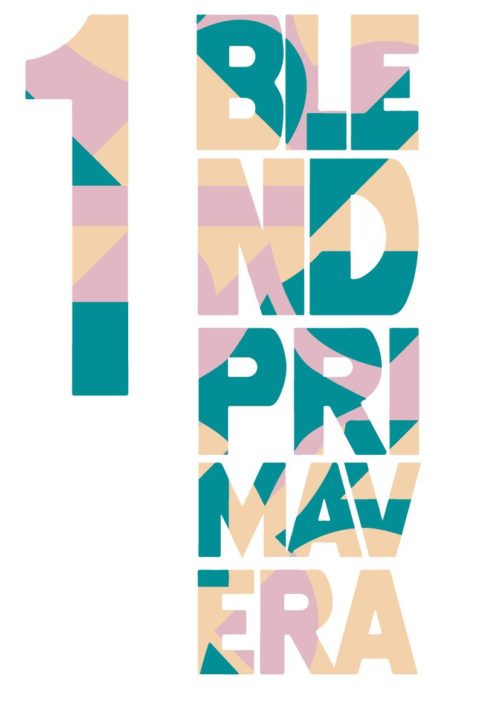
Blend 1 Spring!

Prepare a blend It's a major challenge, especially for a specialty roaster focused on micro-lots and highlighting the uniqueness of each coffee.

For Saint Augustine, the blend It's our business card. We want it to be GALIBIER, Blend (like us). We don't buy worse coffees to mix and satisfy an undecided clientele. blend It's a good way to test our offerings. Our inventory and mix change throughout the year. 

We want to highlight our philosophy with a new image. And we want this image to change with our product.

Spring Blend
Our visual inspiration for this spring

From now on, we launch each season from our designer's perspective. Lisa Palper.

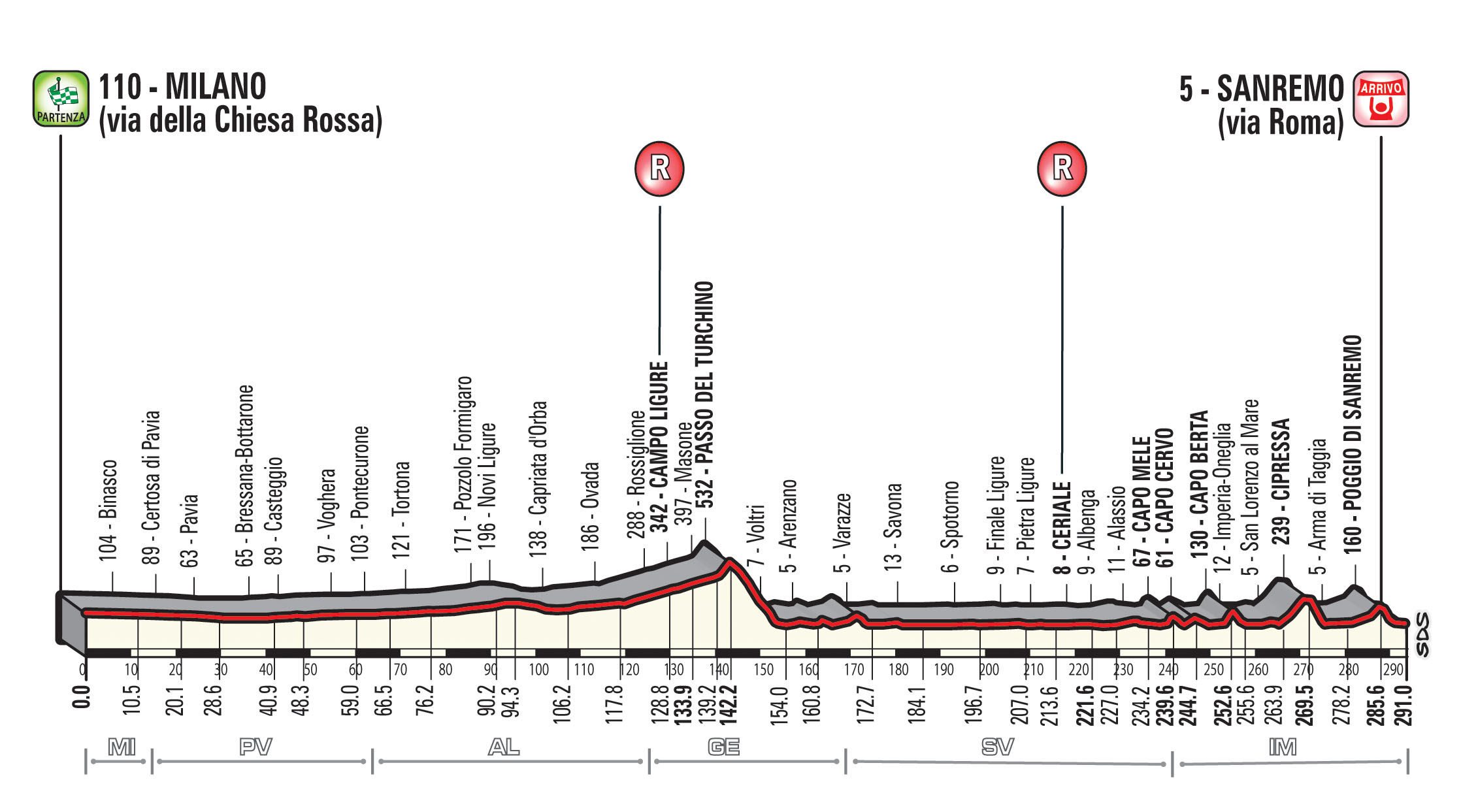
You can find it available in our Blend 1 Spring! starting March 26th (although we know that spring starts this Saturday with the Milan – San Remo!). And, as always, it can be at your home just a couple of days later.

Posted on - Leave a comment

Specialty coffee enters new markets

Call it what you will—betraying the ideals of the specialty coffee community, a lack of passion, just a general bad temper—but I'll be blatantly honest with you (as I've always been doing here, anyway).

I'm simply mesmerized by the way specialty coffee is entering new markets. And it's ironic, "mesmerizing."

I've seen it several times already.

People live in peace for centuries, pay their penny for a normal, absolutely-nothing-special-100% cup of coffee (or even tea, in some cases, by the way) – drink their coffees with their families before going to work, meet up with old friends for a drink espresso and chat about how everyone is doing, they use those old-fashioned coffee makers to make a romantic breakfast coffee for their loved ones…

In other words, people are busy doing much more important things, primarily socializing, rather than thinking about a cup of coffee.

Coffee is a small part of the whole picture, detail, not the centerIt's not the espresso that's the main hero. It's the people we meet while sipping it, or relaxing after a day's work, or having a moment of peace and time to think and be alone with their thoughts, or the magic of the moment when you walk into the bedroom with a breakfast tray on Sunday morning, and your wife/husband is waking up and looks up at you with those sleepy, grateful, surprised, loving eyes...

And then a bunch of know-it-alls come along and start terrorizing everyone about coffee. They say they've been doing it wrong all along, but now it's time to change, and the transition will be smooth and almost painless if everyone stops doing it the way they were doing it overnight and lets the coffee geeks teach them how to do it.

About something as comforting as your usual cup of coffee.

I mean, IT IS like that.

To put it more simply, I was like that a few years ago. I was trying to convince my local customers at a small Italian restaurant to drink El Salvador. Those poor customers were perfectly comfortable in every way with the Italian blend we had. And I was trying to offer them washed catuai that tasted of cherries, red apples, and brandy. The coffee itself was great, no questions asked. But all the other things—timing, focus, audience, my grasp of the whole picture—weren't.

Did I really try to do that? Hell yes, I did, and I felt I had the right to be doing it.

Was it a good idea? Not even for a moment.

Although, you know, it was actually good for me, in a way. I learned that I don't have the right to teach anyone until they ask me to. Politely suggesting something—that's as far as I can go.

I realized that the less experience you have, the more tempted you are to “teach everyone.”

Sometimes I start to think coffee geeks should be called "specialty coffee fanatics." Honestly. And I was the "geek" in that sense, so I know what I'm talking about. I mean, honestly, don't they remind you of those guys for whom it's not enough to believe in a certain "god" (coffee in this case)—they have to convince everyone else to believe in the same one?

I'm writing this to make some peace with myself from the past and to bring that problem of lack of focus (and respect) to light.

My point is… We probably don't need to push so hard for it. specialty coffee

Maybe it will be easier for everyone if we see the specialty as an exception to the rules, not as a rule.

The rule is: people like coffee simple, accessible and easy that does not distract them from life, they like it pay an affordable amount of money and they don't like it waste a lot of time doing itAs you can see, the specialty doesn't fit here. Not at all. 

If you're having trouble imagining what that might be like, think about a product you don't really care about. Something you buy, use, and don't think much about afterward. I mean, canned tuna, or ham, or cheese for sandwiches. Ready? That's how 991% of the world's population thinks about coffee.

It's not normal to feel uncomfortable with the fact that most people like dark-roasted robusta blends. They like them. And people love capsules. And robusta blends are accessible because they are. Not shocking, not challenging, just coffee that allows us to focus on other things, and it doesn't cost much. It costs almost nothing.

I'm talking about this because understanding what's happening is the necessary step that will get us out of where we're stuck and allow us to communicate better with consumers, rather than locking ourselves into a small community of "those in the know."

The specialty part is only a small part of coffee. It's a good place to be, it's a good home. We can be good hosts, we can open the door to the customer, we can show how great the interior is, what it can be like…

But whether he gets in or not is up to him, and there's no right or wrong with that. It's just coffee.

Posted on - 1 Comment

On the importance of not generalizing

On the importance of not generalizing
dav

I sat down with the idea of writing about one thing, and ended up thinking about something else :)

I've been thinking a lot about crema these past few days: does color really matter? Do lines matter? I mean, we all know something about it, from old-school standards. Or how over- or under-extracted espressos probably look. I'm curious about finding out information about those that are well extracted. I'd just like to clarify my doubts regarding flavor and... TDS Mainly, if there's any connection between them and the appearance of the cream. How does this influence the flavor? I'll probably run an experiment soon, just out of curiosity. 

But in the meantime, a brief comment on the coffee-related phrases I've heard that have raised more questions than answers, and why I don't see them as making sense, at least to me. All of these have to do with precision in sensory evaluation.

Specialty coffee has a lot to do with sensory evaluation.

And funny enough, it also has a lot to do with marketing now – all those Instagram posts, all that boasting about “my specialty coffee is more specialty than your specialty,” “our coffee is the best,” espresso machines sexy and expensive, etc…

I find it important to emphasize first that these machines are still operated by people. Skills still matter.

And so – once again – specialty coffee is really about sensory evaluation.  If there is one skill that is mandatory, it is tasting.And what is cupping? It's the ability to blindly evaluate the flavor, the sensory experience, of a beverage called coffee.  Basically, it's the ability to tune out everything else (everything you're being told), trust your judgment, and be as impartial as possible. 

So, some phrases that do indeed have to do with sensory evaluation, and made me think:

“This coffee has the acidity of an Ethiopian coffee.”   

A year ago, I had a guest, who was definitely well-versed in coffee, come over for an espresso. And after drinking it, he confidently shared his assessment with my bosses. When I heard it, I was absolutely amazed. "This coffee has the acidity of an Ethiopian coffee," (incidentally, it was Mundo Novo natural pulp from Brazil).

My internal questions, which arose almost immediately, were: and what is the acidity of Ethiopian coffee like? Are all the Ethiopian coffees do they have the same acidity?

I understand that what he probably meant was “this coffee has a high and pronounced acidity and for my taste it is too prominent, and it lacks balance” – I assume that, taking into consideration the common Portuguese taste, which is still present.

But you understand me, right? Anyone who has tasted Ethiopians You can understand what I mean. One can say that Ethiopians sometimes don't have that much body, as they're more on the floral side, like lime and bergamot, sometimes spices, depending on the region and the process – but regarding acidity, even if you try really hard, you can't make it seem the same. Or am I missing something?

I don't know. The acidity of Ethiopian coffee doesn't mean anything to me, except for the fact that it's a more complicated way of saying "high acidity." Let's be more precise in our sensory evaluation. If you intend to evaluate, evaluate intensity, evaluate quality.

And the other one I've heard, which I've heard like twice in the last few weeks, and I couldn't agree then, and I've understood that I still can't:

“It tastes like coffee from Brazil

Brazil is huge. It has different types of coffee. Specialty and commercial. Usually naturally processed, or naturally pulped, but not always. There's been a lot of experimentation in recent years and many surprises. What do you mean by Brazilian coffee?

Good body? Low yield? Low acidity? Generic coffee flavor?

I understand that this is again a generalization in sensory experience, but my whole being calls for more precision.

“Coffee from Brazil” probably means catuaí, or mundo novo varieties, or acaia, widely grown there. It probably means natural pulped process. It probably means medium acidity.

Let's just be more precise, in our judgment, in our descriptions.

This is all we have left to do: agree on our vocabulary, try to be as precise as possible in our descriptions, train our palate, try to avoid generalizations, and constantly expose ourselves to different sensory experiences to expand our sensory memory.  

Because if it weren't for the flavor, we'd only be left with the image of specialty coffee as something hipster and trendy, but lacking something important at its core.