Description
Colombia Decaf Huila
The Colombia Decaf Huila is a specialty coffee decaffeinated by a natural process using ethyl acetate derived from sugar cane. It comes from small producers in the south of Huila, in the municipality of Pitalito, at an altitude between 1,600 and 1,900 metres above sea level. The varieties grown are Caturra, Castillo and Colombia, processed as washed before decaffeination.
We include it in the San Agustín catalogue because a quality decaf should not be a concession. It should be a coffee that stands on its own.
Huila
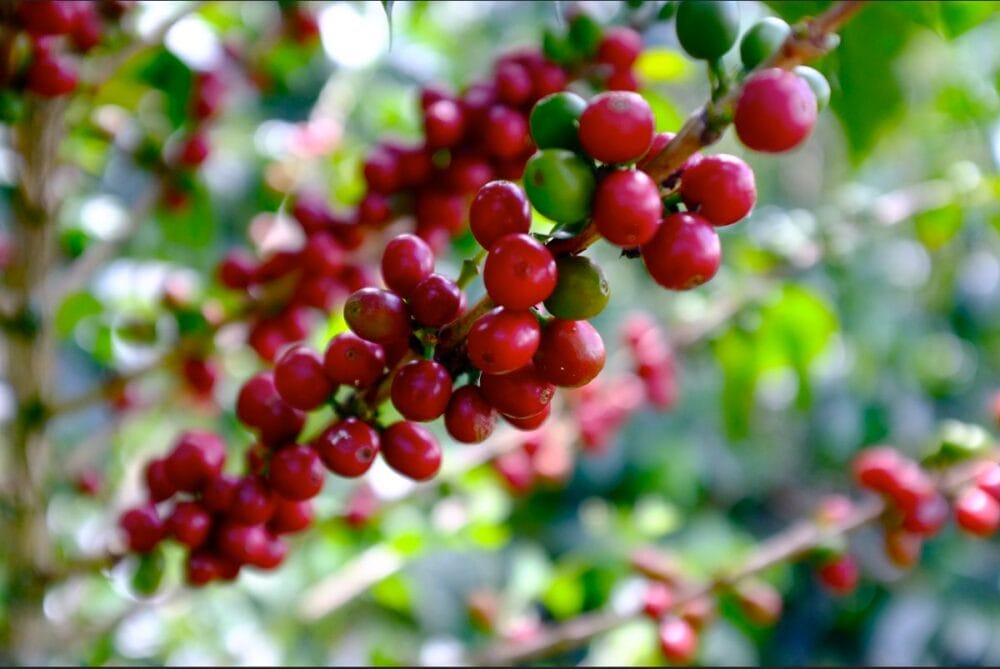
The department of Huila accounts for a good part of Colombia's specialty coffee production. The Central mountain range provides altitude, volcanic soils contribute minerality, and a well-distributed rainy season favours regular harvests. Pitalito, in the south of the department, has become one of the municipalities with the highest density of quality-oriented producers, many of them working small farms with selective picking and lot-by-lot control of processing.
The beans in this decaf come from that area. They are high-altitude washed coffees, selected before entering the decaffeination process to ensure the raw material already has a clean, well-defined profile.
Decaffeination with sugar cane
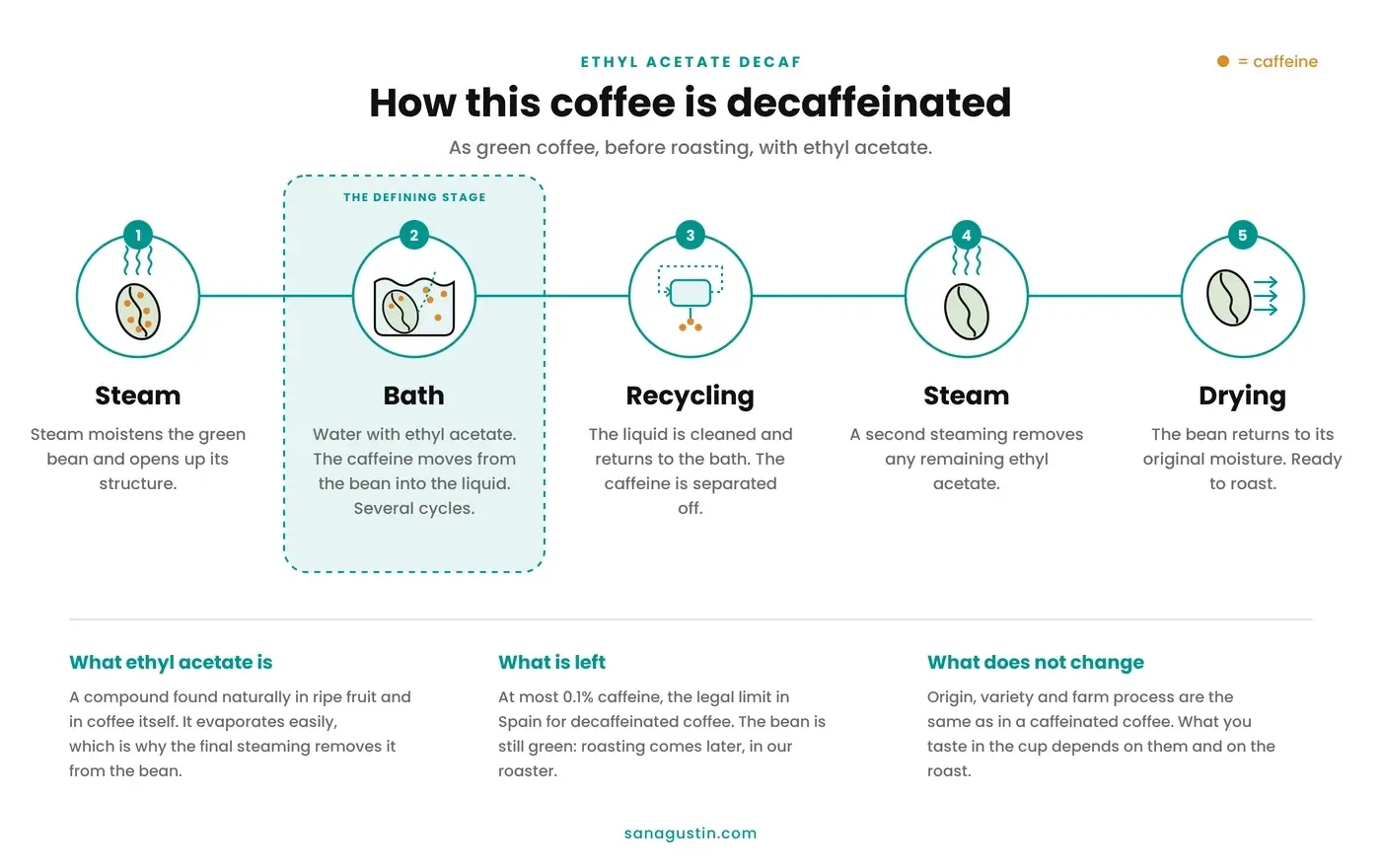
The method used for the Colombia Decaf Huila employs naturally occurring ethyl acetate, an organic compound found in ripe fruit, which in this case is obtained from Colombian sugar cane. It is not an aggressive chemical process or a high-pressure thermal method.
The procedure begins by opening the pores of the green bean with low-pressure steam. The beans are then immersed in a solution of water and ethyl acetate that selectively dissolves the caffeine, without altering the compounds responsible for aroma and flavour. The cycle is repeated several times until a decaffeination level above 97% is reached. The beans are then washed with clean water to remove any solvent residue and dried until they recover their optimal moisture.
The result is a bean that keeps the structure of the original coffee. There is no loss of body or flattening of the profile, which is what usually happens with less careful decaffeination methods.