Summer has arrived (officially, at least), and with it comes our new Blend 2 Summer.
Even though we're no longer children, summer still has a certain freedom. Summer means going to bed later. The smell of freshly cut grass and the sea. Bike rides (the Tour…) and soccer games in the neighborhood square. Camping. Family. The heat. Ice cream, milkshakes, and lemonade. Above all, summer is always something new. Every summer is different, and every summer is a step forward.
Our head designer, Lisa Palper, has understood our intention in creating this blend. It's not a complex list of tasting notes. Summer is sentimental. It's passion, freedom, and warmth. But above all, summer is nostalgia.
We're eager to bring you our newest seasonal blend: Blend 2.Summer.
We'll miss this blend, but for now, we'll drink it all.
It's been a month full of events and thoughts. And we're not even talking about the upcoming World Barista Championship, as everyone is waiting to see what will happen there in Amsterdam, who will make the final, and who will ultimately emerge as the champion.
True, right?
I had a "geeky" article
About water and coffee, ready to be published, but I'll put it on hold for a moment. However, I'll talk about water and coffee from another perspective.
I constantly feel like specialty coffee is becoming too "geeky." In a sense that "geeky" is different from being professional. So "geeky" that we're in danger of forgetting that coffee is like any other beverage or product. Like beer, wine, tea, whiskey, cheese, bread...
Coffee is as complex as any of these products. It is one of them. And while it feels good when you know what you're drinking or eating, and can distinguish the details and quality, it's not absolutely necessary for a good experience. It elevates your experience, yes, but only under one condition. When you are curious to know more about the product. Only in this case. In all other cases, knowing more about the product only irritates him.
How can you simply enjoy a good bourbonYou can enjoy a cup of coffee and then go on with your life, without going into the details of how it was fermented, harvested, grown, and knowing the names of all the workers who touched the cherries. It's not necessary.
I'm getting a little tired of the geeky stuff that leads nowhere.
I'll give you an example.
.
Geeks know that the water you use to make your coffee is very important. They know it needs to have certain levels of certain minerals to extract the coffee properly.
But what are they doing with that information?
They want everyone who makes coffee, no matter how professional, to use water with certain specifications. Because coffee must be roasted to the ideal water. If people don't have it, they have to buy filters, buy bottled water, look at the stickers, add minerals, etc. Do whatever they want, because water is important and everyone has to use good water to make good coffee. Period.
What this basically means is that they want a grandmother who buys coffee for her family Sunday lunch to be a geek over water. Or a super busy guy who needs coffee for fuel in the morning to do his v60 only with a certain type of water. Or a mother of three. I could go on, but you get the idea.
The truth is, not everyone wants to do it. Most people just want to drink coffee and get on with their lives. The roaster's job is to roast coffee for the most common water used, or for the recommended water that the customer can easily purchase. Not for a certain "ideal" water, which is unattainable for ordinary people and requires mineral stocks and additional investments, such as purchasing filters, etc.
That's why big brands thrive. Because they make it simple for the customer. And they're rewarded for it.
Information about water is valuable. It can give you, as a geek, almost superpowers.
Now that you're no longer blaming the roaster, you can take things a step further: "What if this coffee tastes flat because it was roasted for a different type of water?"
Do you see the difference?
Not "This coffee is poorly roasted" or "This coffee tastes bad because it doesn't work with my ideal water." But the question "What type of water was this coffee roasted for?"
Don't force the world to revolve around you, but use knowledge to your advantage.
Today I made a new coffee from a roaster I tried for the first time, with two waters. I made the first V60 with filtered and remineralized water, and it tasted sour and flat. Then I thought, "Okay, the guy's from here, so it's probably his idea to roast for tap water." I made a coffee with tap water, and it had a balanced, sweet flavor.
I think this is what being a coffee geek is all about. It's really about using knowledge and not pressuring the whole world to change because "they're wrong, they need to be educated about coffee."
I'm really in favor of that kind of thinking, that kind of growth as a professional. You need your knowledge to be able to follow the rules. And when you know how to follow the rules, you can think further and learn how to start breaking the rules and get even better results.
But keep in mind that not everyone who drinks coffee wants to be "polite."
If you're a coffee professional, having education and training in the field, especially during your early years, is crucial. For you. To serve better.
But being a coffee drinker in general is a different story. Just like you're not asked for a license when you're about to enjoy your whiskey, beer, or tea. You just do it. And it's the job of cheese/beer/whiskey makers (and coffee makers among them) to make it accessible and easy for you to enjoy their product.
…is there really a significant difference between them, or is dividing roasts this way more of a remnant of the past?
I was trying to buy a coffee from a Spanish roaster This morning, I found that distinction again. They have two types of roasts, for espresso and filter, and they don't recommend using filter coffee for espresso. I didn't buy the coffee for other reasons (€10 for shipping a 250g bag, really?), but I got to thinking about it. About espresso/filter roasts, and how one can taste good only in one method, and not be recommended for the other.
I won't tell you anything new, but I will say that only in the last two or three years, due to the development of coffee roasting software, better grinders, and our growing understanding of extraction and solubility, has roasting coffee become something that can be considered a more or less repeatable process. Only now are we getting closer to being able to repeat the same roast profile over and over again. And for the coffee to taste the same. Some kind of quality, in that sense, has appeared, or is only now appearing, in the specialty coffee segment.
Just now, guys.
All that time before, roasting was surrounded by some kind of magic, and was considered a craft, for which you need to have "a feel." All that sorcery with taking out the trier, smelling the coffee beans, checking the color, when it's the right yellow, when it's not yellow enough—all of that has been completely arbitrary, and definitely completely imprecise.
I'm not even talking about the fact that nervously removing the trier means upsetting the reaction taking place in these coffee beans, and eventually making the roast even more inconsistent.
Today you have enough light, and you, with your imperfect human eye, decide this yellow is the right one. Tomorrow you're tired, you didn't sleep well, your eyes tell you something different: you make a different decision. Were the profiles the same? I doubt it.
And espresso and filter roasts existed, and were practiced, long before we had any idea what was going on inside the roasting machine.
So, which roasters were paying attention to was obvious, something that was always available, always at the forefront. Color.
So, in this way, “traditionally,” “espresso roast” is a darker roast, and “filter roast” is a lighter roast. And, of course, each roaster It has its concepts of lighter and darker. Therefore, there is more inconsistency and disorder.
Now that we've entered the era of Cropster and other similar coffee roasting programs, we know more and more objectively. Actually, here's a little secret: roasters don't need to get out the trier and visually "inspect" the coffee. Those photos you see everywhere, guys staring at the beans, pretending to look for something... There's no need for that. It's done because that's how it's been done for years and years, when there were no other ways to assess the state of the roast except using your vision.
So, why did these "espresso" and "filter" roasts appear? They made sense before, but don't anymore.
They serve to mitigate underdevelopment.
The roasts that prevailed throughout that time were "cooked." We didn't have enough knowledge to roast light and still produce a sweet coffee. The light roasts, if they succeeded, lacked sufficient sweetness, with intense and unbalanced acidity.
Imagine something like this in espresso, in the method that basically intensifies everything in the coffee. You'll get a sour liquid with no trace of sweetness whatsoever. But if you roast it a little longer… If you roast it longer, the acidity will no longer be a nuisance; the aromas in the coffee will be represented primarily by those from the dry distillation phase… You'll lose complexity, yes, you'll have a flat, lifeless coffee, yes – but the acidity will no longer be a nuisance.
There was no way, no understanding, no idea that this could actually be done—to balance acidity with sweetness, without turning the coffee into carbon. So, espresso roasting was a way to make coffee drinkable in espresso. And at the time, what they were doing was roasting to mitigate acidity and "hide" the underdevelopment behind burnt and smoky notes.
That was before.
But now we have much more control, and we can actually control the roasting process to achieve the desired levels.
And the question is, if the coffee is well developed, shouldn't it taste good using any method?
Imagine: You're a specialty coffee lover and you buy a 250g bag for 10 euros.
How would you make this coffee? Would you use 40 grams, wait 24 hours, and have enough concentrate to make 2-3 cups, or could you make a V60 from 15 grams of coffee? Which will give you 220 grams of highly caffeinated liquid in the next 4 minutes? :)
Has it ever happened to you? You're tasting a coffee, and immediately thinking, "It tastes good, but that would be just as amazing as a cold brew! I have to make a cold brew!»
Has this ever happened to you? No? Me neither.
And if you think about it, it's a little strange.
Sometimes you drink a coffee like an espresso, and then you get curious and want to savor it through the filter. Or you drink a coffee and immediately think about how you're going to make it. V60? Aeropress? Espresso? You're asking yourself those endless, yet so dear to the heart of every coffee lover, questions: "What do I want to enhance? The smoothness of the body? Notes of red fruits? The delicacy? How do I make this coffee reach its full potential?"
But it never happens that in that line of coffee brewing methods to choose from, you have a cold brew.
And if cold brew is just a method of making coffee, that's pretty unfair.
But… what if it’s something more?
Let's dive into the topic for a moment.
When I say “cold brew” in this post, I’m referring to immersion cold brew, which is by far the most popular method of cold brewing.
There is also Kyoto-style cold brew, where the coffee is brewed in a special glass "tower" and water slowly drips through the coffee, literally drop by drop.
Kyoto-style cold brew, like probably most Japanese devices, is more of an art than anything else, and the visual aspect is simply spectacular!
It's also a fairly expensive device, which at the same time doesn't produce much liquid, so it's not often used for producing cold brew in large quantities. However, for those who love making coffee at home, there are options that cost around 25 euros, making Kyoto-style cold brew a fairly affordable option.
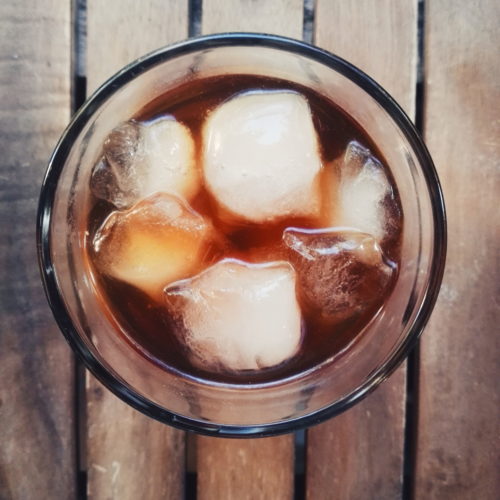
The most popular cold brew preparation method is immersion. It involves mixing medium-coarse ground coffee with cold or room-temperature water, then letting it sit at room temperature. As with any recipe, you're free to experiment with brewing times, grind size, and ratio. The most popular ratios are 6:1 or 7:1 water:coffee.
After 18-24 hours of steeping, filter the coffee concentrate and store it. Then you're free to do anything with it, depending on how much you want to dilute it.
Cold brew coffee concentrate gives you a great deal of freedom in blending and making the final beverage, which can be literally anything: cold brew, hot brew, iced coffee, latte, coffee-based cocktails, etc.
From this point of view, cold brew coffee is extremely versatile.
So let's go back to where we started.
Why isn't cold brew in line with all the others, like espresso, V60, Chemex, etc.?
The main question is this: Is cold brew a standalone coffee brewing method, or is it simply a tool?
I won't jump to any crazy conclusions here, but I'll walk you through the strengths and weaknesses of cold brew.
+ CB is extremely versatile and can be a base for many coffee drinks and cocktails
– CB does not have as intense a “coffee flavor” as espresso, therefore it has a tendency to get “lost” in cocktails
+ Speaking of cold brews, working with CB is easier than with iced filter coffee, because you don't need to calculate the ice melting, and because the concentrate you use is already cold.
– Although you don’t have to calculate ice melting when making cold brew, it would be best to use the refractometer at least when creating the recipe, to achieve a desirable TDS, and to know how the concentrate you are creating behaves with ice and milk when served.
+ the cold preparation can be prepared in advance, stored in the refrigerator, and easily served throughout the week
– Making a batch of cold brew takes 18 to 24 hours. Compared to the usual 2-4 minutes to make a filter and experiment with grind size, 24 hours seems like a long time to wait only to discover you've done something wrong. And if you're out of cold brew, you're really out. It will really take a while to make more.
+ It generally has a smooth, easy-drinking profile without pronounced acidity or bitterness, making it an easy sell to people who don't like coffee with a strong personality, and prefer something more delicate.
– One drawback of cold brew being bland is exactly what some people consider a positive side of cold brew: the drink lacks character, compared to the same coffee prepared another way.
– High ratios. You have to use a lot of coffee, and not very efficiently. So, if you don't own a roaster or have free coffee, making cold brew ends up being quite expensive.
+ The positive side of this is that roasters often use cold brew to “move” the coffee and give it a second life.
– Under control of the extraction. Basically, you choose the recipe, grind size, and steeping length, and wait to see what happens. You can't control much, especially if the location where you're steeping is subject to temperature and humidity fluctuations.
To put it all together, cold brew is the best thing to do if you want to use up some extra coffee you already have that's getting old. It's a good way to prepare coffee "in advance" and store it, or even freeze it, and ultimately save some time on brewing. It's a great thing to do if you like smooth, delicate coffee.
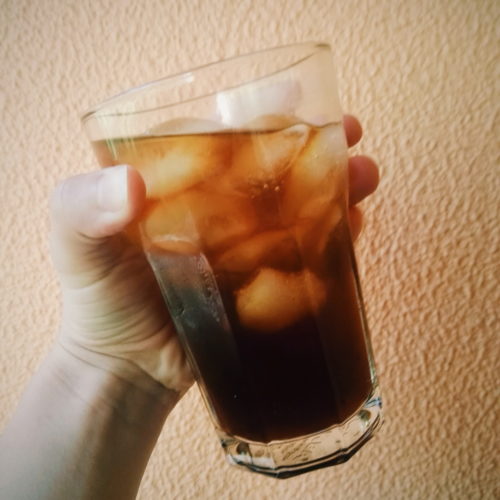
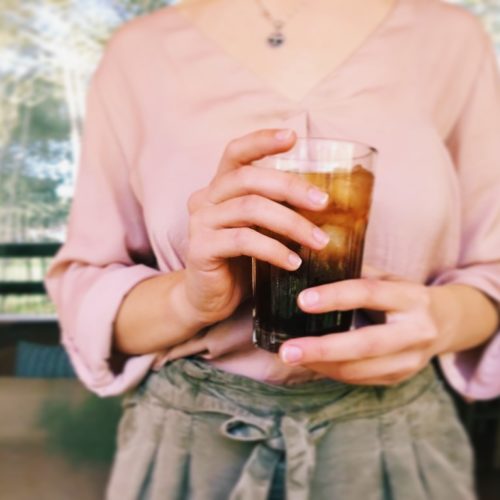
And summer. Summer is the perfect time for cold brew :)
We all know that once you try Specialty Coffee, properly made, it's impossible to go back to drinking commercial coffee the same way you did before.
You enter a new world of different varieties and origins, and this world is vast and still unexplored. You start trying, searching for new things, making lists of coffee shops to visit and roasters to buy coffee from.
Specialty Coffee. Why do we choose it? Complex, delicate, interesting flavor—after all, thousands of combinations—origins, varieties, processes, different farms, different roasts. It's heaven for those who like to discover something new, in terms of flavors. To educate the palate. To gain new experiences.
But. There's a big BUT in this whole story. And I've mentioned it before. To represent everything it has, Specialty Coffee must be properly prepared.
While a commercial coffee is roasted almost to that coal stateWhen you can't tell the origin, and even if it's Arabica or Robusta, it doesn't matter how it's prepared later. It will have a foreboding flavor, and you'll get that flavor even if you do it wrong. The expected flavor, of course, is not the flavor of coffee, as many people still think, but the flavor of the roast itself, the flavor of the roasting.
Commercial coffee is roasted in such a way that it's irrelevant how it's prepared. Or rather, it's roasted to be prepared without any particular rules. You can try it once—try following the rules for preparing coffee with a commercial blend. Controlling everything, the water, the tamping, the dose… you'll be unable to make a decent cup. Commercial coffee is designed so that you can "just do it," without giving it much thought. Go into traditional cafes and see how espresso is prepared, from coffee beans ground 2-3 hours before, without measuring the dose, and using the tamper that comes with the grinder, if it's even tamped.
Specialty coffee is the exact opposite.
You need certain teams, precision and knowledge. AND coffee.
By the way, This is the reason why many coffee shops fail when they try to introduce Specialty into their menus.
Let's assume they have the right equipment, and they probably have the right coffee.
But there's a big problem in people's minds, to begin with. Years of watching people brew commercial coffee makes it hard to believe that you need to be knowledgeable when it comes to specialty coffee. And you need to have that knowledge. And you have to be precise. Measure ALL, ALL THE TIME.
Because commercial coffee basically tells you, “You don’t need to think about it too much, it’s easy, it’s just coffee.”
And Specialty Coffee says “measure everything.”
But measuring everything is difficult.
So many baristas don't do it.
So many coffee shops fail to serve specialty coffee for that reason.
There is an infinite difference between a well-extracted coffee and a coffee underextracted. And to not get that underextracted You have to know what you are doing in general, and what you have done, with that particular shot.
For me, it goes like this. I prefer a well-extracted specialty coffee. And then I prefer a commercial coffee. Saying that… With poorly made specialty coffee, you pay more, you get a barista who breaks the rules, and the coffee shop doesn't forgive them for that. But the person drinking that coffee, with all the mistakes made… is you.
And here comes the nightmare of every toaster, who is in some ways a perfectionist.
You have no control over how your coffee will be prepared after you sell it.
You choose the green coffee to buy, among other things. You find a roast profile for that coffee. You roast it. You sell it.
But after that… it's terra incognita. The most important thing—your customer's satisfaction—depends on how well they make their coffee. It depends on their education and their palate.
For example, if your customer makes filter coffee with an espresso grind, you're screwed. Or when they don't know how to adjust the espresso machine. Again. Or when they use a blade grinder. Or pre-ground coffee. Or when they use your coffee two months after the roasting date.
Education and knowledge are key to specialty coffee for that reason. Because unlike commercial coffee, there are certain rules and a certain level of precision that must be observed. Because "Good coffee doesn't come from nowhere." That's why you'll often hear people in specialty coffee talking about educating the customer. Because high-level satisfaction is deeply connected to knowledge.
I started writing about the despair of the specialty coffee roaster, but I'm going to end with another thought I just had.Perhaps the satisfaction of Specialty also comes from the fact that it's not easy? After all, as we all know, we begin to appreciate things much more when we understand how hard they are to do.
Prepare a blend It's a major challenge, especially for a specialty roaster focused on micro-lots and highlighting the uniqueness of each coffee.
For Saint Augustine, the blend It's our business card. We want it to be GALIBIER, Blend (like us). We don't buy worse coffees to mix and satisfy an undecided clientele. blend It's a good way to test our offerings. Our inventory and mix change throughout the year.
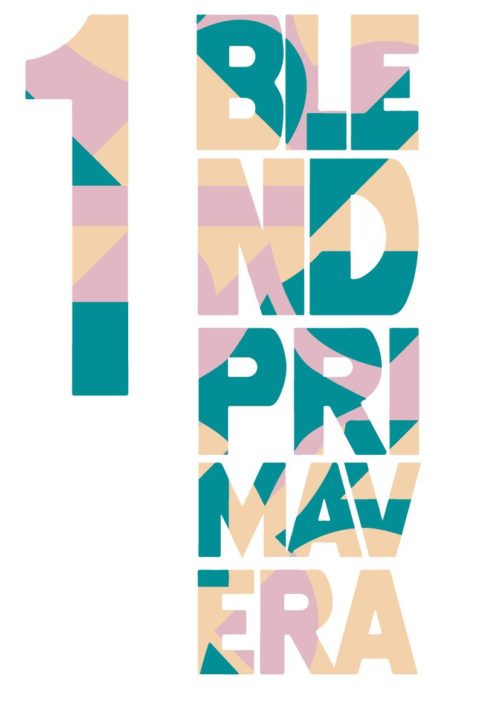
We want to highlight our philosophy with a new image. And we want this image to change with our product.
Our visual inspiration for this spring
From now on, we launch each season from our designer's perspective. Lisa Palper.
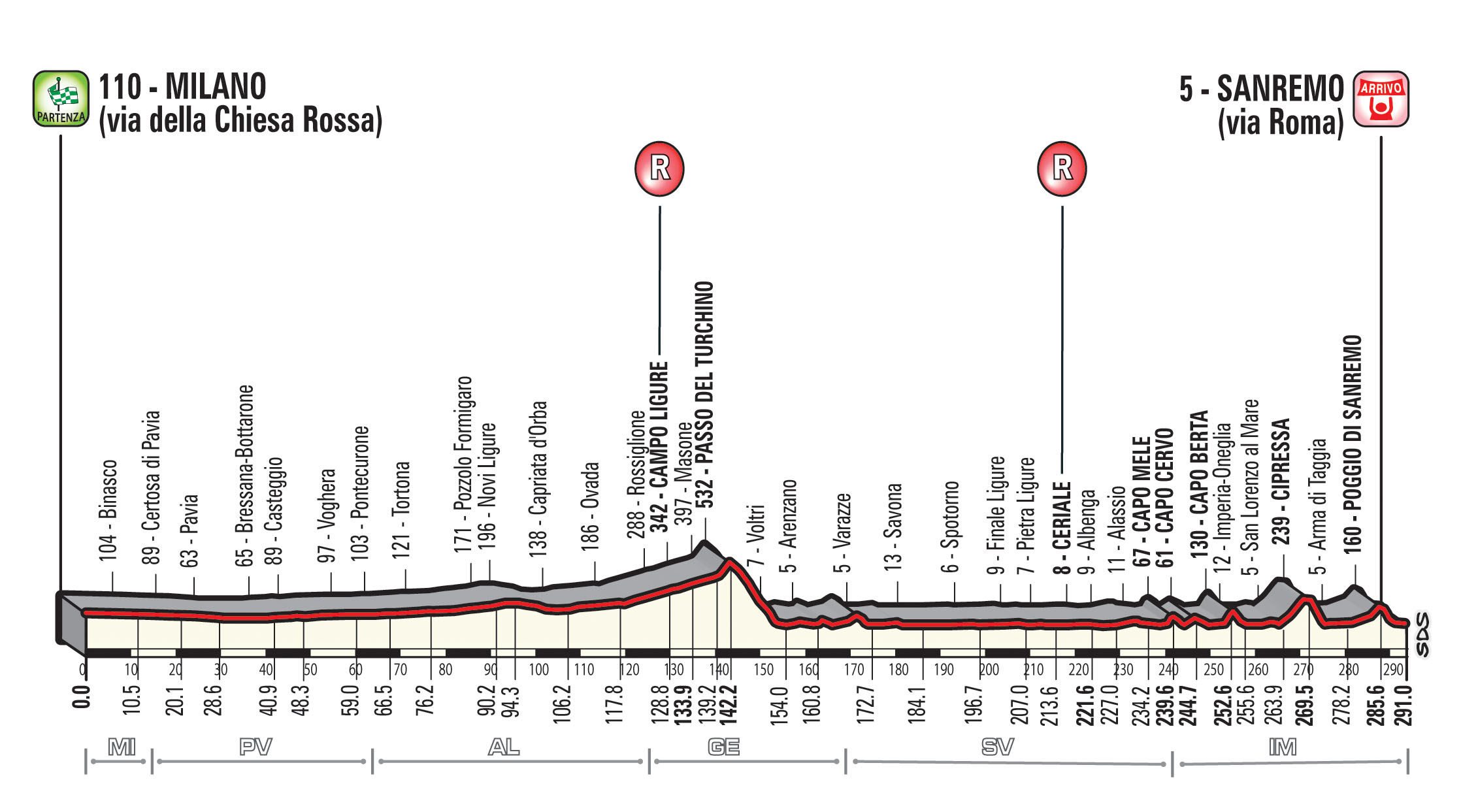
You can find it available in our Blend 1 Spring! starting March 26th (although we know that spring starts this Saturday with the Milan – San Remo!). And, as always, it can be at your home just a couple of days later.
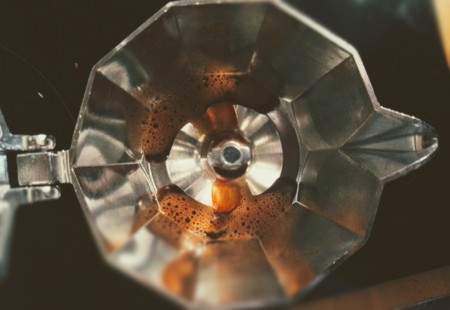
Just to give you an idea of the direction this post is going, I'm drinking Moka Pot coffee right now as I type these words. (and I also listen to the Queen concert in Montreal in 1981, but that's another conversation).
And, importantly, I didn't spit it out screaming how bad it is, as you might expect a "coffee purist" to do.
So if you're one of those guys, stop reading right here. I'm not going to lynch mocha pots here.
I'm just drinking coffee made this way, like many other people on the planet do.
You think I'm crazy, don't you?
For my morning coffee, I have a lot of options. I consistently drink St. Augustine coffee in-house. And I roast coffee myself. And sometimes I'm offered a bag or two from other roasters. So there are plenty of coffees to drink. And plenty of devices, too. Count me in: Kalita, V60, Aeropress, French Press, Auto Drip, Nespresso, Moka Pot.
So my choice in the morning is something like this: How do I want to take this coffee?
When I have time, it's a filter. When I have time and I'm in the mood for a lot of grinding, it's a French Press. When I want a great, never-ending cup of coffee, I opt for an Auto Drip. When I don't want a lot of work… When I don't want a lot of work, and I want to feel a little "old-fashioned," it's a Moka Pot.
A few weeks ago, I ran a poll on Instagram asking whether people use a Moka Pot or not. I got some unexpected results, by the way. I was thinking most people would say, "No, Moka Pot, never!" And then I got 58% of "yes."
So, 58% of those who responded use Moka, or at least have nothing against it. Those who answered "no" were mostly "coffee geeks."
I'll tell you something, purely my perspective. I feel like sometimes the problem is that "coffee geeks" adopt certain ideas but never try them out themselves. They basically adopt other people's opinions, the opinions of some influential people, and pass them on. Sometimes you talk to that kind of person, and you listen to someone else, and sometimes you can even tell exactly whose opinion they adopted.
I don't want to be like that, so I experiment. That's why I have Auto Drip, Nespresso, and, yes, a Moka Pot at home.
People probably won't like what I say about this device, or even the fact that I'm using it, and I have a recipe for it. But what I have to say is: It's good to know how to work with what you have.
What are the preconceived ideas people have about Moka Pot?
First of all, It's not great, it's a "grandmother's device". What can I say... It's really something retroAnd the positive side of this retro is that almost everyone has one at home. Does everyone have a V60? Nah.
Of course, you may be buying more things, especially when the market feeds you with new coffee-making gadgets every month… But isn't it better, at least, to know how to use what you already have? It feels good to be smart. You know, I'm just saying...
Second preconception. The water passes through the boiling coffee. I say, so what? It would be bad if you boiled the coffee after making it, yes. Or left it boiling on the stove. Or let it heat up in the Auto Drip. But if you don't, it's all good! The water passes through the ground coffee (and it does so in much the same way as when you're making a siphon, by the way), and then cools. The temperature of the coffee grounds is less than 100°C, so the sum of the temperatures will be less than 100°C, if that's something you're worried about.
Third preconception. Stove-top coffee tastes like metal. I say: according to this logic, espresso should also taste like metal. Does it? Nope. It can taste stale if you don't clean your equipment (talking about both espresso machine and Moka Pot). If you are considering purchasing a Moka Pot and are choosing between stainless steel and aluminum, choose steel.
To sum up, a Moka Pot is an affordable, easy-to-use device that almost everyone has at home, capable of producing a thick, thick, and flavorful cup of coffee.
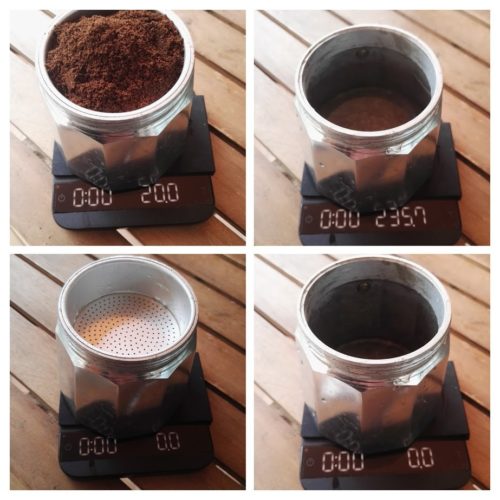
Here is the recipe I use for Moka Pot:
Boil the water
Fill the bottom of the Moka Pot with boiling water almost up to the steam valve (for my moka pot it is equal to 235 grams)
Put the filter basket
Fill it with 20 grams of coffee, evenly distributed, grinding the way you grind it for V60
Put on the top compartment of Moka Pot
Place the Moka pot on medium heat
When you see the coffee appear in the top compartment, wait 10 seconds and then remove the Moka Pot from the stove.
Serve and enjoy!
Things to be careful about when making coffee in a Moka Pot:
When filling the bottom part with hot water, be careful, the whole device gets very hot!
If the coffee is ground too fine, the water won't pass through it. Pay attention to how the moka pot behaves, and remove it from the stove quickly if water starts to seep between the bottom and top. In this case, change the grind size to coarser.
After making coffee, serve it immediately, do not store it in the moka pot, it will have a stale and metallic taste.
And the rules of use are very similar to those of any other coffee-making device:
Love your Moka pot, treat it well, clean it after use, don’t let coffee sit there too long and oxidize, use the proper water for making coffee, freshly roasted coffee from your favorite roaster, if you are a coffee lover – buy a good grinder, and grind the coffee right before making it (believe me, it’s worth the investment!).
and stop feeling guilty and thinking about what other people will say: rejoice in breaking the rules, playing, experimenting, trying new things, preparing your coffee your way, and most importantly, enjoying it!
Call it what you will—betraying the ideals of the specialty coffee community, a lack of passion, just a general bad temper—but I'll be blatantly honest with you (as I've always been doing here, anyway).
I'm simply mesmerized by the way specialty coffee is entering new markets. And it's ironic, "mesmerizing."
I've seen it several times already.
People live in peace for centuries, pay their penny for a normal, absolutely-nothing-special-100% cup of coffee (or even tea, in some cases, by the way) – drink their coffees with their families before going to work, meet up with old friends for a drink espresso and chat about how everyone is doing, they use those old-fashioned coffee makers to make a romantic breakfast coffee for their loved ones…
In other words, people are busy doing much more important things, primarily socializing, rather than thinking about a cup of coffee.
Coffee is a small part of the whole picture, detail, not the centerIt's not the espresso that's the main hero. It's the people we meet while sipping it, or relaxing after a day's work, or having a moment of peace and time to think and be alone with their thoughts, or the magic of the moment when you walk into the bedroom with a breakfast tray on Sunday morning, and your wife/husband is waking up and looks up at you with those sleepy, grateful, surprised, loving eyes...
And then a bunch of know-it-alls come along and start terrorizing everyone about coffee. They say they've been doing it wrong all along, but now it's time to change, and the transition will be smooth and almost painless if everyone stops doing it the way they were doing it overnight and lets the coffee geeks teach them how to do it.
About something as comforting as your usual cup of coffee.
I mean, IT IS like that.
To put it more simply, I was like that a few years ago. I was trying to convince my local customers at a small Italian restaurant to drink El Salvador. Those poor customers were perfectly comfortable in every way with the Italian blend we had. And I was trying to offer them washed catuai that tasted of cherries, red apples, and brandy. The coffee itself was great, no questions asked. But all the other things—timing, focus, audience, my grasp of the whole picture—weren't.
Did I really try to do that? Hell yes, I did, and I felt I had the right to be doing it.
Was it a good idea? Not even for a moment.
Although, you know, it was actually good for me, in a way. I learned that I don't have the right to teach anyone until they ask me to. Politely suggesting something—that's as far as I can go.
I realized that the less experience you have, the more tempted you are to “teach everyone.”
Sometimes I start to think coffee geeks should be called "specialty coffee fanatics." Honestly. And I was the "geek" in that sense, so I know what I'm talking about. I mean, honestly, don't they remind you of those guys for whom it's not enough to believe in a certain "god" (coffee in this case)—they have to convince everyone else to believe in the same one?
I'm writing this to make some peace with myself from the past and to bring that problem of lack of focus (and respect) to light.
My point is… We probably don't need to push so hard for it. specialty coffee?
Maybe it will be easier for everyone if we see the specialty as an exception to the rules, not as a rule.
The rule is: people like coffee simple, accessible and easy that does not distract them from life, they like it pay an affordable amount of money and they don't like it waste a lot of time doing itAs you can see, the specialty doesn't fit here. Not at all.
If you're having trouble imagining what that might be like, think about a product you don't really care about. Something you buy, use, and don't think much about afterward. I mean, canned tuna, or ham, or cheese for sandwiches. Ready? That's how 991% of the world's population thinks about coffee.
It's not normal to feel uncomfortable with the fact that most people like dark-roasted robusta blends. They like them. And people love capsules. And robusta blends are accessible because they are. Not shocking, not challenging, just coffee that allows us to focus on other things, and it doesn't cost much. It costs almost nothing.
I'm talking about this because understanding what's happening is the necessary step that will get us out of where we're stuck and allow us to communicate better with consumers, rather than locking ourselves into a small community of "those in the know."
The specialty part is only a small part of coffee. It's a good place to be, it's a good home. We can be good hosts, we can open the door to the customer, we can show how great the interior is, what it can be like…
But whether he gets in or not is up to him, and there's no right or wrong with that. It's just coffee.
I'd like to talk here—or rather, start talking here—let's put it this way—start talking about what's been on my mind these past few weeks. Share it with you and start a conversation.
It won't be about tips for barista routines or reviews of espressos I've tried lately.
It will be about information, competition, and the growth of the specialty coffee industry, in one area in particular – roasting.
As you probably know, I'm located in Lisbon, Portugal, which is just entering the specialty coffee world and becoming the birthplace of some new roasters.
Specialty coffee is going to be a boom here in the next two years, I dare say. To what extent—we don't know yet, as it depends on many factors. The quality of the coffee specialists on the scene, their internal motivations, their understanding of quality, of specialty for what it is, their palates, their ongoing training—and their ability to communicate all of this to their local customers.
All of these things influence the quality of the coffee roaster we'll have at the end of this period – will they be only local? Will they be known in Europe? Or, who knows, maybe the whole world, and for good reason?
And I focus primarily on coffee roasters, because for me, coffee should be viewed the way we view bread. We don't import bread from other places; we bake our own. Local roasters mirror the "state of the art" of specialty coffee, in my opinion, because on the one hand, it requires a deep understanding of coffee at every level, and on the other, it requires an understanding of the specific nature of local consumption. That kind of "union" between understanding the product and the consumer.
So my question is this.
A question for myself and for you. Fortunately, we're long gone from the days when coffee roasting was seen as a mystery, an artisanal process beyond our control, and for which you had to have a talent. Those were times when roasters hid their profiles (if they had one, of course) so no one else could replicate them.
This is in the past, like David Schomer's Barista Bible.
Now we meet at the roasting camps, sharing, learning, and talking.
What we have now is the opposite. It's the abundance of information. It's open, it's there, and you can take it. Just to give you an example, you can go on Google right now and check out the profiles of the World Coffee Roasting Championship. They can do it. There they are.
Books? Easy. Articles? In a matter of seconds. Want to learn about coffee chemistry? Barista techniques? Roasting strategies? Harvest calendars? No problem at all.
All this information exists, it's real, and sometimes it's free, other times it's not—but what's important is that it's available. You can easily pay a little money and take roasting courses or online courses with Scott Rao or Willem Boot. It will make you feel special, yes. If you're attentive, you'll take something for yourself. Like the thousands and thousands of other coffee specialists who took the same courses as you and who have read the same books.
So, what should we reasonably expect? Certainly, better espressos, because more baristas have discovered the refractometer. More developed roasts, because everyone now takes ROR into account.
So… let's assume it's happening. Roasts are becoming less so flat and end up getting sweeter and sweeter. Espressos are no longer so sour, and are now more complex and much more stable from barista to barista.
The question is…
What is going to distinguish a toaster A from a toaster B? They both bought the same machine, read the same books, took the same courses, have the same or similar coffee importer, and are trying to apply the same roasting strategy.
And now let's imagine the ideal situation, and suppose both roasters don't make the classic "mistakes"—like getting the coffee almost to the second crack, when it tastes burnt and smoky and loses all character, or flat roasts, or gourmet coffee that's presented as a specialty. None of that.
Why choose roaster A? Why choose roaster B? What's the difference between them at the end of the day?
Do those famous "background" factors come into play now more than before? Do we buy packages because they look pretty? Because they put pretty labels on the bags? Because it's blue (pink, black, gold, etc.)? Because we liked their Instagram? How do we decide which one is the best? Who's worth our money? Is it enough to simply "sell it right" for us to believe it's good? Are we really making informed decisions? Or do we, like the flock, follow the shepherd, follow whoever claims to be the best?
I was thinking about my choices. The toasters I love, the ones I'm curious about, and would like to try. I'm not a typical consumer, of course, but still...
There are categories of things I've tried only once, and then never tried again. I understood what I wanted to understand, and I didn't feel any connection, I didn't sense any personality, I didn't taste anything of that exceptional quality that I'd like to taste again. I tried it, and I left it.
There are some roasters who don't have a public image, at least not one I know, but after trying them, I felt the quality and honesty. I felt like they were buying quality coffee, and paying a price for it. I felt like they cared about how the final flavor would be. I remember them. And I'll shop there again if I want something solid to drink.
There's a third category of roasters: those who have a fixed image in my head. Those who have a personal story I believe in. I buy into the character. I buy into the image of the person leading the company, or roasting for that company. And, what's indicative, some roasters I like contradict one another. But what am I buying? I buy into a strong personal opinion, the courage to be different. I'm drawn to the values this person communicates; I'm drawn to integrity.
I guess that's my answer so far. We have the same information available, just reach out and take it, it's yours. Everything can be the same. Machines, packaging, origins, even the roasting style. So why buy from roaster B, and not A?
I was told last week that what can't be copied is style. I'll go further. I'll say it's integrity.
And it's a funny thing, it seems we've come full circle, and we've arrived back where it all began. Like the days when our grandparents bought coffee from local roasters they knew personally, now we buy beans freshly roasted by those we like, or with whom we identify.
When I was a kid, one of my favorite books was Bad Advice, basically reverse psychology for kids :), where the author gave you ideas on how to do the craziest things that would annoy your parents the most: like throwing breakfast out the window, or drawing on the walls, etc.
Beautiful book, by the way.
I've had a post in mind for a while, about the tasting routine.
After all, cupping is a huge part of quality control in specialty coffee, whether you're a roaster, barista, or coffee shop owner, and it's also an incredible tool for self-education.
Cupping is a weekly procedure (sometimes even daily, in the best places), it is something simply necessary for the coffee shop to be considered a “specialty coffee shop”. There is no other tool that teaches you so much about the coffee you are serving and selling, that makes the baristas are more motivated and better understand customer needs.
Talking about bad advice and reverse psychology….
Here's a list of my personal tips, tested by my experience, on how to taste, but end up learning nothing from tasting:
Don't weigh the water you put in the cups
That's a good one. You're very careful with the proportion while preparing a V60, so as not to pour in extra grams of water, and to make sure you are in the acceptable range (and I'm not even mentioning espresso – 43 grams and 35 grams are two different drinks!) – but of course, with cupping everything is different, and it's good to visually check that you are putting in enough water, and that way you are sure that all the coffees are in the same coffee/water ratio.
Don't taste blindly
Open cupping is the best! Always try to take full advantage of the coffee information visible while cupping, so you can easily discover origins and flavor notes, and evaluate roasters and origins more highly when you have a preference. Be sure to include the beans for observation as well. If they have any visual defects, you'll be able to detect them in the flavor as well, without much trouble.
Taste in a group of people, and share opinions immediately.
Cupping is best done in a group of people, preferably among coffee geeks. Discussing what you're experiencing and what you're thinking during the cupping will make you feel like you're on the same page and feel the same way about coffees as everyone else—and because of that, you're right. Eventually, you'll start to find the almond, tropical fruit, and sugarcane sweetness when you hear your friend's feelings.
Don't take notes
Trust your memory completely, especially when it comes to materials like flavor descriptions. Of course, you'll remember exactly how the coffees you tasted throughout the month tasted, and you can always go back and double-check each coffee. Instead of taking notes, simply relax your mind, savor, and appreciate the moment.
Avoid using numbers while evaluating parameters
It's a lot of work—trying to quantitatively formulate why this acidity is 7.5, and that body is 6.25. And after all, who really cares? No one's checking your grades, and we're not in school anymore. It's enough to note that this coffee has "good body" and "satisfactory acidity," and move on.
If you are a roaster (coffee shop owner, barista, etc.): only taste your own coffees, never those of your competitors.
Why should you care? You're the best.
Do not grind 2-3 grams of each coffee sample before grinding the cupping sample in order to clean the grinder.
There's no reason to do so, because, of course, there's no risk of contamination or mill retention. You can guarantee that in those 10 grams of washed Ethiopian coffee you're going to taste, all 10 grams are Ethiopian.
Enter the tasting without any goal
Start the tasting without a clear goal in mind, and do it calmly, appreciating the coffees you taste one after another, their beauty and complexity, knowing that in an hour you'll forget everything and be ready to taste more tomorrow, with a clear head!