Description
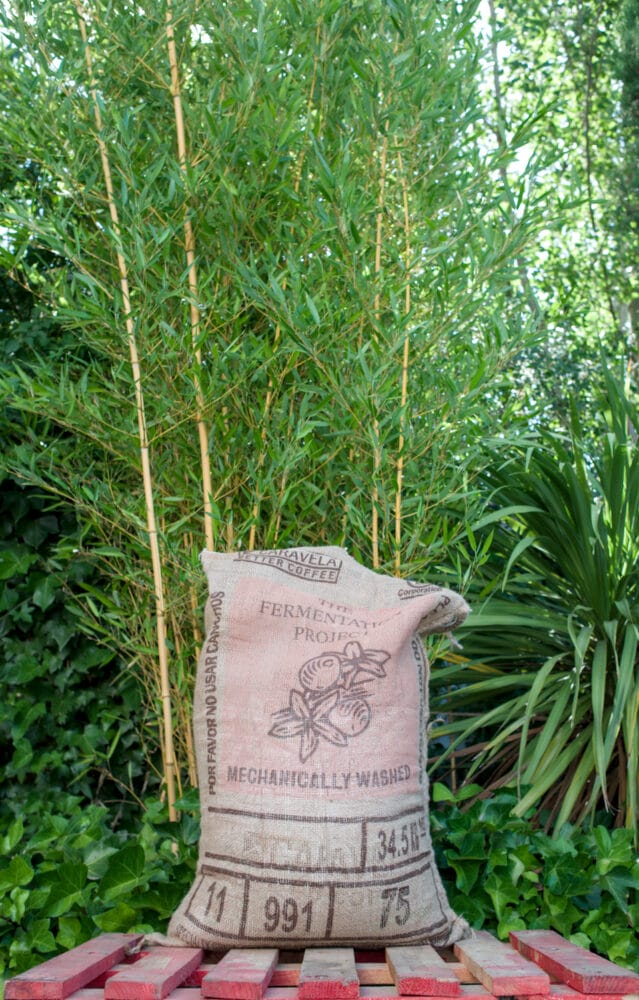
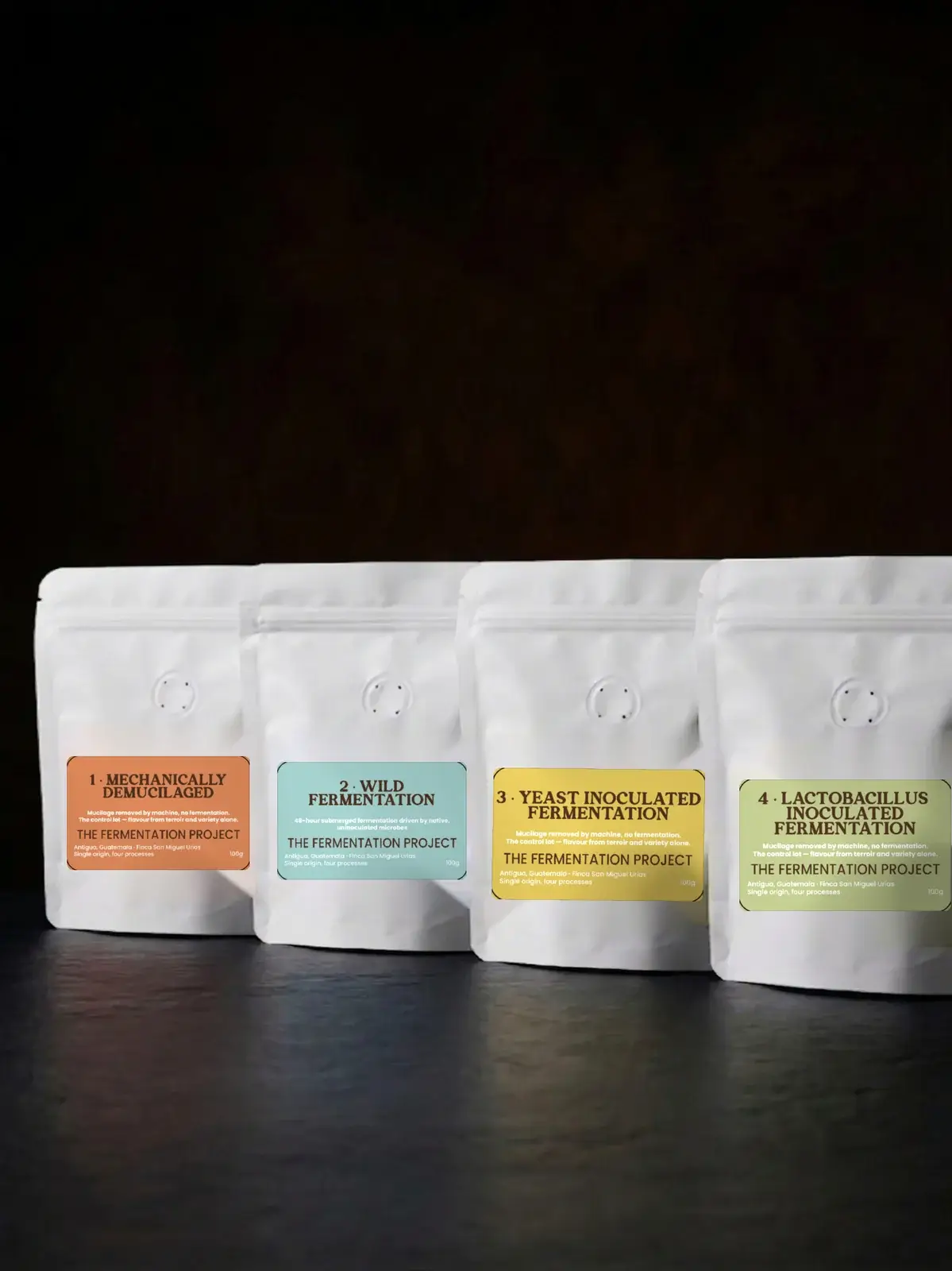
The Fermentation Project by James Hoffmann is a simultaneous global cupping. San Agustín takes part with the full kit: four coffees from the same lot in Antigua, Guatemala, processed with four different fermentations. One origin, four protocols.
It is an educational initiative led by James Hoffmann together with fermentation specialist Lucia Solis and importer Caravela. Against the current trend of co-fermentations and extreme infusions, this project proposes a different conversation: the role of controlled fermentation beyond producing intense flavours.
The Fermentation Project coffee
Finca San Miguel Urías, owned by Hector and Lilian Leal, operated under Rueda Farms. It sits in the Antigua Valley —genuine Antigua—, between Ciudad Vieja and San Miguel Dueñas. The variety is approximately 85% Caturra, 15% H1 and some Bourbon.
All four lots were processed by Lucia Solis directly, working with the farm team so that each batch was depulped, fermented, washed and dried to specification. These are not four coffees that turned out different: they are four protocols deliberately executed on the same raw material.
What changes and what doesn't
All four coffees are washed. There is no natural here. In the washed process, fermentation is first and foremost a functional step: it serves to remove the mucilage —that sweet, sticky layer surrounding the seed— and facilitate drying. But it is also a decisive moment for flavour development.
That is exactly what this set isolates. The experiment runs through a gradient of control: from no microorganism, to whichever happen to be in the environment, to the deliberate choice of a yeast or a bacterium.
The four processes
- Mechanically Demucilaged The mucilage is removed mechanically, by friction, without fermentation. It is the control lot: nothing has fermented. Its profile comes solely from terroir and variety, and serves as a baseline to measure what the other three contribute.
- Wild Fermentation 48-hour submerged fermentation with the native microbiota, without inoculation. It is the traditional washed process as it has always been done: the microorganisms already present in the fruit and the farm environment do the fermenting.
- Yeast Inoculated (Saccharomyces) — 48-hour submerged fermentation directed by a yeast strain Saccharomyces selected, looking for a defined and reproducible profile.
- Lactobacillus Inoculated 48-hour submerged fermentation driven by inoculated lactic acid bacteria, with a lactic acidity character.
Why we don't publish cupping notes
You won't find them on this page. It is a rule of the project and it aligns with our way of working: the point of cupping four coffees in parallel is for you to reach your own conclusions, without anyone suggesting beforehand what you should find.
Live global cupping
Don't know what this is about? James explains. here in five minutes.
The Fermentation Project world tasting will be Saturday, October 3, 2026 at 4:00 PM (Spanish peninsular time), live on James Hoffmann's YouTube channel. The video remains available on demand after the broadcast, so you can enjoy it at your own pace even if you can't watch it live.
The kit includes four coffees, 100g of each. They are designed to be tasted together: individually they are interesting coffees, together they are an experiment.