Posted on - Leave a comment

And now seriously… do we ever get to evaluate the taste of coffee?

Do we ever evaluate the taste of coffee?
Processed with VSCO with f1 preset

When I entered the coffee world—and I wouldn't say the specialty coffee world, because it was, as I see it now, low-quality coffee—when I entered, I knew nothing about varieties, origins, and processing.

And I was exploring. So I could easily try Sumatran coffee, or Indian Monsoon Malabar, or Jamaican Blue Mountain, or pay crazy money for the expensive geisha cafe, which didn't have any roasting dates. And a classic: going to Starbucks to check out their single origins.

And there was always a conflict. Because I couldn't taste the flavors written there in the tasting notes on the coffee bags.

But until recently, I pretended I could. (And I'm far from the only one who did!)

I now know that, as it was a low-quality coffee, and the roast was quite dark, it would not have been possible to taste the jasmine flowers in that old, rickety Geisha, nor the strawberries in the Monsoon Malabar.

But the labels said so. And I was insisting that I felt it. Probably, if I were more confident and honest with myself, I would have used the words "stale," "old," "paper." But no. I didn't have enough vocabulary, and I hadn't learned at that point to trust my receptors.

Only after a while did I get into the routine of tasting, begin to eat more consciously, expand my palate, and, over time, be able to taste more and more things. But it's a training process. And I'm not a "supertaster" of any kind. It's just a training process of learning how to put what you're feeling into words, and do it quickly and accurately.

And when I started getting into that tasting routine, it really made me realize how lazy my brain was. Every tasting became a battle against my brain's tremendous laziness, and it continues to be so to this day. Every time.

I realized that if I knew the roaster, or the origin, and I liked the previous experience, I tended to give higher scores. So I discovered almost immediately that it's mandatory to taste blind if you don't want your expectations to interfere.

I realized that if I like the flavor of coffee, I tend to also evaluate acidity and body more highly, and not analyze them carefully. I started to focus more on each parameter.

I realized that the packaging, the brand image, how expensive it is, my first impression of how much the company invested, will automatically make me rate the coffee higher. It will distract me from the flavor itself, because I'll make a connection between the packaging and quality. It also works the other way around: if I'm not impressed with the brand and the packaging, I may reduce the points when I'm tasting it. My brain is creating a connection that doesn't exist in reality.

And the list goes on and on; I'll write later about the tasting itself, which can be useful, as well as useless, if that topic interests you.

Right now, my questions are about something else.

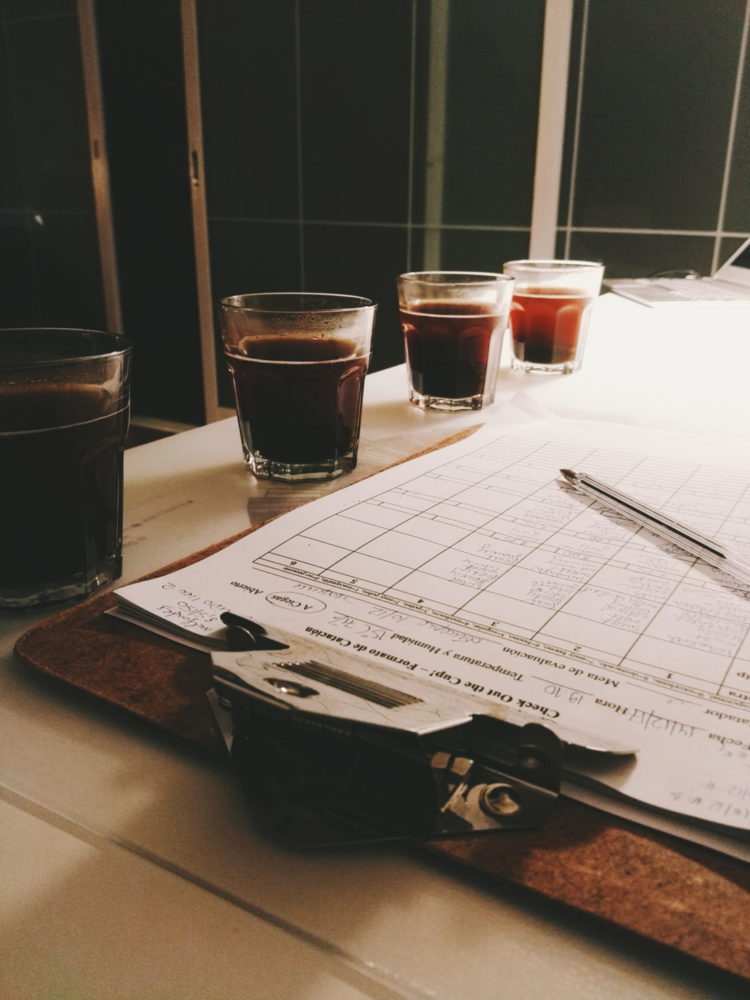
I recently tasted a coffee, "X." In two different locations, the same coffee, within a one-month period. The tasting notes on the label say, let's say, "mango." But if you cup it, blind, you'll simply feel the roast. Burnt, toasty, charred, smoky—that's what I wrote on my cupping form while I was blind-tasting it. Twice.

So I'm not even saying it doesn't taste like mango, but it does taste like pineapple or hazelnut, and the tasting notes are inexact, but more or less close.

I'm saying there's no trace of specialty coffee quality in the coffee's flavor, and the only thing you can find is the flavor of the roast itself. There's not even the possibility of adding "nut" to it, because there are no nuts.

But then I saw several people writing about that particular coffee and repeating the “mango” story.

And I repeat, there is no doubt that this coffee has notes of "mango," because there is none.

So the reality is, once again, revealing. It means that many people who write about coffee, who write about food, don't take the time to taste. They're writing about flavors, but they don't trust their own sensations; they rely on someone else's misleading descriptions.

You don't have to be a real professional in sensory evaluation.

All of us, when we start tasting, start with very poor vocabulary and end up using only 6-10 descriptors.

We can't taste the "handle" yet, but we use the words "roasted," "smoky," "chocolatey," "fruity," "almondy," "citrusy," "floral": those general descriptions are enough—yes, they are ENOUGH—to make an honest assessment, in this case, of the coffee you're drinking. Yes, you won't look as smart as if you were writing "This coffee tastes of rose petals and amaretto liqueur, with some delicate notes of clementine peel"—you won't look as good, no.

But on the other hand, it's better to keep trying and give an honest description of the coffee you're drinking. Yes, it will be short, like "chocolate," "full-bodied," "balanced," but you won't put yourself in the foolish position of writing that it tastes like mango when the coffee is totally burnt.

And the descriptors will come with time. When you learn to connect what you feel with words. It will come. It always comes. You don't need any special talent for that. All you need is to keep practicing, stay connected to your sensations, and be impartial. It takes time, but it always comes.

That's all for now.

As always, I'm just trying to say that the time invested in mastering a skill is always worth it. And tasting is an essential skill in the food industry and, therefore, in specialty coffee.

In other words, don't be afraid to say, "You know, dude, I can't feel the handle."

Because chances are you're right.
Posted on - Leave a comment

Finding its own voice as a specialty coffee shop

Finding its own voice as a specialty coffee shop

It's funny how things are interconnected, and the topics almost float in the air. You can almost believe they're out there, in the common space, and anyone can just reach out and...

I was getting to a point today, due to the complex combination of events and thoughts about them, and I'm currently reading that there will be a webinar tomorrow more or less on what I was thinking. :)

So…

On Monday, I read a comment about a coffee shop, and I thought it was incredibly funny. I mean, it almost brought me to a state of ecstasy, and I'm not even kidding. XD

It was something like, “Good food… attentive staff… nice location… and they have a La Marzocco that serves mostly medium roasts.”

I made some attempts to make a joke about it with my colleagues, but not successfully XD. 

My failed attempts made me realize that the phrase sounds funny only to me, because I'm working with coffee, while it doesn't to them. To me, it sounds something like, "They have a barbecue that serves medium-rare meat," or "They have a machine that makes yellow lemonade."

So I was in seventh heaven, thinking, "This sentence is perfect." Because it seems like it contains a lot of important details and information, but in reality, to someone who knows about coffee, it says almost nothing.

Think about it.

"They have a La Marzocco." Okay, they have an espresso machine, which is a very well-known brand. That's it. It doesn't necessarily mean the coffee is good. It doesn't mean you can have a coffee there and say, "Yes, this coffee is made in La Marzocco, I can taste it clearly!" No. But, attention, the client said it.

The next is "medium roast." This is also fantastic, because it really means "the coffee you're serving isn't very light, but it's not burnt either—it's somewhere in the middle." For today's roaster, or anyone involved in roasting, hearing "medium roast," or "French," "full city," etc., will mean almost nothing, because they're operating with different criteria, monitoring roast color on colorimeters, and operating discharge temperatures. For them, for us, there's an eternity within the term "medium roast," and one medium roast will be different from another. But, once again, it wasn't the coffee specialist who said that, it was the customer.

So what does that really mean? Am I being followed?

While as coffee specialists we are becoming more precise in roasting, brewing and sensory evaluation, most of our customers are paying attention to the brand of equipment we are using, the cups we have chosen, and whether the coffee is light, medium, or dark roasted, whether it is from Colombia or Brazil. And that is the reality.

And it's not our clients who are going to learn our language; it's us who must speak both languages well. And everyone knows it.

The topic I would like to start with, and leave it to your discretion, is the following.

As I mentioned before, I can't even count the times customers walked by and stayed just because "it's La Marzocco," because they recognized the brand of espresso machine. Simple as that.

The reality of coffee industry brands, and their popularity and recognition among both coffee specialists and enthusiasts of all levels, leads us to a situation where specialty coffee shops are becoming increasingly similar to one another. I mean, it's not just me; you've noticed it too, right?

I bought some Acme, La Marzocco (ok, Victoria Arduino, Nuova Simonelli, Opera or Spirit), EK43, Peak or Super Jolly mugs, Hario, V60, Chemex, Kalita, BUNN, OCD dispenser, Acaia scale… Did I forget anything?

But you can see where I'm going. Add the trio [macchiato/cappuccino/flat white] to the menu, add a couple of single origins, make a special house blend, add chai latte and matcha. Start serving brownies and croissants, don't forget the avocado toast, and there you have it, the recipe for creating a specialty coffee shop.


I don't know. I understand it's a business. But isn't it a bit boring in most cases? Repeating, repeating, and repeating the same structure, while simultaneously insisting on how different you are from your closest competitor? Who uses the same business model, by the way, and roasts the same natural Ethiopians from the same importer...

Of course, sometimes it's good to play it safe, but haven't we gone too far as an industry?

I wish we would focus on bringing more creativity to our coffee shops, more "personality." We would focus on finding the perfect balance of having key pieces of equipment that tell our customers we're serious about what we do—speaking their language, but having our own recognizable voice. 

I say this both as a customer who would like more options, but real options, and as someone who works within the industry and sees the enormous importance of innovation at all levels. 

I see it as something to think about.

Be well!

A hug

Posted on - Leave a comment

Hacienda La Esmeralda

Tasting at Xorxios

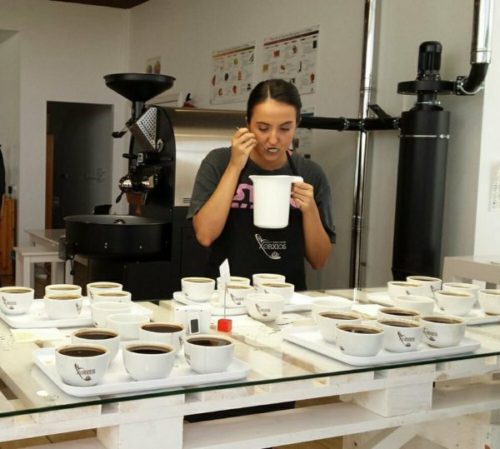
Dear friends, for this Christmas, like every year, we have purchased a lot from the Peterson family from the private collection of Hacienda La Esmeralda in Panama,  The lots in the private collection are made up of a blend of micro-lots from their Geisha-producing farms. This year I had the opportunity to try these coffees during a training course at Xorxios. There, we did several blind tastings in Brazil, and whenever a Geisha was on the table, it was unmistakable. They have a characteristic floral aroma whose intensity never diminished. Both the aroma and the fragrance were very fragrant, and the flavor was fully matched. We tried this coffee in both washed-process and natural-process tastings. We all agreed that they were the highest-scoring coffees, even surpassing very good Ethiopians. Our instructor, Rolando Cañas himself, "an internationally recognized figure in the coffee world," said that nothing more could be expected from a coffee, referring to a natural Geisha from Panama.

These are grown on the Jaramillo, Quiel and Cañas Verdes farms at high altitudes of 1,600-1,800 meters above sea level.
The coffees in the private collection showcase the classic aromas that have made people around the world fall in love with Geisha coffee: floral, fruity, high citric acidity, a bold cup, and a juicy body.
Each coffee at Hacienda La Esmeralda is picked at its peak ripeness, and this, combined with the high altitude, results in a sweet, bright, and delicious cup.

The history of Geisha Coffee dates back to 1936, when Captain Whalley of a British colony was tasked with collecting 10 pounds of coffee seeds from the area around Geisha Mountain in present-day Ethiopia. He was commissioned to collect these seeds as part of a census of Ethiopian wild coffee varieties mandated by the Kenyan Director of Agriculture. Ethiopia's wild forests are the birthplace of coffee, and this survey was conducted to assess the commercial viability of hundreds of "accessions" (small regional mutations of a core coffee variety) for planting in other British colonies. This varietal was then taken to other countries in the region, where it grew and acclimated to the soils and climates of each region. From there, it made the leap to the Americas and was established in Costa Rica, where Hacienda La Esmeralda acquired it.
In 2004, for "Best of Panama," an annual coffee cupping competition, the Petersons did something they'd never done before: during processing, they separated the production from different areas of the farm into individual lots. This was the first time the cuppers ever tasted a sample that was 100% Geisha coffee, and when they did, it was clear Hacienda La Esmeralda had something new on its hands: the explosion of juicy brightness and multiple aromas. Hacienda La Esmeralda won the 2004 "Best of Panama" competition with its Geisha coffee, and that year it set a record for the highest price paid for a coffee at auction.
Since then, Hacienda La Esmeralda has done much to improve its high-altitude Geisha coffee cultivation, including substantial experiments in Washed and Natural processing methods. Special attention has also been paid to meticulous lot separation, allowing them to develop a more nuanced understanding of the different microclimates in which Geisha thrives best.

Peterson Family
Posted on - 1 Comment

On the importance of not generalizing

On the importance of not generalizing
dav

I sat down with the idea of writing about one thing, and ended up thinking about something else :)

I've been thinking a lot about crema these past few days: does color really matter? Do lines matter? I mean, we all know something about it, from old-school standards. Or how over- or under-extracted espressos probably look. I'm curious about finding out information about those that are well extracted. I'd just like to clarify my doubts regarding flavor and... TDS Mainly, if there's any connection between them and the appearance of the cream. How does this influence the flavor? I'll probably run an experiment soon, just out of curiosity. 

But in the meantime, a brief comment on the coffee-related phrases I've heard that have raised more questions than answers, and why I don't see them as making sense, at least to me. All of these have to do with precision in sensory evaluation.

Specialty coffee has a lot to do with sensory evaluation.

And funny enough, it also has a lot to do with marketing now – all those Instagram posts, all that boasting about “my specialty coffee is more specialty than your specialty,” “our coffee is the best,” espresso machines sexy and expensive, etc…

I find it important to emphasize first that these machines are still operated by people. Skills still matter.

And so – once again – specialty coffee is really about sensory evaluation.  If there is one skill that is mandatory, it is tasting.And what is cupping? It's the ability to blindly evaluate the flavor, the sensory experience, of a beverage called coffee.  Basically, it's the ability to tune out everything else (everything you're being told), trust your judgment, and be as impartial as possible. 

So, some phrases that do indeed have to do with sensory evaluation, and made me think:

“This coffee has the acidity of an Ethiopian coffee.”   

A year ago, I had a guest, who was definitely well-versed in coffee, come over for an espresso. And after drinking it, he confidently shared his assessment with my bosses. When I heard it, I was absolutely amazed. "This coffee has the acidity of an Ethiopian coffee," (incidentally, it was Mundo Novo natural pulp from Brazil).

My internal questions, which arose almost immediately, were: and what is the acidity of Ethiopian coffee like? Are all the Ethiopian coffees do they have the same acidity?

I understand that what he probably meant was “this coffee has a high and pronounced acidity and for my taste it is too prominent, and it lacks balance” – I assume that, taking into consideration the common Portuguese taste, which is still present.

But you understand me, right? Anyone who has tasted Ethiopians You can understand what I mean. One can say that Ethiopians sometimes don't have that much body, as they're more on the floral side, like lime and bergamot, sometimes spices, depending on the region and the process – but regarding acidity, even if you try really hard, you can't make it seem the same. Or am I missing something?

I don't know. The acidity of Ethiopian coffee doesn't mean anything to me, except for the fact that it's a more complicated way of saying "high acidity." Let's be more precise in our sensory evaluation. If you intend to evaluate, evaluate intensity, evaluate quality.

And the other one I've heard, which I've heard like twice in the last few weeks, and I couldn't agree then, and I've understood that I still can't:

“It tastes like coffee from Brazil

Brazil is huge. It has different types of coffee. Specialty and commercial. Usually naturally processed, or naturally pulped, but not always. There's been a lot of experimentation in recent years and many surprises. What do you mean by Brazilian coffee?

Good body? Low yield? Low acidity? Generic coffee flavor?

I understand that this is again a generalization in sensory experience, but my whole being calls for more precision.

“Coffee from Brazil” probably means catuaí, or mundo novo varieties, or acaia, widely grown there. It probably means natural pulped process. It probably means medium acidity.

Let's just be more precise, in our judgment, in our descriptions.

This is all we have left to do: agree on our vocabulary, try to be as precise as possible in our descriptions, train our palate, try to avoid generalizations, and constantly expose ourselves to different sensory experiences to expand our sensory memory.  

Because if it weren't for the flavor, we'd only be left with the image of specialty coffee as something hipster and trendy, but lacking something important at its core.

Posted on - 1 Comment

Alternative milk: testing and choosing

Alternative milk: testing and choosing
dav

It's hard to surprise us with orders like "soy latte" these days, right?

We are now more than capable of all these vegan versions of cappuccinos and lattes Traditional, and if you ask me, it's for the best. It's always good to broaden your horizons, learn something new, and offer tasty alternatives.

For many different reasons, people today are switching from "cow juice" to lactose-free, plant-based alternatives. We won't discuss the reasons, as they can be diverse, from the ideological to the simply physiological, but they all lead to the same result: people are seeking out non-dairy milks and are looking to drink them with coffee. And what could we offer?

I'm going to list here the milk alternatives I would choose.

But first I need to shock something.

Coffee and milk are a marriage made in heaven. No non-dairy milk, no matter how healthy and good, will taste as balanced with coffee as whole milk. And I mean whole milk, not semi-skimmed, reduced-fat, lactose-free, or low-fat. Good whole milk, 3.2% – 5%.

I come from a culture where this type of milk IS NORMAL, and now I live in a culture where 3% is TOO MUCH.

But one thing is certain, no matter where you live and what is considered normal there – the best tasting cappuccino will be the cappuccino made with whole milk with a fat content of 3.2 and higher.

All other options are a compromise. An attempt. Sometimes successful, sometimes not.

And one more detail. This is mainly for food bloggers. A couple of weeks ago, I had a blogger at the cafe, and she was quite disappointed with the latte art on the almond milk cappuccino. It was a heartfelt attempt.

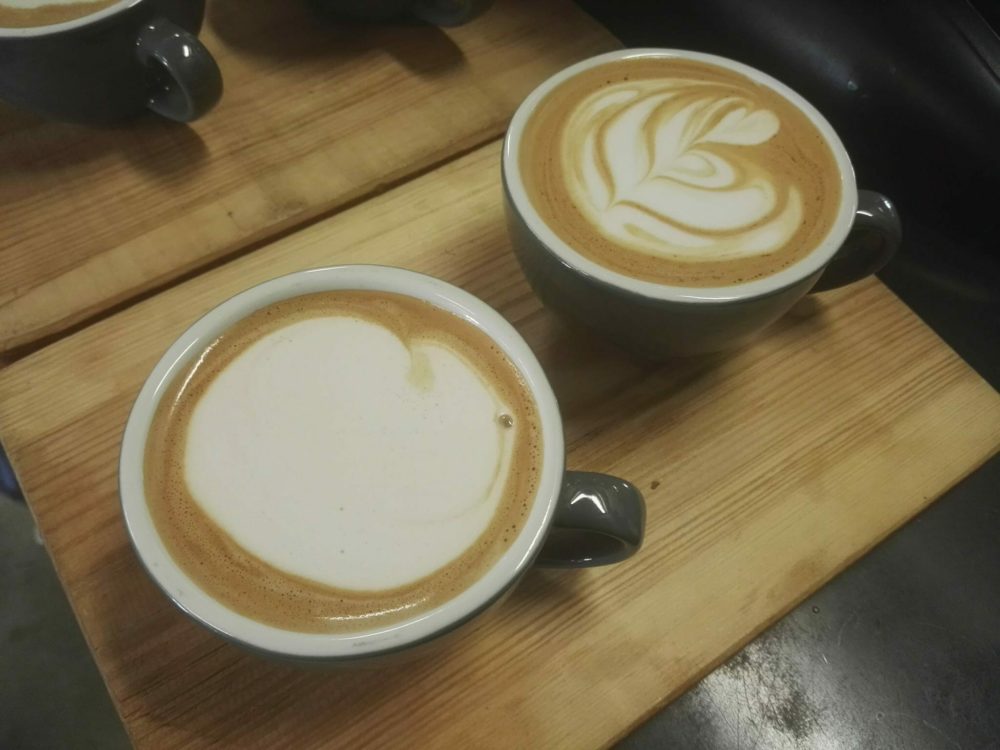
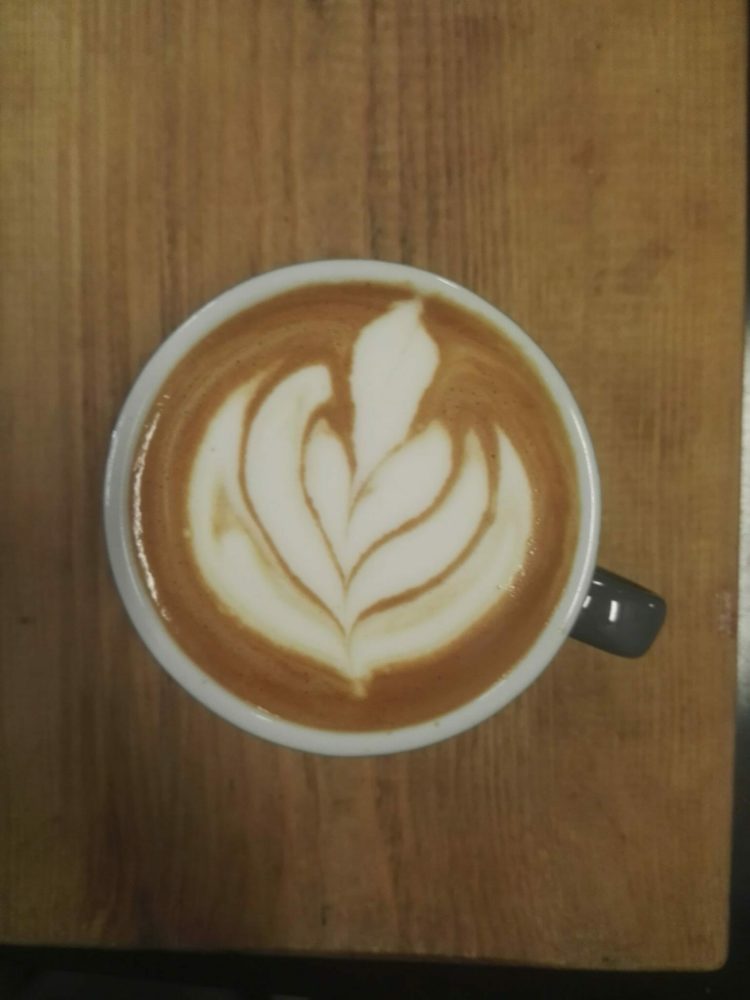
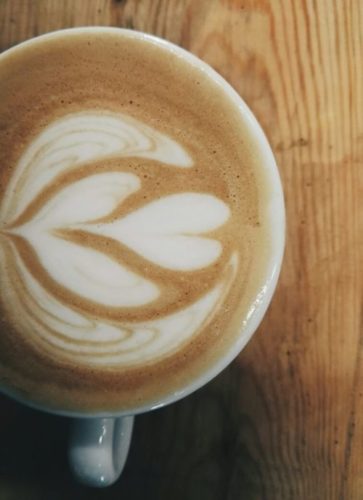
So… due to the different protein/fat content of plant-based milks, latte art with plant-based milk will never have the same quality as with regular milk. It's simply impossible. The prerequisite for good latte art is good whole milk. It textures perfectly, the foam is stable, and has the perfect texture that allows the barista to create those designs. So, if you opt for non-dairy milks, be prepared to miss out on those perfect Instagram photos. It's truly a compromise, whether it's beautiful latte art or plant-based milk.

An experienced barista can make something decent with soy milk, or they can try it with almond milk, but compared to what they can do with whole milk, these designs will pale. This is due to the physical characteristics and chemical content of non-dairy milks.

It's really a decision you have to make when you're looking for the perfect Instagram shots. Just don't order plant-based milks if your goal is to post latte art.

Let's move on to the non-dairy alternatives I prefer and I talked a little about them.

1. Soy milk

Alternative milk: testing and choosing
dav

Yes. Obvious but true, so I can't help it. Soy milk is a challenge to texture when you're a beginner, but once you start to understand the game, you start to get the feel for it, and it becomes much easier. I'd go so far as to say that soy milk is the easiest plant-based milk to texture (or, in other words, things get harder after that XD). Soy milk requires lower temperatures, so you should stop a little earlier than usual, I'd say when it reaches 55 C.

The flavor of the combination of soy milk and coffee is quite pleasant, especially when the milk isn't overheated. It's close to regular milk, sometimes with a slightly powdery aftertaste, and the foam is quite sweet. Soy milk tends to accentuate the bitter components of coffee, in my opinion, even when it's a light roast.

2. Almond milk

Alternative milk: testing and choosing
dav

The second most sought-after plant-based alternative, and therefore the most popular, in my opinion, almond milk tastes good with coffee when cold. If it's being textured, the flavor changes, and the combination with coffee starts to become, well... unusual. Almond milk accentuates the acidic components of coffee, which makes it a difficult milk to use with specialty coffee. Coffee itself is acidic, and when you mix it with potentially acidic almond milk, the result can be disappointing.

Almond milk is also more difficult to texture than soy milk; the texture of the milk after heating appears to be frothier, with slightly larger bubbles. It's harder to achieve a glossy texture.

You should aim for even lower temperatures than with soy milk. Latte art is tricky. It looks like the milk is floating, breaking up the cream, and, like soy milk, the designs become blurry. Almond milk separates quickly after foaming, so you need to pay more attention to incorporating it well before pouring.

3. Hazelnut milk

dav

Simply a pleasure in itself, hazelnut milk was supposed to work well
with coffee, but… The flavor of this milk is so strong that it basically makes the coffee taste disappear. Challenging to texture, but easier than almond milk, the bubbles are small and soft. The foam is less stable and tends to disappear after 7-10 minutes.

4. Coconut milk

dav

Coconut has fat, you think. So isn't that what's needed to make the foam stable? Hell yeah! But wait... Try texturizing coconut milk and you'll understand the problem. First of all, it's quite liquid. Not as liquid as rice milk, but still. The visuals are great; you can achieve a glassy, micro-foamy surface. But the taste... all the sweetness of coconut milk when heated turns into the rancid taste of the oil. Nasty surprise.
And, also important, coconut milk is often made from other milks, mainly rice milk.

5. Rice milk

dav

The plant-based milk with the thinnest texture among those featured in this review. Literally watery, it looks and behaves like water, and you even begin to fear that you won't be able to texture it. Fortunately, you can do it quite decently, and it even allows for a bit of latte art. Everything looks promising... except the taste. What at first seems like water—yes, you're right—ends up tasting like water too.

What I've noticed with all plant-based milks when frothing is to keep them as cold as possible and to create all the foam in the initial stage as quickly as possible. You don't have as much time as with regular milk, so all the foaming should be done at the beginning. In the first 3 seconds.

PS Plant milk doesn't work well with the coffee It is oat milk.

Posted on - Leave a comment

Single-basket portafilters. Is it goodbye?

Single-basket portafilters. Is it goodbye?

I mean, I gave up. I really tried, I swear. Honestly, I feel like I'm the last barista on Earth who finally started using only double portafilters, while all the other guys already did a long time ago.

This is why I admit that I knew the single-basket portafilter had been excluded from specialty coffee because the shape of its basket leads to inconsistent extraction and makes it really difficult to pull good espressos consistently.

I was aware of the issues, but we were still using them, not to make a drastic change, but rather a step-by-step change. So when we finally said goodbye to the simple basket, I wanted to make sure everyone understood why.

We all work with single-serve portafilters, and we never thought it would be a problem. It's something that theoretically makes sense. One espresso = less coffee = single basket, two espressos = double. It seems perfectly logical, and it shouldn't cause any problems at all; on the contrary, it should help us manage our workflow. That was the original idea, I suppose. And it just didn't survive the specialty coffee wave.

Nowadays, the idea of using 7 grams for a single shot and 14 for a double, like the idea that an espresso is necessarily a 30 ml beverage extracted in 30 seconds, is a thing of the past. Some of us still remember these times (in fact, I entered the coffee world at the time when David Schomer's book was a barista bible, and I'm sure I'm not the only one here); the lucky ones have only heard of them. Never mind. Things have changed dramatically in the last five years, and they're going to change even faster in the future (in the direction of greater automation, as we all understand).

Back to the simple baskets. I'll tell you what I experienced and how I decided to stop using them. I know that many baristas who came along after the "30ml days" simply didn't use them, because they were considered defective in the first place. I wasn't one of those. And there are still many people who continue to use them.

To put it simply, with all the tools in use, it became extremely difficult for me to come to work every day and strive to ensure that our single and double shots had the same ratio, the same TDS, the same flavor, and all of that consistently. One espresso after another, all day long.

As I was saying before, consistency is key. Regarding the food, regarding the service, regarding the coffee.

And now imagine that battle. Not only do you want your double portafilter espresso to be the same, every shot—you want your portafilter with the single basket to produce the same espresso. Same weight, same flavor, same TDS. With the different geometry of the baskets. With the coffee trapped in the grinder. Because even with direct grinding, without using the dosing chamber, you'll have roughly 1g of coffee there—1g that's coarser or finer than you need—when you're switching between single and double.

So, goodbye to consistency. Or not. But you grind a little coffee each time you switch between a single or double shot. Extra work, extra waste, extra time.

Many people are concerned with the question, "What should I do with the other espresso if I only have to make one?" But I started asking myself at that point: How much coffee do I waste by adjusting that portafilter with the single basket, and then constantly switching between single and double portafilters throughout the day? Could it be more than two or three wasted espressos? What is the cost of one espresso to you?

Is it probably not as big a problem as we'd like to see it? Perhaps we end up losing more by insisting on using them than by actually switching?

When I said earlier that the simple baskets didn't survive the specialty coffee era, I was partly joking, partly not. Because it's only now, when we're starting to think, first, about numbers in coffee, and second, about specialty coffee as it is (look here the definition of specialty coffee that I adhere to) we discovered that they are actually lacking. Before, everyone was very happy with them.

And now, when we have more consistent grinds, when we roast more lightly and know how to cup better, and not only that, when we finally throw away the 50 ml measuring jug and buy the scale and refractometer, we discover that the portafilter with the simple basket has been letting us down all along. We only discover it now.

Is this a time for change? And… Is this goodbye?

Posted on - Leave a comment

"Extract everything": proportions in espresso

"Extract everything": proportions in espresso
.

The ideal coffee/water ratio for espresso is a never-ending story and always raises many questions.

I had my doubts about whether I'm the best person to write about this, basically because I stick to two rules in all my coffee activities.

The first rule is "Measure everything." Literally. And the second is "Experiment, even if what you're trying to do looks weird." Actually, those are the two reasons why I shake the V60. Yeah, no shame :)

Or maybe this actually makes me a good person for trying to think about proportions… Who knows. But I'll try.

I confess that for a second I thought about being a “know-it-all” and writing a lot of letters, showing you a lot of super complicated graphs, and making a very long and, of course, very informative article (or even a series of articles!) with a lot of definitions and numbers, and with the brewing chart, of course – but I prefer to be honest with you and instead of all that, share with you a little secret that is not a secret at all :)

Everything (and I mean EVERYTHING) written after June 2015 that discusses espresso extraction and recipes for beginners and mid-level baristas is, or will be, inspired by these posts by Matt Perger on the Barista Hustle (Dose, Strength, Yield, Time, Altogether).

The information has been out there for two years, and it's the kind of information that opens your eyes, organizes everything you want to know about how to "build" an espresso from scratch, and leaves you with a clear head and a huge desire to go out and pull those espressos "like a boss." I tend to give the last video, about putting it all together, to new baristas, when they're ready to enter the world of ratios. 

I'd like to talk about espresso ratios here, about my preferences, but since I'm using some tactics I learned from Barista Hustle in adjusting my espresso – first, I'll put it briefly here, so we're on the same page.

The important detail here is that this system works even if you don't have a refractometer. Yes, it's better to have one, yes, numbers are much more reliable than your taste buds—but what can I say? It's time to train our taste buds. 

In my opinion, it's necessary to be able to taste an espresso, and to say what's wrong with it, and how to solve the problem. A kind of understanding of the reasons, what I call "sensory imagination."How could it be better, and what can I do to make it better?Does espresso need more body? Do I want more clarity? More complexity?

Start in this order: first set the dose (dry coffee), then the desired amount of espresso in the cup, and as the last step – the shot time.

Choose and lock the coffee dose in the portafilter, according to the amount of coffee you intend to make and the size of the baskets you are using in your portafilters.

Use weight (not volume!) to measure espresso.

You decide which style of espresso you prefer—or, in other words, what you're more willing to compromise on: extraction or strength—and then choose the performance you want.

And that's it. Hurray! (Then, of course, you apply every possible and impossible adjustment to improve the uniformity of your extraction.)

So… Why am I the wrong person to talk about ratios? … Because it’s all good to me :) Do you like your espresso short, intense, and full-bodied, something around 11-12% Tds? It’s all good to me. Do you like a sweet, delicate espresso, and don’t mind losing some texture while gaining complexity? Is 8-9% your go-to? Sounds great!

As long as you know what you're doing, and why, and who your customer is, what they want, and whether they're getting what they want – you're going to be in complete control, staying on top of your espresso game.

And whether it’s 8% or 12%, or even 7% is your choice – the truth is that we are in the world of flavor, and your short extracted coffee can have an interesting flavor, and also as a lungo it can gain some complexity and be different: study your customer and study their coffee and then choose what is best for you. 

There's no right or wrong; there's only your informed choices and your performance. Right and wrong can lie in the barista's technique or approach. But what can be wrong with a barista's technique?

What I'm not a fan of at all is overdosing to under-extract espresso, to mask flaws in the roasting technique or the barista's work, and eventually all those triple ristrettos. When you learn, from your own experience or someone else's, how much work goes into harvesting, processing, transporting, and roasting the coffee, it's almost physically painful to use 21 grams in the basket to extract 21.

Oh really. 

That's why I'm on the side of extracting maximum flavor from the minimum dry dose. And that idea of manipulating espresso flow that we learned before—that to extract less you should grind coarser or put more coffee in the basket—needs to change. We should stop using the dose to manipulate the flow, because we end up wasting more coffee, and actually understanding less about it. So, if you want to extract less, you have to grind coarser.

Regarding proportions, the line of thinking I am suggesting is this:

First, consider the style of espresso your customers are looking for. What is the espresso For them? What are they used to? A short, bitter substance drunk like medicine? Or do they allow for a little more flavor?

Then explore how your coffee works with that ratio.It has a good flavor extracted shortIs it interesting and sweet enough to be extracted for a little longer?

Consider the number of milk-based drinks you're making, and if it's a significant number, calculate the milk-to-espresso ratio you're using. If your drinks are long, it makes much more sense to also use long espressos. Otherwise, the coffee will suffocate in all that milk. If you primarily serve short espressos and cappuccinos, you can use a short espresso as a base to maintain the balance between milk and coffee.

As I told you at the beginning, for me working with coffee is a beautiful combination of being free from experiment and measure everything at the same time. And it applies to espresso ratios in the same way.

Yes, you must know the rules, measure the extraction, the TDSUsing the flat tamper, the right baskets, consistent tamping—basically, finding every way to constantly improve your technique with the goal of improving consistency and extraction. But what comes next is also your job, as a barista: figuring out how your coffee tastes best, and how to deliver that espresso repeatedly.

The truth is, there are no rules that tell you "always do it this way." And if someone tells you the ratio should always be 2.2 or 1.5, don't believe them. There are too many factors at play (roast level, days after roasting, variety and processing, the style of espresso you'd like to achieve, cultural factors in the country where you're drinking it, etc.) to be able to create such a strict rule and insist on it.

So, I think there's no point in searching for it. Instead, take a deep breath and immerse yourself in the search for espresso. Be free to experiment. And measure everything! :)

Posted on - Leave a comment

Making espresso (well) is a simple task.

Make coffee espresso (well) is a simple task.

There are very few requirements to meet. We just need a good, clean mill. A machine espresso Reasonably thermally stable. The right water. Of course, a coffee that meets our expectations, and finally, proper technique when performing our dance.

So far, it doesn't matter much whether we are professionals or if we are going to make coffee at home. However, it is much easier than our grinder and our coffee machine. espresso are of higher quality if we are professionals, just as it seems easier for the cleanliness and quality of water to shine more brightly in the domestic sphere.

When it comes to coffee, there are no shortcuts. Some of us will prefer blends, others prefer single origins, micro lots, single varietals… Some prefer America and others Africa. Bourbon, Caturra, Pachamama, SL-28… These are just preferences, and they're easy to solve: buy the coffee you want to drink. If all this sounds like gibberish to you, it's even simpler: just buy good coffee. That is, coffee that includes information on its packaging about its origin (country and region, at least), varietal (what type of coffee plant it's from), and the quality (what kind of coffee it's made from). Coffea arabica (it's about) and roasting date. This isn't the absolute truth. There are good coffees that don't include this information on their packaging, and, conversely, there are coffees that do include this information and aren't really special. But this way you usually can't go wrong. The one I'm using this week is this crazy one: Honduras Los Ceibos

Making espresso (well) is a simple task.

We have a machine, a mill, water (mineral or filtered), and coffee. What else do I need to know?—you might be wondering.

There are two things.

There are only two things that distinguish the elaboration of specialty coffee in a professional setting and at home. And they are rarely talked about.

The first difference is obvious: volume. In a coffee shop, one hundred, two hundred, or five hundred coffees are prepared every day. Obviously, the training required to consistently perform the task of preparing a espresso (or a cappuccino, or a latte…) in a professional setting, something that can be acquired in a couple of days can take months at home. Especially without the help of a professional.

The second one isn't going to appeal to everyone, especially professionals. But there's no doubt that the coffee industry in general, and the specialty sector specifically, has instilled in us the idea of perfection, of recognizable flavors prescribed in tasting notes, of recipes that must be followed. And the reality is different.

In addition to machinery, water, coffee, and technology, you need patience. A lot of it.

Learning to make delicious coffee is like learning to play the violin. It takes patience, because frustration will accompany us throughout the process. And, just as our ears become more educated as we learn to tune when playing music, we must develop our palate to recognize flaws in our beverages. And be wary of those baristas who are always satisfied with every drink they prepare, because the truth is that excellent results happen only once in a while. The goal should always be to be able to obtain consistent and repeatable results (and yes, scales and stopwatches are essential; and no, you don't need a refractometer), and to improve the quality of the beverage from that perspective.

The barista's job should be to prepare the best possible beverage with the materials available. Before blaming the roast, think about your water, the cleanliness of your machine, your concentration and attention to detail, your mood... You won't learn anything from blaming your equipment or your coffee supplier. Just as you won't learn anything from saying the grinder is dirty or the water isn't good enough.

Take notes. Repeat the same recipe a thousand times. Try to change only one thing at a time, and always change the easiest. Seek to improve little by little and with specific goals. Try not to overwhelm your palates. And take notes. Ask without fear at your local coffee shop, and ask with numbers. Try to identify the numbers with your palate. It's more important to recognize a gram more (or less) of water in an espresso than to identify "clear notes of raspberry and berries." And, above all, don't forget how much you love coffee, and enjoy the cups you make, even if they're not perfect.

And don't trust anyone who tells you that making coffee is a simple task.

Posted on - 1 Comment

"One, Two, Three, Fight!" or thoughts on the barista competition

Thoughts on the barista competition

I'm in danger of making this post seem a bit biased—and that's why I'm going to be very careful writing it. But I want to write it because this is the topic that truly excites me. It feels "alive," controversial, and that alone makes it worthwhile to try.

Before I begin writing, I have to confess that I have no experience as a competitor. Partly due to my personality; partly, and mostly, because I've been moving from one country to another in recent years. However, I do have experience on the other side of the scene—as a trainer for competitors and as a sensory judge, which makes me familiar with the protocol.

So, as you've probably already guessed, I'd like to delve into the world of barista competitions today, and think out loud, here with you, about what drives people to compete, what motivates them, what it gives back to the industry, and also mention a few facts that I find interesting.

People who compete have one big thing in common. And it's not about them being objectively the best in the industry. They all have the desire to win, to try, to find out who's the best—to compete, in other words. What I mean is, not all qualified professionals compete. The sample isn't representative, if you understand what I'm talking about. 

Basically, we find out who's the best among those who consider themselves the best in some way, and are willing to say it out loud. Those guys who aren't quite sure, those guys who don't have enough of a "competitor vibe," who don't want to put themselves on the map and shout about themselves out loud—they might be better baristas, more creative, more professional than some competitors, but they're not competing, so...

And here comes the most curious thing for me about the "barista department." I don't know about you, but most of the baristas I know, those I've worked with, those I've trained, those I've spoken to—are women. Most of the baristas you'll see in coffee shops are women. 

And now let's see one thing, the list of competitors for the 2019 World Barista Championship7. There are currently 50 registered competitors, and only 7 of them are women. 7 of 50. 14%. 2016: 61 competitors, 12 of them women. 19,67%. Women simply don't compete. Why? Is there something at the core of competition that makes it more attractive to men, and not women?

There's a study that says women are more focused on other values, like connection and communication, and competition just doesn't fit with that because it's disconnecting. I know many more male baristas who dream of competing, putting themselves on the scene, when sometimes objectively they're not as skilled as some of the female baristas. But they just don't hesitate, or the idea of competing excites them much more. I don't know. But I wish we could have more women entering the competition.

Competing, and especially winning the competition, is the best way to become known in the coffee scene – and eventually attract sponsors and offers. Goals of fame and money are the primary motivators for entering the competition. Which is fair enough; after all, we all have to pay the bills. What's disturbing to me is that when it becomes the sole motivator – aspirations are high, humility is zero, and it leads to cases like opening a barista school, talking about espresso, train people, charge money, and never, ever measure TDS in your life. That's a very real case, which is terrifying, but that's a different story.

I was thinking about that, and I guess that fame motivator is more active now in countries where the barista scene is developing. It's like the first step, the desire to be the best among the others, which is still close to the desire to be the big fish in the small pond. The bar isn't that high yet, and it's easier to get in and take some high places with a fairly simple presentation.

As the barista scene begins to develop, we see more and more people entering competitions with the goal of personal improvement. These include roasters, baristas, coffee shop owners, and managers. They use this opportunity to showcase themselves, yes, but at the same time, their place at the end isn't as important as the judges' feedback, and more importantly, everything they learned during the brewing process, which is a journey in itself to begin with. Competition opens the door to growth.

At the next level, competing is becoming a way to get the message across, the idea behind it, bringing something new to the industry, showing the results of experiments at each stage of coffee production, which could be coffee processing, variety (Sudan Rume and Sasa Sestic), new equipment (e.g. Canadian Ben Put using vacuum sealer), cafe operations (like using pre-ground coffee, like Charles Babinski from the US) or some crazy techniques (using frozen beans, like Kyle Ramage representing the US did this year).

This is the most exciting level, as it brings so much innovation to the industry and allows these ideas to reach more people, provoke more thought, give birth to new ideas, etc. For me, this is the most fruitful, the most interesting level and reason to compete—to add something new, to bring new ideas to the discussion. There are not many countries with this level of baristas; they are industry pioneers, such as the United States, Australia, Germany, Taiwan, and Japan, where there are a large number of competitors and regional championships.

The competition It's a challenge for the barista, a challenge to their skills, their creativity, their speed, their personality, despite everything. It's a challenge to put something bigger into their presentation than just a naked desire to win. Be inspired, driven, and walk away, no matter what position you took, with more ideas and knowledge than you had before you entered.

Posted on - 1 Comment

"Tell me if you freeze it..." – or on the cool side of coffee

Tell me if you freeze it

Hello, hello! Good afternoon, everyone.

First of all, I have to introduce myself, because I am a new face here, in this space of San Agustín CafesMy name is Liza. I've been in the specialty coffee world since 2012 as a barista, and since 2015 as a coffee roaster. Among many other things, I'm fortunate to have worked roasting for a specialty coffee chain in my home country.

I now live and work in Lisbon, Portugal, and have been blogging about coffee for some time now. "Coffee Without Lies"Here I'd like to share with you—if you find it interesting, of course—my random thoughts about specialty coffee, the industry, and simply the delicious (or not so delicious) espressos I'm lucky enough to try.

If you ask me to point out a trend in the coffee world that has made the most noise in recent years, sparked the most discussions, motivated people to experiment, and in the end, in almost all cases, has easily integrated into the daily routine of coffee professionals and enthusiasts – I'm going to say "freezing."

I use the word "trend" because it's something relatively recent – but I clearly remember an episode in my life that happened about 3 years ago.

My boss and I were on a trip to a farm and were visiting one of the coffee professionals I admire and highly respect—roaster, farm owner, trainer, judge (and many other things)—and she invited us to have coffee at her cafe.

We chose the beans (it was Pacamara Natural, but correct me if I'm wrong) – and then in front of us, the barista opened the freezer, took out the beans, measured the necessary amount… We couldn't believe our eyes. We've heard many times before how bad it is. Never do it, it's an absolute no-no – and here she is, using the frozen beans for the AeroPress we ordered. We asked her if she finds freezing a good way to store beans. She said, "Absolutely yes, I do for a long time."

We were sitting outside, looking at the mountains, enjoying the cool breeze, literally hundreds of meters from the coffee plantations. Of course, we didn't expect that AeroPress to taste good. After all, who would? We silently agreed not to say anything out loud out of respect, but... I mean, really? It seemed like a joke! Specialty coffee in the freezer?

Needless to say, the barista brought it, and it tasted good. Frozen coffee. It tasted. Good. Yes, an AeroPress made from frozen beans stored in non-airtight bags—it tasted better than acceptable.

It surprised us. We haven't adopted the practice, but let's just say it opened our minds after that.

Personally, I started freezing months after this. Not for practical reasons, really. At the time, I was living in Central America, and someone brought me Caballero Catuai from Tim Wendelboe. I had to stock up on it because I wanted to enjoy it longer. Considering that in that part of the world, I was getting coffee roasted outside the country, specifically—from Europe, specifically—from Tim Wendelboe.

So I froze it.

It was my first attempt. I bought those special bags and a hand pump, which I found, luckily for me, at the supermarket next door. I measured the doses I use for V60 at home, and froze the coffee, dosed like that, in 15-gram bags. I froze the necessary dose so as not to have to go through the extra effort of opening an entire bag, removing the coffee, and freezing it again. I read (I think it was Matt Perger) that it makes more sense to do it that way. And I put it in the freezer, hoping for the best. Honestly, because the coffee was fantastic, and I was risking everything by putting it in there to freeze.

To cut a long story short, don't use hand pumps if you want to be taken seriously in the world of coffee freezing :) Some of the bags weren't sealed properly and burst open. Of course, they absorbed all the smells from the fridge, absorbed moisture, and the coffee in the cup was unpleasant. Others survived. And I became able to do something that sounds pretty crazy: enjoy a cup of magnificent coffee from Tim Wendelboe in Central America, months and months after the roast date, while it continued to be delicious.

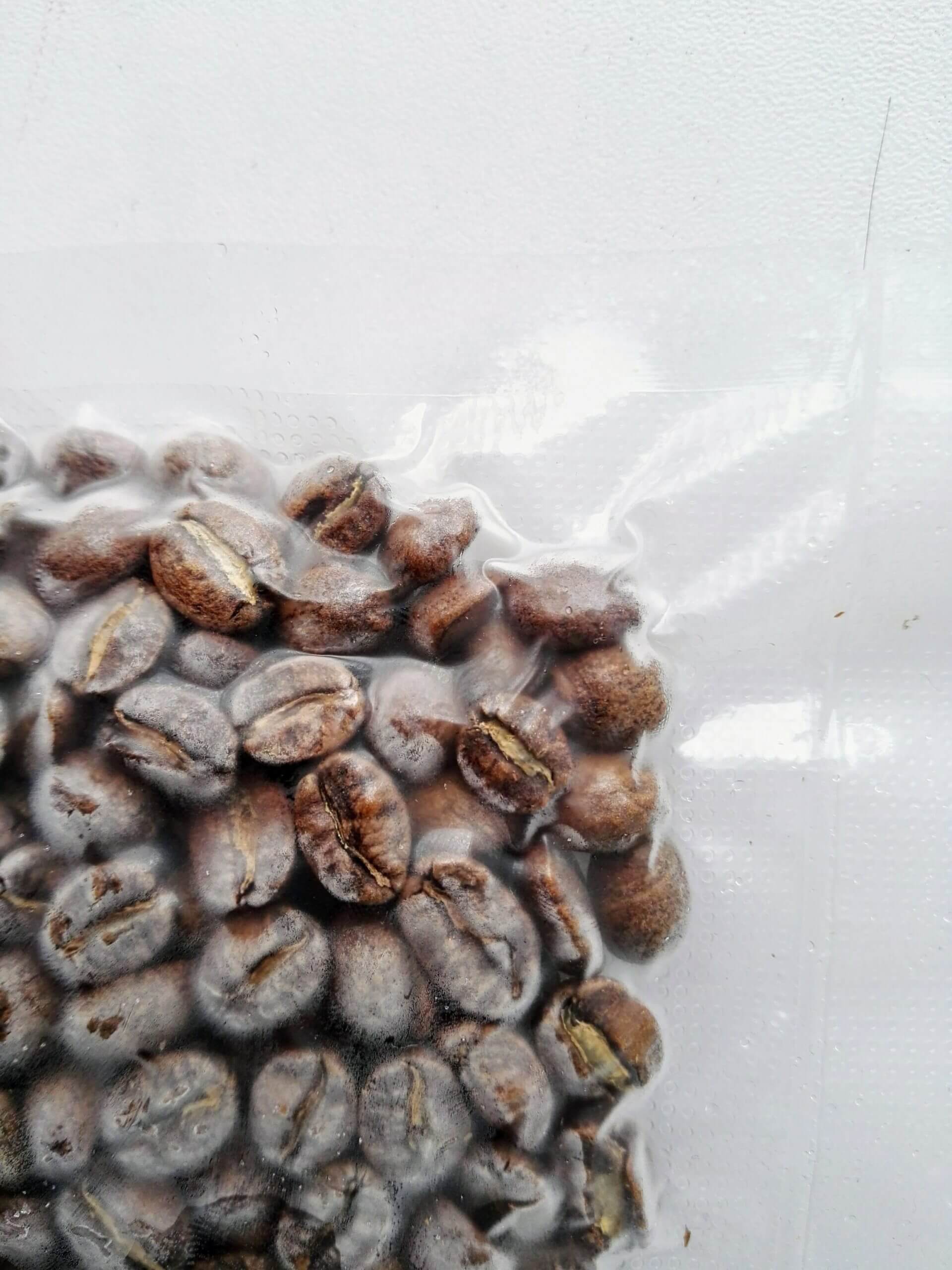
My routine now no longer includes a hand pump, but it does include freezing the vacuum-packed beans.

And here we have, in a nutshell, a simple way to significantly slow the aging of coffee beans, without worrying about changing the coffee-to-water ratio, grind size, or brewing method based on how long it's been since the roast date. Do it exactly the same way you did the first time. Months after the roast date.

To mention other benefits of freezing: better particle distribution, less coffee "dust" that leads to over-extraction, and a cleaner, shinier cup at the end. Even better than before freezing.

Necessary equipment? Vacuum sealer + special bags. Exactly the ones chefs use to package food when cooking sous-vide. They're very popular right now, and you can easily get them for less than 100 euros, and if you can keep an eye out for promotions, even less than 50 euros.

Freezing coffee in vacuum bags has become part of my routine now, whether I'm getting new coffee and don't want it to go stale too quickly, knowing I won't drink it all at once, or when I want to have a bunch of samples to taste, or when I'm roasting and want to keep comparing different batches… In all cases, you're no longer playing against time. I think it's worth spending some money on.

It remains to be seen whether it works as well with ground coffee as it does with whole beans. Probably yes, if the coffee is frozen first, then removed, ground, vacuum-sealed, and refrozen in portions... There's a whole field to experiment with, I'm just thinking out loud...