Posted on

Why are some people more sensitive to the taste of coffee?

Why are some people more sensitive to the taste of coffee?

Why can experienced coffee tasters distinguish many coffee flavors, but the vast majority of users can't describe the notes they perceive? Or why can they describe some notes, but not as accurately as coffee tasters? These questions are frequently asked in the industry. Let's analyze how the sense of taste works and how the brain analyzes flavor.

For starters, it's hard to know whether something tastes good or not, as many factors influence how we perceive things, such as smell, pharmacological effects, temperature, vision, environment, atmosphere, etc. Some people also have different tastes due to their genes, which is why some people may hate cilantro or cauliflower.

Just like wine tasting, many factors influence the flavor of coffee, such as the origin of the beans, the production method, and the type of processing. By tasting different types of coffee, you can appreciate the differences in the flavor and quality of the beans. Just as a wine connoisseur can distinguish between different regions and grape varieties, a coffee connoisseur can appreciate the differences between different origins and different production processes.

Human taste is basically divided into five categories: sour, sweet, bitter, salty, and umami (the taste of amino acids and proteins). In addition, there is spiciness, which is a kind of painful sensation and can be very different depending on the food that produces it, but it is not a taste. It produces a dryness or tightness in the mouth, which is what we feel when oral protein breaks down.

The human body has between 4,000 and 5,000 taste buds, half of which are located at the root of the tongue. There are also between 2,000 and 5,000 taste buds from the depths of the mouth to the throat.

Understanding how our brain interprets the taste of coffee.

When coffee reaches your mouth and touches your taste buds, it sends signals to your brain, which then interprets these signals to determine whether the coffee tastes sour, sweet, or bitter. However, we often say that a cup of coffee tastes like honey or flowers—how can that be if there are only five flavors? This is primarily due to your sense of smell. Although the human sense of smell isn't as keen as a dog's, it's still very sensitive. The flavors in coffee evaporate and combine with the olfactory organs at the back of your nose to create what we call "flavors." The combination of smell and taste signals is very complex, and your brain requires long-term training to distinguish all the combinations of signals in detail. This is why coffee tasters and chefs have specialized training in recognizing different flavors and smells.

If you're unable to detect the subtle flavors of coffee or can't taste some of the flavors in dishes mentioned by others, it's not necessarily because your sense of taste and smell are impaired. It's simply because your brain doesn't recognize or interpret those smells. For example, if I tell you that a cup of coffee smells like Earl Grey (a type of black tea, usually of Indian origin, flavored with bergamot essential oils), you may not know what I'm talking about. Therefore, the brain needs training to be able to recognize and distinguish different flavors and smells, which is also part of the training for coffee tasters.

The rise of the coffee flavor wheel.

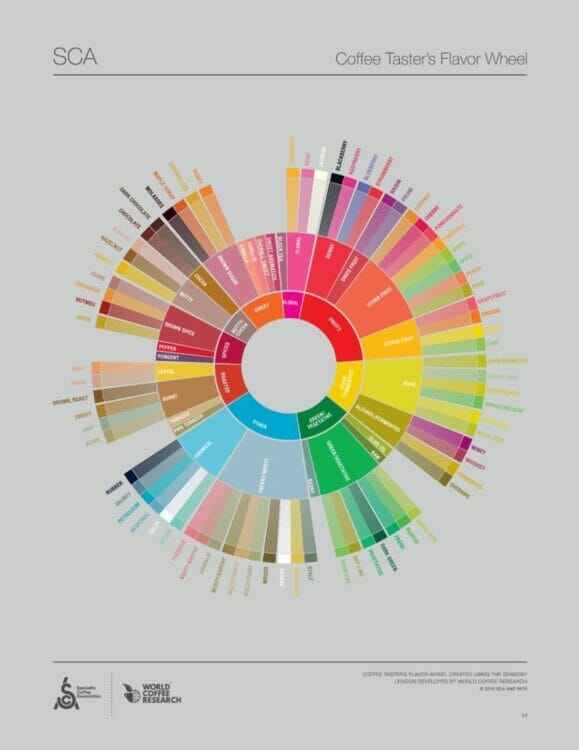
Basically, the problem that the color red we see can be different for each person also applies to the sense of taste. When we eat something with the same flavor, we may have different interpretations of how that food tastes. To solve this problem, the coffee industry has created something called a "flavor wheel" that helps everyone communicate and better understand what they are drinking or smelling. In 2016, the SCA made some changes to the original flavor wheel published in 1995. This helps everyone speak the same language when referring to the different flavors of coffee.
Why are some people more sensitive to the taste of coffee?

The coffee "flavor wheel" has been carefully designed to show which flavors are closest to each other and which are less similar. Typically, adjacent flavors on the map are more closely related to each other, while opposite flavors are less similar. If you're not sure how to describe the flavor of a cup of coffee, you can use the flavor wheel as a guide to help you find the right words. It's a useful tool to ensure we're all speaking the same language when referring to the different flavors of coffee.

How to expand your flavor vocabulary.

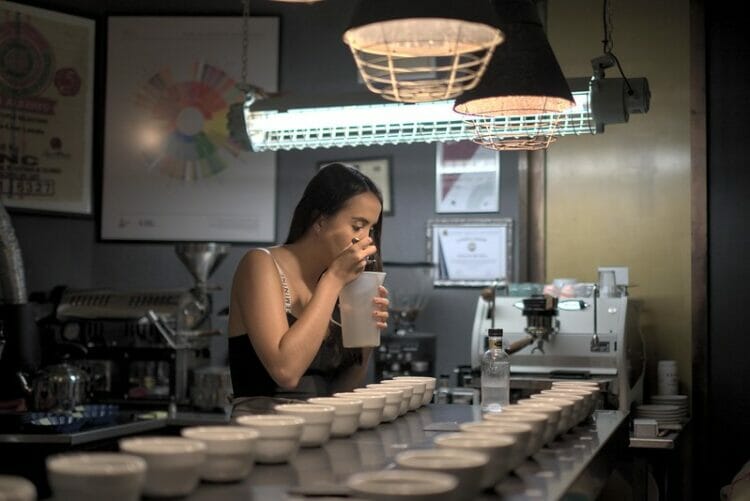
When coffee tasters evaluate the flavor of a sample, they often sip the coffee vigorously to turn the liquid into many small droplets that coat all the taste buds in the mouth. However, this can be very noisy and may be inappropriate in a coffee shop, as the shop owner or other customers may think you're a professional or trying to be annoying. Instead, it's recommended to sip the coffee slowly, allowing the liquid to flow throughout your mouth and moisten every cell.

To improve your flavor vocabulary and learn to better describe what you're drinking or eating, you can practice tasting different foods and fruits in your daily life, such as oranges, grapes, mangoes, berries, plums, peaches, lychees, red wine, nuts, caramel, and honey. It's also important to have an open mind and be willing to try unusual or unfamiliar foods that may come your way.
Why are some people more sensitive to the taste of coffee?

The Flavors of Coffee: Why Is Bitterness King?

In the book "THE CRAFT AND SCIENCE OF COFFEE," it is mentioned that bitterness is one of the main components of coffee flavor. Humans, who originally rejected bitterness and acidity, have learned to enjoy these flavors through culture and experience. Each person has a different tolerance for bitterness and can accept various levels in different foods. For example, Taiwanese are accustomed to eating fermented foods like soy sauce or fermented tofu, so they can easily accept the fermented flavor of some types of coffees with natural processes and more exotic profiles. Westerners, on the other hand, tend to place a greater emphasis on the original flavor of foods and prefer cleaner, more acidic, and brighter flavors.

In the past, most people drank Arabica coffee beans, which have a variety of fruity and acidic flavors. However, over time and under the influence of marketing, people began to associate the taste of coffee with bitterness, and coffee is expected to have a strong, bitter taste. As a result, the original Arabica coffee beans with acidic flavors are considered strange.

Subjective taste and smell in specialty coffee: Why it's important to be open to trying different flavors.

The acidic taste of specialty coffee can cause saliva to be released, which can help the taste buds perceive more flavors. When the liquid enters the mouth, it is washed away by saliva. If it is washed away more quickly, it will have a clearer taste, and if it is washed away more slowly, it will have a lingering aftertaste. Some flavors, such as sweetness and acidity, are very prominent in coffee and disappear quickly after being perceived, which can provide a refreshing sensation. Other flavors, such as jasmine aroma, grapefruit flavor, and nutty flavor, will have a lingering aftertaste.

Acids can be divided into good acids and bad acids. The good acids we like in our specialty coffee are those that resemble fruits. A bad acid would be, for example, the acid from a defective bean. Some people don't like the acidity of specialty coffee. Others simply don't like acidity.

Finally, it's important to keep in mind that coffee's acidity and sweetness are two characteristics that can significantly affect its flavor and should be considered when choosing and preparing the perfect coffee for each person. It's also important to remember that taste and smell are two very subjective senses and can vary greatly from person to person. Therefore, it's important to be open to trying different flavors and be willing to learn more about them in order to fully enjoy coffee and all its complexities.
Posted on - 1 Comment

9 reasons to drink specialty coffee

apart from the fact that it tastes great!


MeditateEven the busiest of specialty coffee lovers in their busy schedules have one or two moments a day when they just stop and let themselves go. That's basically meditation. And no, it doesn't necessarily mean doing yoga. The simple act of making a cup of coffee in the morning is a kind of silent ritual, when only you and your morning brew exist in the world. The water is heating up, the filter is washing, the first drops of this precious liquid fall into your cup, you breathe deeply, thinking of nothing, only in the moment, letting the moment happen... Congratulations, I don't know if you noticed, but you've finished your meditation, and you're ready to start the new day :)

Explore – Drink specialty coffee It means constantly exploring. Exploring coffee itself, different origins, new varieties, new processes, new regions. Coffee goes from being simply coffee to something that's always new, always exciting. Have you tried the Mundo Novo variety? Have you ever had coffee from Guatemala? What kind of Brazilian coffee do you prefer? Do you remember the time when it was "just coffee," just a regular dose of caffeine directly into your veins? 

Love – I'm not going to lie when I say that when we go to a restaurant, we expect a chef to love their job, and when we buy clothes, we expect the designer to love what they're doing? Specialty coffee, in many ways, is a product of love. At every level, people in the coffee business love what they're doing. Isn't that a perfect reason to drink it?

Get closer to the product – It's not unusual to find the producer's name on a bag of specialty coffee now. How powerful is that?! Once again, coffee, which used to be completely devoid of personality, is now a product named after the person responsible for growing it. I think this is a huge step toward appreciating the efforts of the people around us in general, and understanding that things don't just appear out of thin air; certain people produce them for us. We're all interconnected. It would be a huge impact to know the names of the people who produced the food in our refrigerator, wouldn't it? We can start with coffee.

Consume locally – Specialty coffee is best when enjoyed freshly roasted, no more than four weeks after the roast date. This is why many people prefer to find local coffee roasters and buy directly from them, ensuring that the coffee they drink will be fresh, even knowing the roast date. This isn't really the case with commercial coffee purchased at the supermarket. By purchasing locally roasted specialty coffee, we support small (or not so small) businesses and contribute to the fact that people in their communities are living better lives.

Appreciate the details – Anyone who has tried to make a “simple” espresso from scratch knows how difficult it is. I mean it. Evaluating the coffee’s potential, “building” the espresso desired in your mind, choosing the ratio, adjusting the grinder, tasting the result, measuring the TDS, adjusting the espresso to the desired extraction rate. All these steps are just to make a small, "simple" espresso. Anyone who starts drinking specialty coffee immediately understands that beauty is in the details, and every detail is important. And absolutely not just in coffee, but in life in general. Starting with your cup of coffee, you end up appreciating more and more every aspect of life that requires effort.

Community Specialty coffee has one of the most dedicated communities around it. As you begin your journey, you'll find more and more people involved in the world of coffee (or discover that some of your friends have been doing it for a while), share your preferences, your discoveries, and expand your perception. New friends, new acquaintances, new people, all centered around one simple thing called "coffee." And you thought it was just a drink, right?

Improve your tasting – in the tasting of everything. This one is simple. When we start paying attention to the coffee we're drinking, we'll want to pay attention to more of the things we're eating. You'll want to try different beers, different cheeses, you'll think about experimenting with new wines. You'll discover that whiskey can be different, bread can be made from different types of flour, and with different levels of fermentation required. You'll try sourdough. Craft beer. Natural wine. You'll expand your palate. And in this way, you'll end up eating more consciously, paying attention to the flavor of products even more than before. You'll be able to savor nuances you never knew existed.

Finding Harmony – Drinking specialty coffee brings peace and harmony to your life. Making coffee in the morning is like a meditation. It brings you closer to the local producer and roaster. It gives you an insight into what it takes to grow a product like coffee and how much love goes into a coffee bean after all the work put into bringing it to your table. Coffee ultimately becomes much more than we ever imagined. And yes, it tastes incredible!

Posted on - Leave a comment

Blend 1 Spring!

Prepare a blend It's a major challenge, especially for a specialty roaster focused on micro-lots and highlighting the uniqueness of each coffee.

For Saint Augustine, the blend It's our business card. We want it to be GALIBIER, Blend (like us). We don't buy worse coffees to mix and satisfy an undecided clientele. blend It's a good way to test our offerings. Our inventory and mix change throughout the year. 

We want to highlight our philosophy with a new image. And we want this image to change with our product.

Spring Blend
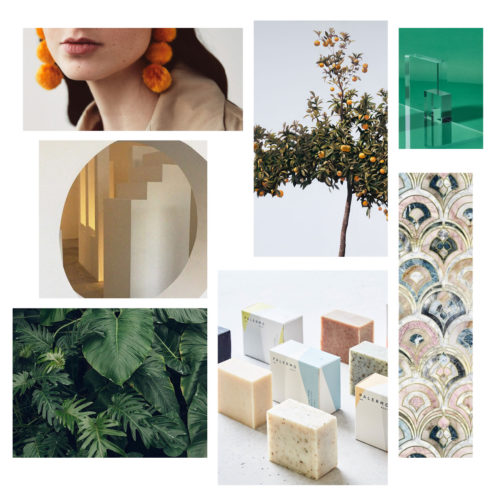
Our visual inspiration for this spring

From now on, we launch each season from our designer's perspective. Lisa Palper.

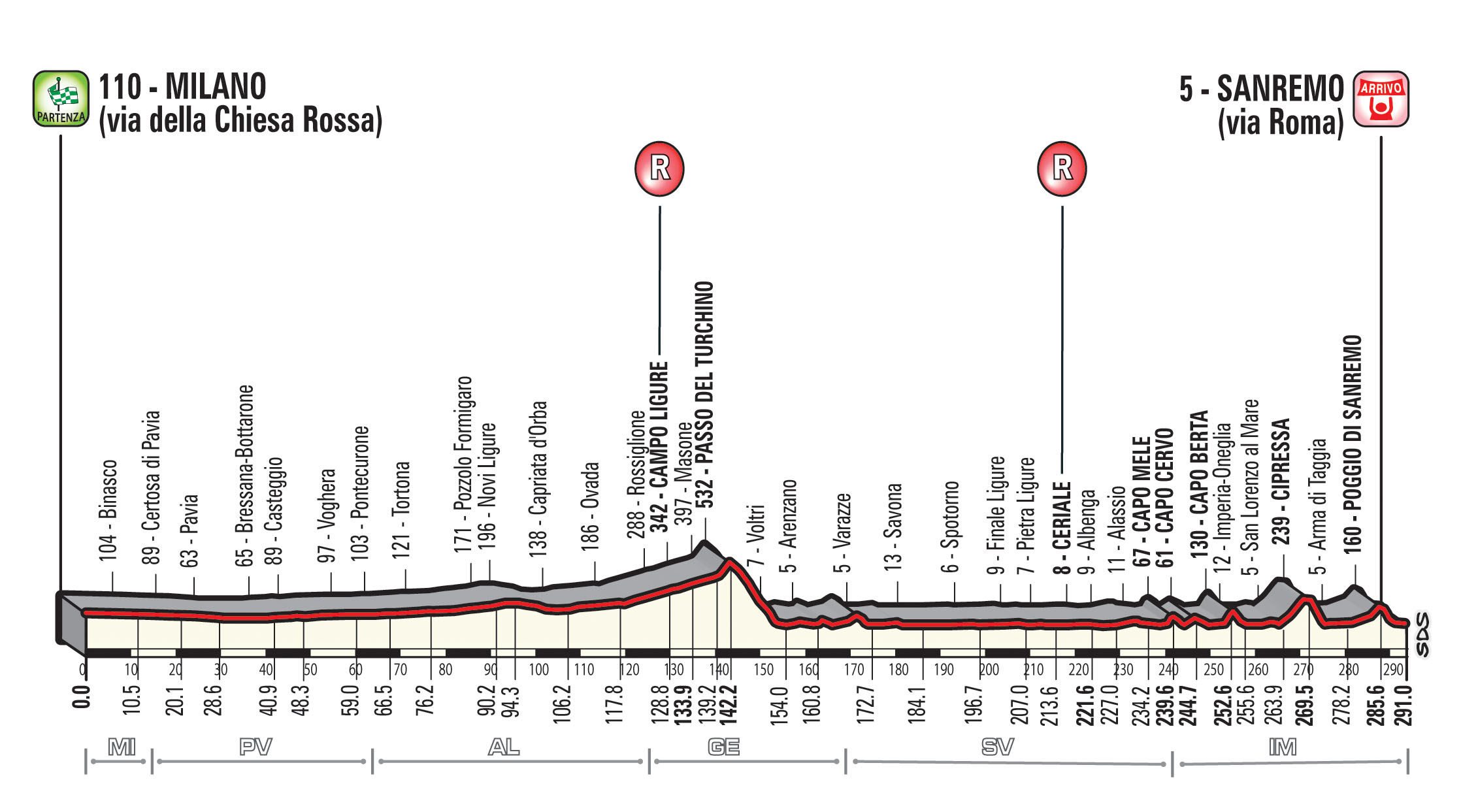
You can find it available in our Blend 1 Spring! starting March 26th (although we know that spring starts this Saturday with the Milan – San Remo!). And, as always, it can be at your home just a couple of days later.

Posted on - Leave a comment

Specialty coffee enters new markets

Call it what you will—betraying the ideals of the specialty coffee community, a lack of passion, just a general bad temper—but I'll be blatantly honest with you (as I've always been doing here, anyway).

I'm simply mesmerized by the way specialty coffee is entering new markets. And it's ironic, "mesmerizing."

I've seen it several times already.

People live in peace for centuries, pay their penny for a normal, absolutely-nothing-special-100% cup of coffee (or even tea, in some cases, by the way) – drink their coffees with their families before going to work, meet up with old friends for a drink espresso and chat about how everyone is doing, they use those old-fashioned coffee makers to make a romantic breakfast coffee for their loved ones…

In other words, people are busy doing much more important things, primarily socializing, rather than thinking about a cup of coffee.

Coffee is a small part of the whole picture, detail, not the centerIt's not the espresso that's the main hero. It's the people we meet while sipping it, or relaxing after a day's work, or having a moment of peace and time to think and be alone with their thoughts, or the magic of the moment when you walk into the bedroom with a breakfast tray on Sunday morning, and your wife/husband is waking up and looks up at you with those sleepy, grateful, surprised, loving eyes...

And then a bunch of know-it-alls come along and start terrorizing everyone about coffee. They say they've been doing it wrong all along, but now it's time to change, and the transition will be smooth and almost painless if everyone stops doing it the way they were doing it overnight and lets the coffee geeks teach them how to do it.

About something as comforting as your usual cup of coffee.

I mean, IT IS like that.

To put it more simply, I was like that a few years ago. I was trying to convince my local customers at a small Italian restaurant to drink El Salvador. Those poor customers were perfectly comfortable in every way with the Italian blend we had. And I was trying to offer them washed catuai that tasted of cherries, red apples, and brandy. The coffee itself was great, no questions asked. But all the other things—timing, focus, audience, my grasp of the whole picture—weren't.

Did I really try to do that? Hell yes, I did, and I felt I had the right to be doing it.

Was it a good idea? Not even for a moment.

Although, you know, it was actually good for me, in a way. I learned that I don't have the right to teach anyone until they ask me to. Politely suggesting something—that's as far as I can go.

I realized that the less experience you have, the more tempted you are to “teach everyone.”

Sometimes I start to think coffee geeks should be called "specialty coffee fanatics." Honestly. And I was the "geek" in that sense, so I know what I'm talking about. I mean, honestly, don't they remind you of those guys for whom it's not enough to believe in a certain "god" (coffee in this case)—they have to convince everyone else to believe in the same one?

I'm writing this to make some peace with myself from the past and to bring that problem of lack of focus (and respect) to light.

My point is… We probably don't need to push so hard for it. specialty coffee

Maybe it will be easier for everyone if we see the specialty as an exception to the rules, not as a rule.

The rule is: people like coffee simple, accessible and easy that does not distract them from life, they like it pay an affordable amount of money and they don't like it waste a lot of time doing itAs you can see, the specialty doesn't fit here. Not at all. 

If you're having trouble imagining what that might be like, think about a product you don't really care about. Something you buy, use, and don't think much about afterward. I mean, canned tuna, or ham, or cheese for sandwiches. Ready? That's how 991% of the world's population thinks about coffee.

It's not normal to feel uncomfortable with the fact that most people like dark-roasted robusta blends. They like them. And people love capsules. And robusta blends are accessible because they are. Not shocking, not challenging, just coffee that allows us to focus on other things, and it doesn't cost much. It costs almost nothing.

I'm talking about this because understanding what's happening is the necessary step that will get us out of where we're stuck and allow us to communicate better with consumers, rather than locking ourselves into a small community of "those in the know."

The specialty part is only a small part of coffee. It's a good place to be, it's a good home. We can be good hosts, we can open the door to the customer, we can show how great the interior is, what it can be like…

But whether he gets in or not is up to him, and there's no right or wrong with that. It's just coffee.

Posted on - Leave a comment

Roasting Specialty Coffee: All the information is here. Now what?

I'd like to talk here—or rather, start talking here—let's put it this way—start talking about what's been on my mind these past few weeks. Share it with you and start a conversation.

It won't be about tips for barista routines or reviews of espressos I've tried lately.

It will be about information, competition, and the growth of the specialty coffee industry, in one area in particular – roasting.

As you probably know, I'm located in Lisbon, Portugal, which is just entering the specialty coffee world and becoming the birthplace of some new roasters.

Specialty coffee is going to be a boom here in the next two years, I dare say. To what extent—we don't know yet, as it depends on many factors. The quality of the coffee specialists on the scene, their internal motivations, their understanding of quality, of specialty for what it is, their palates, their ongoing training—and their ability to communicate all of this to their local customers.

All of these things influence the quality of the coffee roaster we'll have at the end of this period – will they be only local? Will they be known in Europe? Or, who knows, maybe the whole world, and for good reason?

And I focus primarily on coffee roasters, because for me, coffee should be viewed the way we view bread. We don't import bread from other places; we bake our own. Local roasters mirror the "state of the art" of specialty coffee, in my opinion, because on the one hand, it requires a deep understanding of coffee at every level, and on the other, it requires an understanding of the specific nature of local consumption. That kind of "union" between understanding the product and the consumer.

So my question is this.

A question for myself and for you. Fortunately, we're long gone from the days when coffee roasting was seen as a mystery, an artisanal process beyond our control, and for which you had to have a talent. Those were times when roasters hid their profiles (if they had one, of course) so no one else could replicate them.

This is in the past, like David Schomer's Barista Bible.

Now we meet at the roasting camps, sharing, learning, and talking.

What we have now is the opposite. It's the abundance of information. It's open, it's there, and you can take it. Just to give you an example, you can go on Google right now and check out the profiles of the World Coffee Roasting Championship. They can do it. There they are.

Books? Easy. Articles? In a matter of seconds. Want to learn about coffee chemistry? Barista techniques? Roasting strategies? Harvest calendars? No problem at all.

All this information exists, it's real, and sometimes it's free, other times it's not—but what's important is that it's available. You can easily pay a little money and take roasting courses or online courses with Scott Rao or Willem Boot. It will make you feel special, yes. If you're attentive, you'll take something for yourself. Like the thousands and thousands of other coffee specialists who took the same courses as you and who have read the same books.

So, what should we reasonably expect? Certainly, better espressos, because more baristas have discovered the refractometer. More developed roasts, because everyone now takes ROR into account.

So… let's assume it's happening. Roasts are becoming less so flat and end up getting sweeter and sweeter. Espressos are no longer so sour, and are now more complex and much more stable from barista to barista.

The question is…

 What is going to distinguish a toaster A from a toaster B?  They both bought the same machine, read the same books, took the same courses, have the same or similar coffee importer, and are trying to apply the same roasting strategy.

And now let's imagine the ideal situation, and suppose both roasters don't make the classic "mistakes"—like getting the coffee almost to the second crack, when it tastes burnt and smoky and loses all character, or flat roasts, or gourmet coffee that's presented as a specialty. None of that.

Why choose roaster A? Why choose roaster B? What's the difference between them at the end of the day?

Do those famous "background" factors come into play now more than before? Do we buy packages because they look pretty? Because they put pretty labels on the bags? Because it's blue (pink, black, gold, etc.)? Because we liked their Instagram? How do we decide which one is the best? Who's worth our money? Is it enough to simply "sell it right" for us to believe it's good? Are we really making informed decisions? Or do we, like the flock, follow the shepherd, follow whoever claims to be the best?

I was thinking about my choices. The toasters I love, the ones I'm curious about, and would like to try. I'm not a typical consumer, of course, but still...

There are categories of things I've tried only once, and then never tried again. I understood what I wanted to understand, and I didn't feel any connection, I didn't sense any personality, I didn't taste anything of that exceptional quality that I'd like to taste again. I tried it, and I left it.

There are some roasters who don't have a public image, at least not one I know, but after trying them, I felt the quality and honesty. I felt like they were buying quality coffee, and paying a price for it. I felt like they cared about how the final flavor would be. I remember them. And I'll shop there again if I want something solid to drink.

There's a third category of roasters: those who have a fixed image in my head. Those who have a personal story I believe in. I buy into the character. I buy into the image of the person leading the company, or roasting for that company. And, what's indicative, some roasters I like contradict one another. But what am I buying? I buy into a strong personal opinion, the courage to be different. I'm drawn to the values this person communicates; I'm drawn to integrity.

I guess that's my answer so far. We have the same information available, just reach out and take it, it's yours. Everything can be the same. Machines, packaging, origins, even the roasting style. So why buy from roaster B, and not A?

I was told last week that what can't be copied is style. I'll go further. I'll say it's integrity.

And it's a funny thing, it seems we've come full circle, and we've arrived back where it all began. Like the days when our grandparents bought coffee from local roasters they knew personally, now we buy beans freshly roasted by those we like, or with whom we identify.

Posted on - Leave a comment

"Bad Advice": Cata

When I was a kid, one of my favorite books was Bad Advice, basically reverse psychology for kids :), where the author gave you ideas on how to do the craziest things that would annoy your parents the most: like throwing breakfast out the window, or drawing on the walls, etc.

Beautiful book, by the way.

I've had a post in mind for a while, about the tasting routine. 

After all, cupping is a huge part of quality control in specialty coffee, whether you're a roaster, barista, or coffee shop owner, and it's also an incredible tool for self-education.

Cupping is a weekly procedure (sometimes even daily, in the best places), it is something simply necessary for the coffee shop to be considered a “specialty coffee shop”. There is no other tool that teaches you so much about the coffee you are serving and selling, that makes the baristas are more motivated and better understand customer needs.

Talking about bad advice and reverse psychology….

Here's a list of my personal tips, tested by my experience, on how to taste, but end up learning nothing from tasting:

  1. Don't weigh the water you put in the cups

That's a good one. You're very careful with the proportion while preparing a V60, so as not to pour in extra grams of water, and to make sure you are in the acceptable range (and I'm not even mentioning espresso – 43 grams and 35 grams are two different drinks!) – but of course, with cupping everything is different, and it's good to visually check that you are putting in enough water, and that way you are sure that all the coffees are in the same coffee/water ratio.

  1. Don't taste blindly

Open cupping is the best! Always try to take full advantage of the coffee information visible while cupping, so you can easily discover origins and flavor notes, and evaluate roasters and origins more highly when you have a preference. Be sure to include the beans for observation as well. If they have any visual defects, you'll be able to detect them in the flavor as well, without much trouble.

  1. Taste in a group of people, and share opinions immediately.

Cupping is best done in a group of people, preferably among coffee geeks. Discussing what you're experiencing and what you're thinking during the cupping will make you feel like you're on the same page and feel the same way about coffees as everyone else—and because of that, you're right. Eventually, you'll start to find the almond, tropical fruit, and sugarcane sweetness when you hear your friend's feelings.

  1. Don't take notes

Trust your memory completely, especially when it comes to materials like flavor descriptions. Of course, you'll remember exactly how the coffees you tasted throughout the month tasted, and you can always go back and double-check each coffee. Instead of taking notes, simply relax your mind, savor, and appreciate the moment.

  1. Avoid using numbers while evaluating parameters

It's a lot of work—trying to quantitatively formulate why this acidity is 7.5, and that body is 6.25. And after all, who really cares? No one's checking your grades, and we're not in school anymore. It's enough to note that this coffee has "good body" and "satisfactory acidity," and move on.

  1. If you are a roaster (coffee shop owner, barista, etc.): only taste your own coffees, never those of your competitors.

Why should you care? You're the best.

  1. Do not grind 2-3 grams of each coffee sample before grinding the cupping sample in order to clean the grinder.

There's no reason to do so, because, of course, there's no risk of contamination or mill retention. You can guarantee that in those 10 grams of washed Ethiopian coffee you're going to taste, all 10 grams are Ethiopian.

  1. Enter the tasting without any goal

Start the tasting without a clear goal in mind, and do it calmly, appreciating the coffees you taste one after another, their beauty and complexity, knowing that in an hour you'll forget everything and be ready to taste more tomorrow, with a clear head!

Posted on - Leave a comment

And now seriously… do we ever get to evaluate the taste of coffee?

Do we ever evaluate the taste of coffee?
Processed with VSCO with f1 preset

When I entered the coffee world—and I wouldn't say the specialty coffee world, because it was, as I see it now, low-quality coffee—when I entered, I knew nothing about varieties, origins, and processing.

And I was exploring. So I could easily try Sumatran coffee, or Indian Monsoon Malabar, or Jamaican Blue Mountain, or pay crazy money for the expensive geisha cafe, which didn't have any roasting dates. And a classic: going to Starbucks to check out their single origins.

And there was always a conflict. Because I couldn't taste the flavors written there in the tasting notes on the coffee bags.

But until recently, I pretended I could. (And I'm far from the only one who did!)

I now know that, as it was a low-quality coffee, and the roast was quite dark, it would not have been possible to taste the jasmine flowers in that old, rickety Geisha, nor the strawberries in the Monsoon Malabar.

But the labels said so. And I was insisting that I felt it. Probably, if I were more confident and honest with myself, I would have used the words "stale," "old," "paper." But no. I didn't have enough vocabulary, and I hadn't learned at that point to trust my receptors.

Only after a while did I get into the routine of tasting, begin to eat more consciously, expand my palate, and, over time, be able to taste more and more things. But it's a training process. And I'm not a "supertaster" of any kind. It's just a training process of learning how to put what you're feeling into words, and do it quickly and accurately.

And when I started getting into that tasting routine, it really made me realize how lazy my brain was. Every tasting became a battle against my brain's tremendous laziness, and it continues to be so to this day. Every time.

I realized that if I knew the roaster, or the origin, and I liked the previous experience, I tended to give higher scores. So I discovered almost immediately that it's mandatory to taste blind if you don't want your expectations to interfere.

I realized that if I like the flavor of coffee, I tend to also evaluate acidity and body more highly, and not analyze them carefully. I started to focus more on each parameter.

I realized that the packaging, the brand image, how expensive it is, my first impression of how much the company invested, will automatically make me rate the coffee higher. It will distract me from the flavor itself, because I'll make a connection between the packaging and quality. It also works the other way around: if I'm not impressed with the brand and the packaging, I may reduce the points when I'm tasting it. My brain is creating a connection that doesn't exist in reality.

And the list goes on and on; I'll write later about the tasting itself, which can be useful, as well as useless, if that topic interests you.

Right now, my questions are about something else.

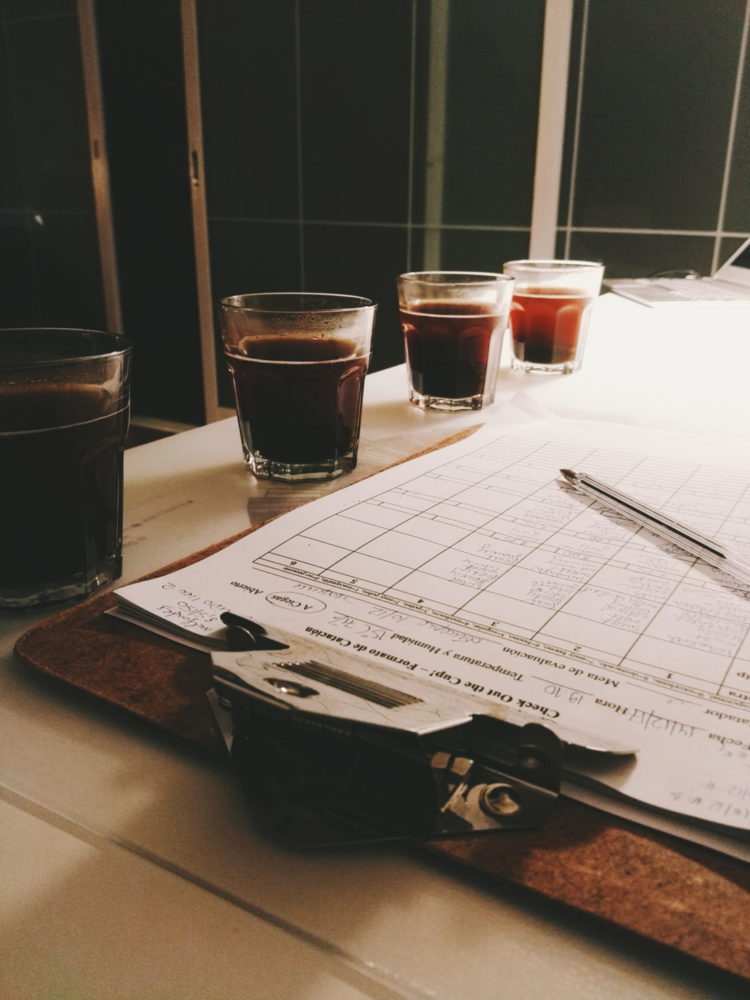
I recently tasted a coffee, "X." In two different locations, the same coffee, within a one-month period. The tasting notes on the label say, let's say, "mango." But if you cup it, blind, you'll simply feel the roast. Burnt, toasty, charred, smoky—that's what I wrote on my cupping form while I was blind-tasting it. Twice.

So I'm not even saying it doesn't taste like mango, but it does taste like pineapple or hazelnut, and the tasting notes are inexact, but more or less close.

I'm saying there's no trace of specialty coffee quality in the coffee's flavor, and the only thing you can find is the flavor of the roast itself. There's not even the possibility of adding "nut" to it, because there are no nuts.

But then I saw several people writing about that particular coffee and repeating the “mango” story.

And I repeat, there is no doubt that this coffee has notes of "mango," because there is none.

So the reality is, once again, revealing. It means that many people who write about coffee, who write about food, don't take the time to taste. They're writing about flavors, but they don't trust their own sensations; they rely on someone else's misleading descriptions.

You don't have to be a real professional in sensory evaluation.

All of us, when we start tasting, start with very poor vocabulary and end up using only 6-10 descriptors.

We can't taste the "handle" yet, but we use the words "roasted," "smoky," "chocolatey," "fruity," "almondy," "citrusy," "floral": those general descriptions are enough—yes, they are ENOUGH—to make an honest assessment, in this case, of the coffee you're drinking. Yes, you won't look as smart as if you were writing "This coffee tastes of rose petals and amaretto liqueur, with some delicate notes of clementine peel"—you won't look as good, no.

But on the other hand, it's better to keep trying and give an honest description of the coffee you're drinking. Yes, it will be short, like "chocolate," "full-bodied," "balanced," but you won't put yourself in the foolish position of writing that it tastes like mango when the coffee is totally burnt.

And the descriptors will come with time. When you learn to connect what you feel with words. It will come. It always comes. You don't need any special talent for that. All you need is to keep practicing, stay connected to your sensations, and be impartial. It takes time, but it always comes.

That's all for now.

As always, I'm just trying to say that the time invested in mastering a skill is always worth it. And tasting is an essential skill in the food industry and, therefore, in specialty coffee.

In other words, don't be afraid to say, "You know, dude, I can't feel the handle."

Because chances are you're right.

Posted on - Leave a comment

Making espresso (well) is a simple task.

Make coffee espresso (well) is a simple task.

There are very few requirements to meet. We just need a good, clean mill. A machine espresso Reasonably thermally stable. The right water. Of course, a coffee that meets our expectations, and finally, proper technique when performing our dance.

So far, it doesn't matter much whether we are professionals or if we are going to make coffee at home. However, it is much easier than our grinder and our coffee machine. espresso are of higher quality if we are professionals, just as it seems easier for the cleanliness and quality of water to shine more brightly in the domestic sphere.

When it comes to coffee, there are no shortcuts. Some of us will prefer blends, others prefer single origins, micro lots, single varietals… Some prefer America and others Africa. Bourbon, Caturra, Pachamama, SL-28… These are just preferences, and they're easy to solve: buy the coffee you want to drink. If all this sounds like gibberish to you, it's even simpler: just buy good coffee. That is, coffee that includes information on its packaging about its origin (country and region, at least), varietal (what type of coffee plant it's from), and the quality (what kind of coffee it's made from). Coffea arabica (it's about) and roasting date. This isn't the absolute truth. There are good coffees that don't include this information on their packaging, and, conversely, there are coffees that do include this information and aren't really special. But this way you usually can't go wrong. The one I'm using this week is this crazy one: Honduras Los Ceibos

Making espresso (well) is a simple task.

We have a machine, a mill, water (mineral or filtered), and coffee. What else do I need to know?—you might be wondering.

There are two things.

There are only two things that distinguish the elaboration of specialty coffee in a professional setting and at home. And they are rarely talked about.

The first difference is obvious: volume. In a coffee shop, one hundred, two hundred, or five hundred coffees are prepared every day. Obviously, the training required to consistently perform the task of preparing a espresso (or a cappuccino, or a latte…) in a professional setting, something that can be acquired in a couple of days can take months at home. Especially without the help of a professional.

The second one isn't going to appeal to everyone, especially professionals. But there's no doubt that the coffee industry in general, and the specialty sector specifically, has instilled in us the idea of perfection, of recognizable flavors prescribed in tasting notes, of recipes that must be followed. And the reality is different.

In addition to machinery, water, coffee, and technology, you need patience. A lot of it.

Learning to make delicious coffee is like learning to play the violin. It takes patience, because frustration will accompany us throughout the process. And, just as our ears become more educated as we learn to tune when playing music, we must develop our palate to recognize flaws in our beverages. And be wary of those baristas who are always satisfied with every drink they prepare, because the truth is that excellent results happen only once in a while. The goal should always be to be able to obtain consistent and repeatable results (and yes, scales and stopwatches are essential; and no, you don't need a refractometer), and to improve the quality of the beverage from that perspective.

The barista's job should be to prepare the best possible beverage with the materials available. Before blaming the roast, think about your water, the cleanliness of your machine, your concentration and attention to detail, your mood... You won't learn anything from blaming your equipment or your coffee supplier. Just as you won't learn anything from saying the grinder is dirty or the water isn't good enough.

Take notes. Repeat the same recipe a thousand times. Try to change only one thing at a time, and always change the easiest. Seek to improve little by little and with specific goals. Try not to overwhelm your palates. And take notes. Ask without fear at your local coffee shop, and ask with numbers. Try to identify the numbers with your palate. It's more important to recognize a gram more (or less) of water in an espresso than to identify "clear notes of raspberry and berries." And, above all, don't forget how much you love coffee, and enjoy the cups you make, even if they're not perfect.

And don't trust anyone who tells you that making coffee is a simple task.

Posted on - 1 Comment

"Tell me if you freeze it..." – or on the cool side of coffee

Tell me if you freeze it

Hello, hello! Good afternoon, everyone.

First of all, I have to introduce myself, because I am a new face here, in this space of San Agustín CafesMy name is Liza. I've been in the specialty coffee world since 2012 as a barista, and since 2015 as a coffee roaster. Among many other things, I'm fortunate to have worked roasting for a specialty coffee chain in my home country.

I now live and work in Lisbon, Portugal, and have been blogging about coffee for some time now. "Coffee Without Lies"Here I'd like to share with you—if you find it interesting, of course—my random thoughts about specialty coffee, the industry, and simply the delicious (or not so delicious) espressos I'm lucky enough to try.

If you ask me to point out a trend in the coffee world that has made the most noise in recent years, sparked the most discussions, motivated people to experiment, and in the end, in almost all cases, has easily integrated into the daily routine of coffee professionals and enthusiasts – I'm going to say "freezing."

I use the word "trend" because it's something relatively recent – but I clearly remember an episode in my life that happened about 3 years ago.

My boss and I were on a trip to a farm and were visiting one of the coffee professionals I admire and highly respect—roaster, farm owner, trainer, judge (and many other things)—and she invited us to have coffee at her cafe.

We chose the beans (it was Pacamara Natural, but correct me if I'm wrong) – and then in front of us, the barista opened the freezer, took out the beans, measured the necessary amount… We couldn't believe our eyes. We've heard many times before how bad it is. Never do it, it's an absolute no-no – and here she is, using the frozen beans for the AeroPress we ordered. We asked her if she finds freezing a good way to store beans. She said, "Absolutely yes, I do for a long time."

We were sitting outside, looking at the mountains, enjoying the cool breeze, literally hundreds of meters from the coffee plantations. Of course, we didn't expect that AeroPress to taste good. After all, who would? We silently agreed not to say anything out loud out of respect, but... I mean, really? It seemed like a joke! Specialty coffee in the freezer?

Needless to say, the barista brought it, and it tasted good. Frozen coffee. It tasted. Good. Yes, an AeroPress made from frozen beans stored in non-airtight bags—it tasted better than acceptable.

It surprised us. We haven't adopted the practice, but let's just say it opened our minds after that.

Personally, I started freezing months after this. Not for practical reasons, really. At the time, I was living in Central America, and someone brought me Caballero Catuai from Tim Wendelboe. I had to stock up on it because I wanted to enjoy it longer. Considering that in that part of the world, I was getting coffee roasted outside the country, specifically—from Europe, specifically—from Tim Wendelboe.

So I froze it.

It was my first attempt. I bought those special bags and a hand pump, which I found, luckily for me, at the supermarket next door. I measured the doses I use for V60 at home, and froze the coffee, dosed like that, in 15-gram bags. I froze the necessary dose so as not to have to go through the extra effort of opening an entire bag, removing the coffee, and freezing it again. I read (I think it was Matt Perger) that it makes more sense to do it that way. And I put it in the freezer, hoping for the best. Honestly, because the coffee was fantastic, and I was risking everything by putting it in there to freeze.

To cut a long story short, don't use hand pumps if you want to be taken seriously in the world of coffee freezing :) Some of the bags weren't sealed properly and burst open. Of course, they absorbed all the smells from the fridge, absorbed moisture, and the coffee in the cup was unpleasant. Others survived. And I became able to do something that sounds pretty crazy: enjoy a cup of magnificent coffee from Tim Wendelboe in Central America, months and months after the roast date, while it continued to be delicious.

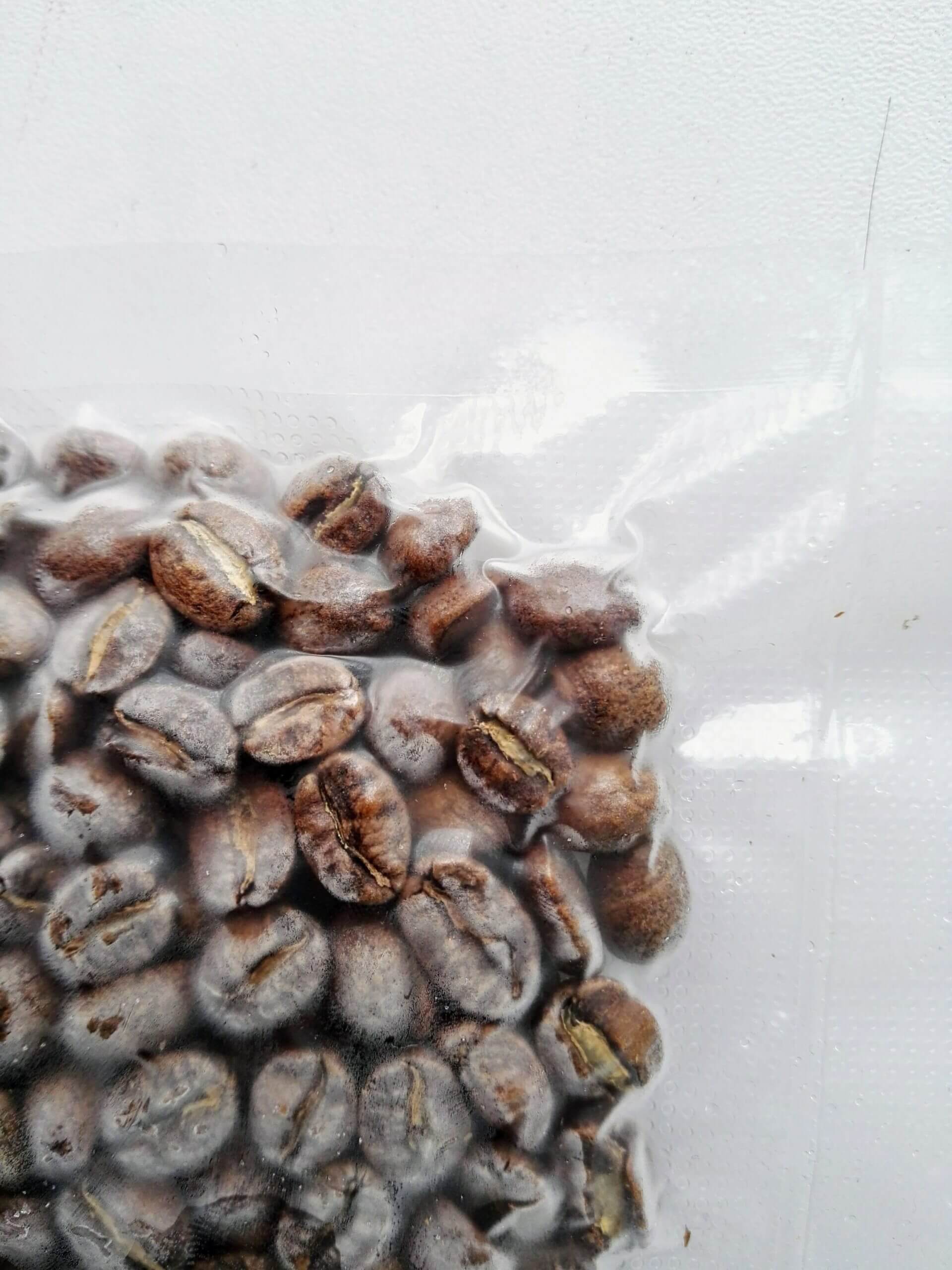
My routine now no longer includes a hand pump, but it does include freezing the vacuum-packed beans.

And here we have, in a nutshell, a simple way to significantly slow the aging of coffee beans, without worrying about changing the coffee-to-water ratio, grind size, or brewing method based on how long it's been since the roast date. Do it exactly the same way you did the first time. Months after the roast date.

To mention other benefits of freezing: better particle distribution, less coffee "dust" that leads to over-extraction, and a cleaner, shinier cup at the end. Even better than before freezing.

Necessary equipment? Vacuum sealer + special bags. Exactly the ones chefs use to package food when cooking sous-vide. They're very popular right now, and you can easily get them for less than 100 euros, and if you can keep an eye out for promotions, even less than 50 euros.

Freezing coffee in vacuum bags has become part of my routine now, whether I'm getting new coffee and don't want it to go stale too quickly, knowing I won't drink it all at once, or when I want to have a bunch of samples to taste, or when I'm roasting and want to keep comparing different batches… In all cases, you're no longer playing against time. I think it's worth spending some money on.

It remains to be seen whether it works as well with ground coffee as it does with whole beans. Probably yes, if the coffee is frozen first, then removed, ground, vacuum-sealed, and refrozen in portions... There's a whole field to experiment with, I'm just thinking out loud...