Description
West Java, in western Java
West Java is a washed coffee from Indonesia, grown in the regencies of Bandung and West Bandung, on the slopes of the Tilu and Halu mountains and the Patuha volcano. The coffee farms lie between 1,300 and 1,700 metres, in plots of around one hectare within agroforestry systems: the coffee trees grow in shade, sharing the land with other trees. These are smallholder farms, which deliver the harvested cherry to shared processing stations.
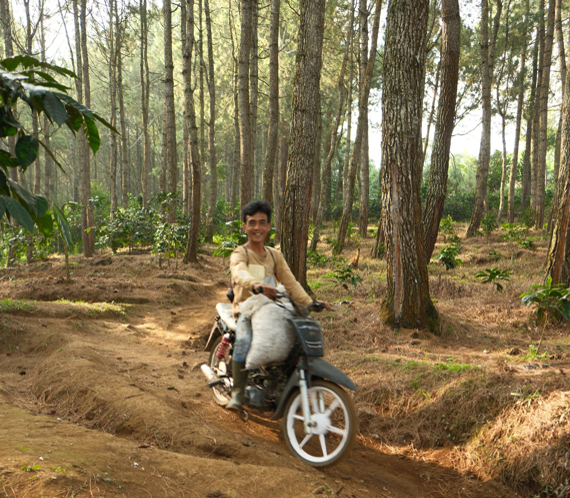
The lot brings together four varieties —Ateng, Lini S-795, USDA and Andung Sari— from the 2026 harvest, and it is imported by Xorxios.
The land where coffee was called Java
These mountains are the Preanger, the highlands south and east of Bandung where the Dutch planted arabica in the late 17th century and where the East India Company began buying coffee from the farmers. In 1726 more than 2,000 tonnes left the island and Java displaced Yemeni mocha in the European market. For a century and a half, “java” and “coffee” were the same word.
Leaf rust wiped out almost the entire crop in the late 19th century, and West Java took a hundred years to come back. Until recently its coffee was shipped to Medan and blended with Sumatran coffee; only in the last few years has it been sold under its own name. The boost came in 2016, when a lot from nearby Mount Puntang won an international cupping in Atlanta, and in 2018, when a coffee from the Mount Halu area, one of the areas in this lot, won an AVPA award in Paris.
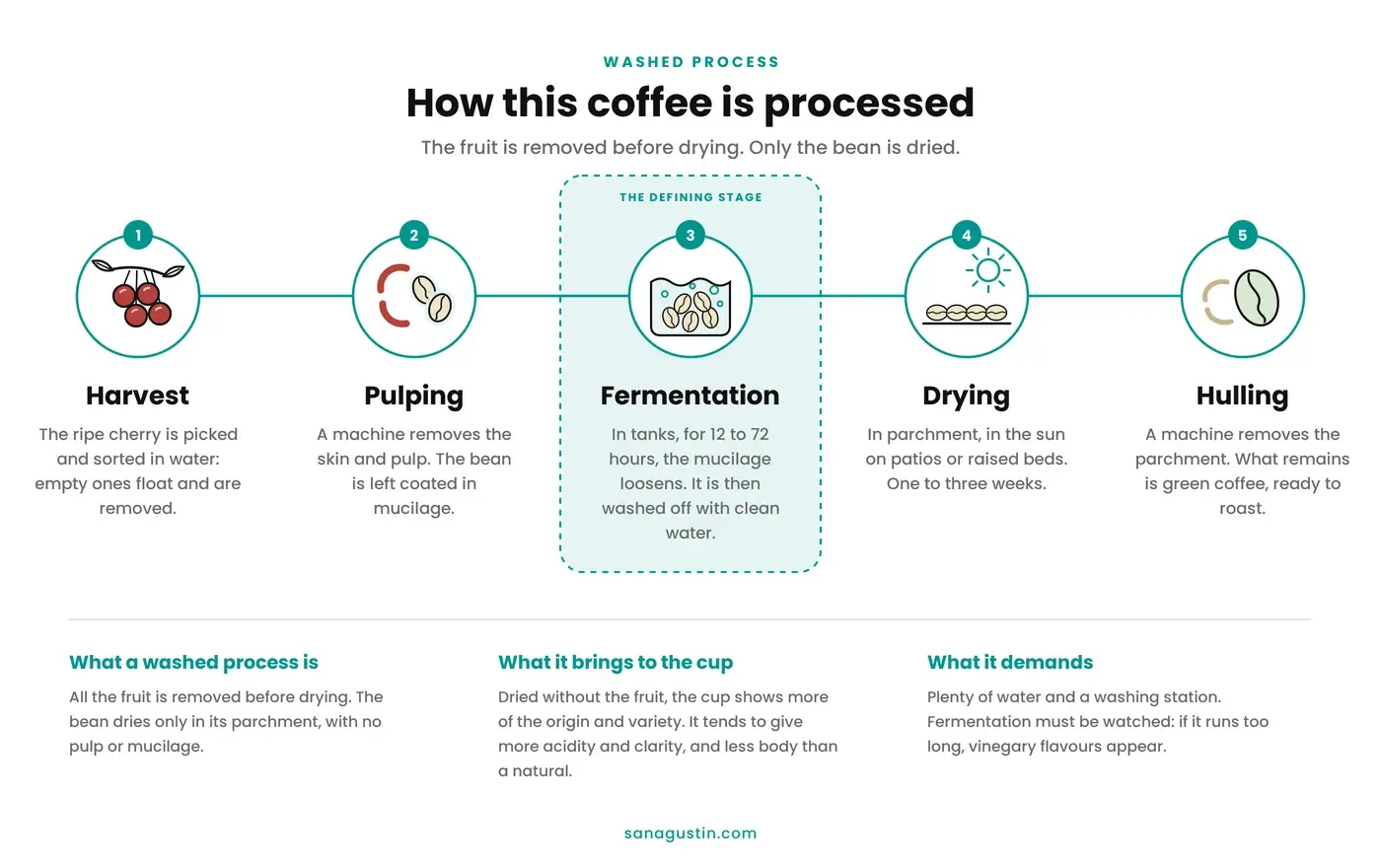
How this washed Indonesian coffee is processed
At the station, the ripe cherries go through flotation to remove the lower-density fruit and are pulped that same night. They ferment for around 36 hours and are sun-dried for six to ten days.
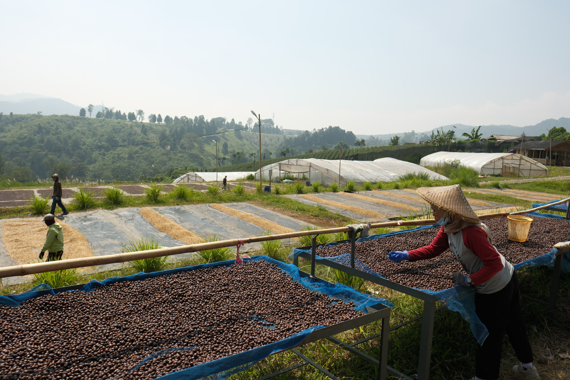
Washed is the most widespread process in specialty coffee: it leaves the cup clean and lets the origin show more clearly, without the layer of ripe fruit that a natural brings.