Posted on

Finca "El Diamante" Colombia (Again)

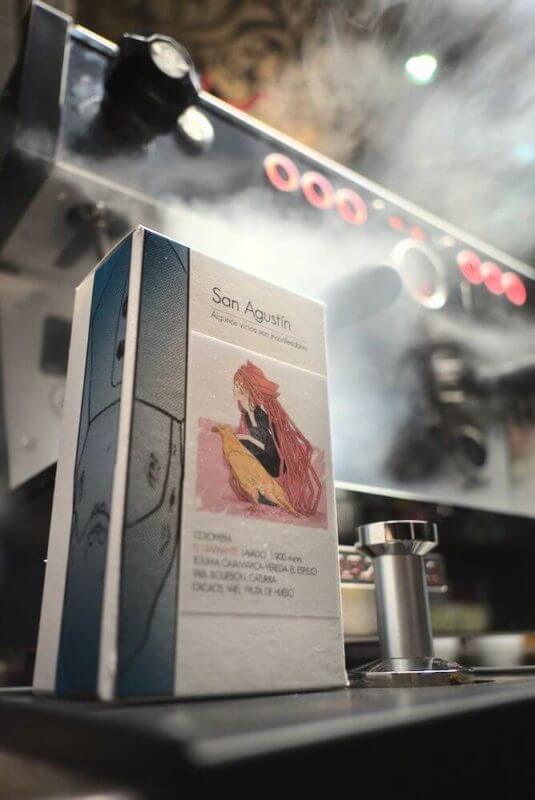
The highly popular micro-batch from Colombia, "El Diamante," recently ran out. As usual, we requested samples from our importer a month in advance to purchase a new batch of this highly sought-after origin. (We try to maintain this level, but it's not always an easy task.)

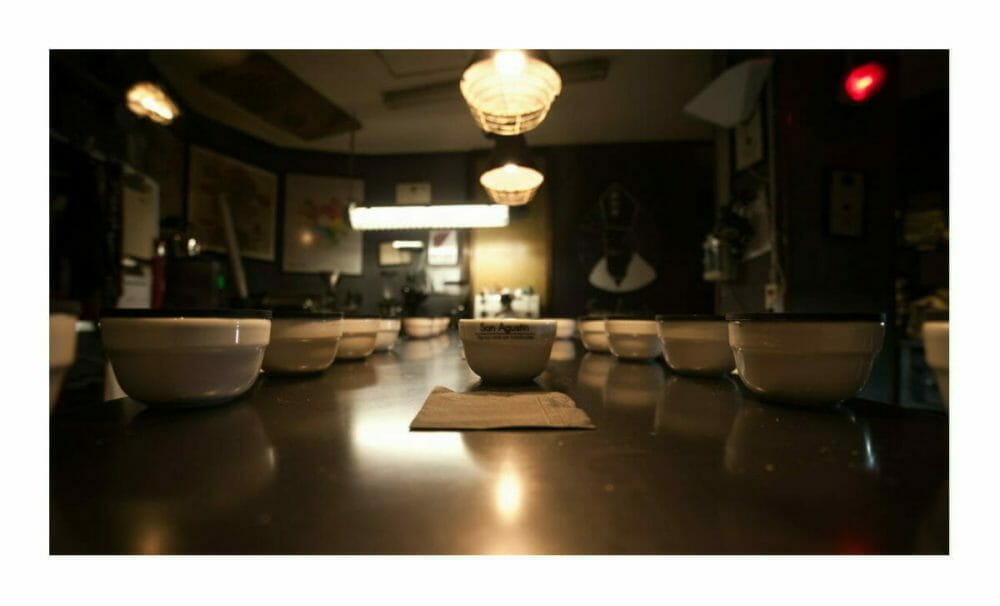
Shortly after, we received five samples of green coffee, each with a reference number. I set up the sample roaster, roasted for the Brazilian cupping, and, as always, following the SCA protocol, María prepared the blind cupping, which we conducted with Katarzyna. It is always a pleasure to see the level of selection that our importer "Xorxios" makes with this origin.Sometimes it's difficult to select which one to choose given the level of all the samples, but lately we seem to be well-synced and usually agree.

"Honeyed cocoa, ripe stone fruit, lots of flowers, sweet and savory on the palate, with well-integrated acidity and good body, resulting in a creamy and complex coffee.", that was the sample that we loved. With the reference in the bag I get ready to call Xorxios to request information, and if everything fits, buy this lot.

The surprise came when he told me that the reference belongs to the new harvest batch of "Netfali Castro" and his farm, El Diamante. This is the second time this has happened to us this year; the other time was with—The Flowers– Honduras, by Gerardo Manuel Peñalva Urquía.

We only buy the best lots we can find, and we always do so in blind tastings. We don't care about any information or marketing that a coffee may have. The most important thing is the flavor and the ability to continue discovering interesting coffees. But one thing has become clear to us this year with these two purchases: We have good selection and tasting criteria. Which we hope you like too.

Colombian Espresso “El Diamante”. Made in a La Marzocco Linea PB coffee maker.
Posted on

Diary of a Caffeine Addict

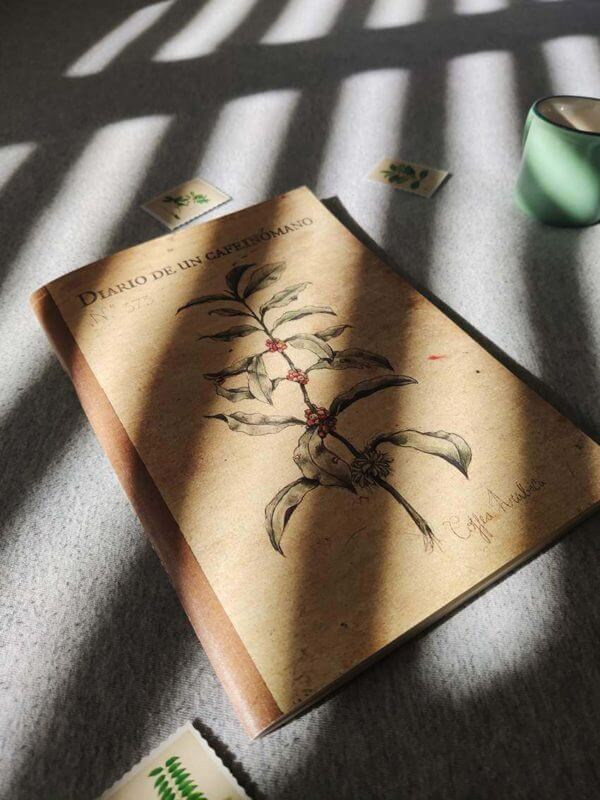
We present an essential tool for recording your perfect espresso recipes. It's a recipe book created and designed by our friends at 3 Seven 3 Coffee, some guys who work specialty coffee from a Coffee Truck with a very peculiar image and philosophy.

In the “Diary of a Coffee Addict” you can note down all the specific characteristics of the coffee in question and then record, at your discretion, the data of the ideal extraction routine, so that the next time you use that coffee, you can easily recover your perfect recipe.

It also has several interesting details, such as a space to leave your coffee imprint, a section for your own notes, a coffee diary, pages for "miscellaneous things," and a QR code that takes you to the 373 Café playlist so you can enjoy good music while you prepare or drink a good cup of coffee.

Posted on

First Coffee

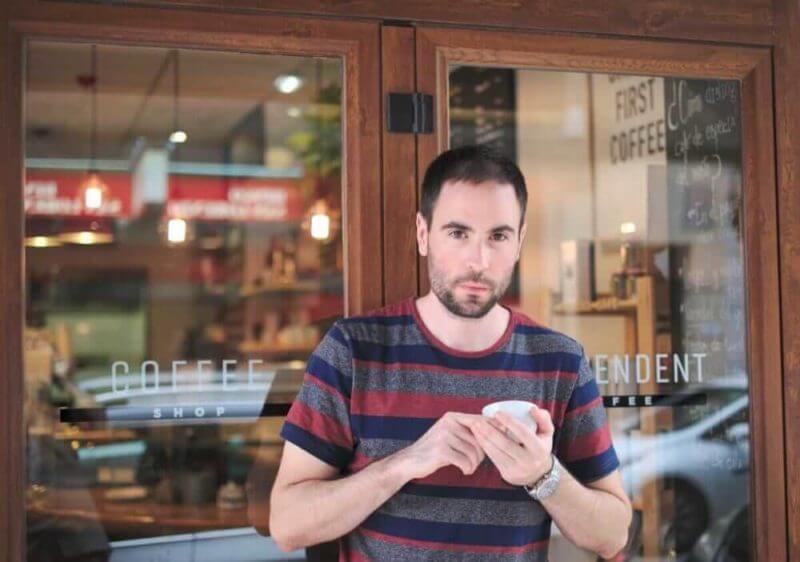
Jairo at First Coffee

"First Coffee" is a small specialty coffee located in Gijón.

From 8:30 a.m., they offer homemade breakfasts (the potato omelet is a delicacy you can't miss) and delicious coffees until 6:00 p.m.

The owner of the establishment and the person in charge of everything is Jairo.

I would define Jairo as one of those people who says little and does a lot. Very professional, humble, and hardworking.

FIRST COFFEE
Celestino Junquera Street, 17, 33201 Gijón, Asturias
984 19 29 48

"Primero Café" is a perfect example of how an entrepreneur can open a business focused on coffee and, through their research and training, discover the world of specialty coffeeThis causes a radical change in his business that is now irreversible.

He is a very good example of how this transition should be made; he researched the sector, trained himself and started little by little introducing an alternative mill with a specialty roaster.

First Coffee
First Café Gijón

A plan was established and executed taking advantage of the third anniversary of "Primero Café" which consisted of the following:

  • A series of small makeovers on your premises, "Daria Fedotova» (our designer) made a beautiful mural.
  • Purchased a white Marzocco Classic coffee maker.
  • He removed commercial coffee completely and now only works with specialty coffees, in this case roasted by St. Augustine.
¡Daria Fedotova made this exclusive mural!

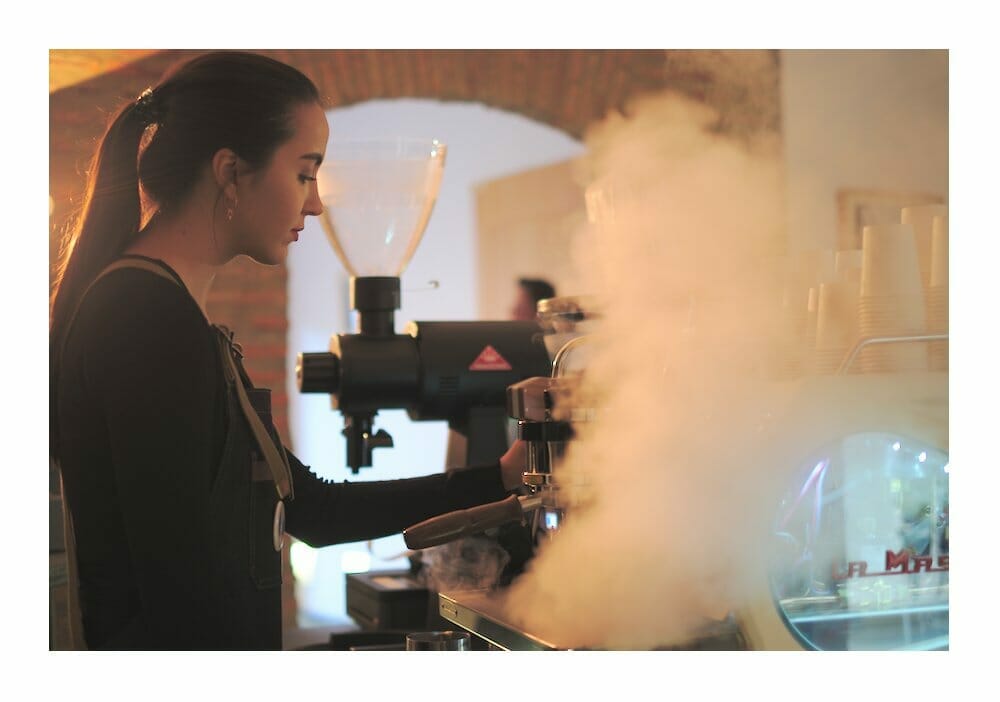
Jairo is a barista with a long history in the coffee industry. Every morning, he calibrates the grinders and finds the best recipe for each coffee, aiming to deliver perfect flavor consistency with every shot. His ability to handle more than 300 coffees a day is a testament to his dedication and passion for coffee.

First Coffee
Jairo in full routine

This place is famous for its chicken sandwiches with mustard sauce and potato tortillas. They also offer a wide variety of options, including croissants, toast, homemade cakes, and the delicious tumaca bread toast. It's the perfect place to enjoy a quick and delicious meal.

Jairo is accompanied by a barista and a cook.

This is the typical place that offers few things but does them exceptionally well. I wish there were more places like this, and it's definitely worth a visit.

If you're in Gijón, this is a must-visit spot to enjoy a good specialty coffee!!!

First Coffee (Specialty Coffee)
Posted on

"San Agustín" at the Romantic Market

We walked through the cathedral square, dazzled by the spectacle unfolding before our eyes. The Romantic Market had been set up in the Sierra Pambley Foundation, an old 19th-century mansion that had been tastefully and elegantly restored. There were several rooms and two patios, one with a stage where traditional music concerts were performed, and a bar serving drinks and tapas.

They sold all kinds of products, from handmade clothing to ceramics and jewelry. Many of the vendors were local artisans, but there were also exhibitors from other provinces who had come to showcase their skills and promote their work.

In the middle of the square, a crowd gathered to watch the parade of banners and decorated floats representing each of the province's towns. It was a tradition that dated back centuries and remained very popular among the residents of León.

We headed toward our small shipping container, which we had designed especially for this event. It had been built by our friend Jose Manuel Rubial, a man who had dedicated his life to building unique and sustainable structures. We were proud to be able to offer our delicious coffees in such a special place.

People flocked to our small stand, curious to try our delicious coffees and chat with us. It was a perfect day to enjoy the Romantic Market and the San Froilán festival. We were happy to be part of this tradition so beloved by the people of León.

Rubial Inox
Madrid, 4, 24227 Valdefresno, León
987 21 61 01

San Agustín Container. Made by Rubial Inox.«
Madrid, 4, 24227 Valdefresno, León
987 21 61 01

Our team consisted of; Malkoenig K30 vario, Malkoenig EK-43 and the single-group coffee maker Marzocco Strada EP.

The coffee we chose for the occasion was a natural Ethiopia that we had just received.«ARORESA«.

Sandra was serving coffees non-stop!

Sandra and Maria They took care of the coffees and Laura helped with the sale of takeaway packages.

On the right, Laura serving customers.

The turnout was high, and the impressions were very positive. We hope to return!

Calibrating the mill

Here are some interesting photos.

The container in front with people passing by
Sandra creaming milk
Sandra pressing

Posted on

Photoshoot with Erwan and Sarah

Photoshoot with Erwan and Sarah

A few days ago, our friends Erwan and Sarah returned to visit us. We had known them for a year, and they had amazed us with their photos, videos, and way of life.

It's always exciting when you get a message from them saying they'll be visiting again.

The plan this time was to spend a whole day with us doing a photoshoot long enough to have publications for a while in instagram.

Of course, during the work there were rich coffees and it also happened that that day we had a Brazilian Tasting cThey are the owners of one of our favorite restaurants, “Pagus.” (Don’t forget to try their finger-licking pasta recipes.)


Photoshoot with Erwan and Sarah
Maria preparing the tasting
Photoshoot with Erwan and Sarah
The "Pagus" team tasting
Photoshoot with Erwan and Sarah
Posted on

Stop thinking and your problems will end.

Stop thinking and your problems will end.

Jaws, ET, Jurassic Park, Schindler's List, Saving Private Ryan, Star Wars—films directed by the so-called Midas of film. All of them topped the charts with audiences and critics, but Munich was something else entirely.

Steven Spielberg introduces us to the Arab-Israeli conflict. The conflict of conflicts, the eternal struggle of the Jewish people to find their place, expelled time and again from each settlement and searching for their origins. A conflict that has not really been solely Arab-Israeli but has been projected onto a global scale, involving both European and American countries.

Let's return to the starting point. "Munich," taken from the book "Revenge," shows how the terrorist group Black September attacked Israeli Olympic athletes at the 1972 Olympics (the first to be held in Germany since 1936). The result: eleven Israelis murdered, failed demands, and a Olympics that continues.

From this event, Steven Spielberg plots the entire film around the revenge of the Jewish secret services to take down those involved in the incomprehensible and horrific massacre. These Olympic Games, on the other hand, were supposed to represent the unity of peoples through sport.

A harsh exposition that intertwines political ideas, issues of morality, and conflicts of religious or social coexistence. Perhaps too focused on revenge, leaving more substantial loose ends in the background. A revenge that is daily bread, repeated over and over again for so many years. Politics or politicians have never yielded the desired results, perhaps because there have always been interests both inside and outside that want the problem to never end, or as a well-known actor said, "Politicians are people who invent problems where there are none, and then try to solve them."

A dense, intense, and tough trailer reminiscent of the great spy films. Made to be enjoyed every second.

Something similar happens in the world of coffee, as it is one of the most popular products in the world, there are also commercial interests, stock market, exploitation or any other type.

Let's leave those complex topics for another time and simply move on to coffee. As you know, coffee grows on a bush, and each berry typically contains two beans. These berries, when ripe, are a rich, melting red or sapphire red, depending on how you look at them. There are places where coffee is harvested by hand and transported by animals due to the rugged terrain. Then, on the farms, the various production processes take place, depending on the region and tradition.

There are berries that, instead of producing two beans, produce a single bean (only in Arabicas). This bean is smaller and has different shapes (rounded or closed) because it receives fewer nutrients and is more affected by the weather, all due to the fact that it sprouts at the ends of the bush. Consequently, it has a more concentrated, more intense, and stronger aroma. This means that master roasters have to change their roasting strategy to extract its full potential.

But their work does not end here, since the grain "snail"Once denigrated, it is used primarily for its prized blends, thus giving it its signature touch.

Everything has a place within the machinery of life if you know how to apply the correct method.

Posted on

Demonic

Demonic

He turned around, standing in front of the espresso machine, gently placed a 20cl glass cup down, and poured 11 drops of almond liqueur into it. He extracted two shots of different specialty coffees from the machine, simultaneously pouring the precious elixir—a coca leaf—into the bottom of the cup. He then took raw milk from a glass bottle and heated it in a saucepan until it reached the desired temperature.

Without saying a word, absorbed in his work, he followed the established protocol. He brought his nose to the coffee glass, waited five seconds, and began pouring the milk, creating a sensation of visual contrasts thanks to his skill with the "acting tempo."

He turned around, went to the refrigerator, and scooped out a wafer-thin scoop of cream ice cream with chocolate nanoflakes. He placed it on top of his coffee. He looked at me like a teacher looks at his students and, without blinking, uttered these words:

-Wait two minutes, don't stir, and don't add sugar or anything else. This will help you stay awake for a while.

-Does this concoction have a name? (I mumbled).

-Demonic (he replied).

A film that had a profound impact on my soul suddenly came to mind: The Exorcist. I remember perfectly, as if it were today, where I saw it. At the time, I was just over fourteen years old, spending one of those ordinary weekends in a small rural town.

At the local bar, they decided to show the film on a VHS player, rented from one of those video stores so popular at the time. Of course, this was completely illegal to play in public establishments—as could be read before the film began. A few minutes into the screening, silence continued throughout the entire session.

My generation comes from a culture where religion was always visible, already perceived as a higher order. It permeated everything, directly or indirectly, inoculating us with its seed. If your reasoning led you to atheism, your mind, in extremely serious situations, would lead you to believe the opposite.

Beginning at an excavation site in distant lands, the film quickly introduces us to the situation; the struggle between good and evil, with exorcism rites performed by bomb-proof religious figures, forms the basis of a shocking, shocking staging, with cinematic exaggerations that chill the blood.

The legendary girl from the exorcism and the problems that arose during filming (fires, veiled tapes, deaths, and even problems with the Catholic Church) meant that even at the premiere there were ambulances outside the theaters.

Horror movie A film where there ever was one, especially if you see it in the wrong place and at a critical age. It didn't need movie stars or grand stages; with a script drawn from real events and a theme ingrained in our DNA, it showed us what cinema is all about. Three, two, one, action.

Posted on

Tribal Rites


          The sixties brought to the cinema one of the most popular films for the youth of that decade. Its appeal was driven, above all, by the music. A soundtrack that rang in every bell tower on the planet. A music that entered the borders uncontrollably and captivated the younger generations of the time. Sung in English, whose lyrics we didn't understand but felt, it brought new dances, new meeting places, new sounds. It was disco music.       

          The venue for this film was the Odisea 2001 nightclub. It was Saturday night, and inside the venue: a dance floor, reflective balls, flashing colored lights, and music—good disco music.

          Tony Manero perfectly represented this generation; he worked for a standard salary in an unexciting job, and his family life didn't offer him anything either, but when the weekend arrived, "the show began." The ritual of getting ready was the prelude to what was to come. His hairstyle, his style of dress, the type of clothing, and his staging will forever remain in the memory of all viewers. 

          Dancing, his friends, girls, music, bands, rivalry, drugs, and anything else that went against the grain made up the cocktail of his being. He was the kind of person who felt like home was a nightmare, that nothing mattered, not even the future, not studies, not wars, not politics.

          For many people, music has always been an escape from dreaming, loving, or living. People of that generation probably won't know how to do a simple rule of three or which river runs through Paris or Madrid, but they'll certainly be able to remember with Swiss-like precision what bands were playing in the club, what they wore, or who performed a song from that era after just a few seconds of listening.

          Saturday Night Fever represented the ideals of a significant portion of that 1970s generation. In fact, the idea for the film was conceived in a New York Magazine article titled "New York Tribal Rites on Saturday Night."

          "Stayin' Alive" and "More Than a Woman" are songs everyone remembers. The soundtrack, fronted by the Bee Gees, put it at the top of the charts. However, I prefer "If I Can't Have You" by Yvonne Eliman. "It's all a matter of taste."


          When it comes to coffee, everyone has their own tastes. So, when it comes to making it, some prefer espresso, while others prefer filter coffee.

          As we've discussed the preparation of espresso in previous articles, today we'll discuss espressos made in a filter, which some experts consider to be the key process for enjoying this exquisite elixir.

          Brewing is an art form; the grinding is different; the water isn't pressurized but instead filtered by gravity. It's a slower process, with different coffee and water measurements, but no less precise. The types of filter coffee makers also vary (Chemex, Clever Dripper, V60, etc.). Pouring should be smooth and slow, allowing the coffee to bloom and reveal its full splendor, a process that can take several minutes.

          The result is a less intense flavor. On the other hand, the coffee's complex flavors can be brought out, primarily due to the accentuated aromas. This process is very useful when it comes to differentiating coffee origins.

          In any case, whether it's a filter or espresso, the important thing is how or with whom you dance it.

Posted on

The Boss

          Faithful and seduced by your monthly date with cinema and coffee, today I invite you to delve into one of the most unique and profound films of its decade, whose perspective has left no one indifferent.

          Filmed in 1975, One Flew Over the Cuckoo's Nest is about a mental health center where the mind isn't treated but rather alienated, thus leading to disciplinary and oppressive behavior. A mental health center where torture and murder are carried out in the living (by lobotomy) in the name of science. A mental health center designed to cure and treat mental illnesses they don't understand and which tend to exacerbate. 

          The film triumphs (Oscars for Best Picture, Director, Leading Actor, Leading Actress, and Screenplay) thanks to its approach that combines critical acclaim with comedy. The perfectly chosen characters elevate the entire film to the nth degree. Jack Nicholson plays McMurphy perfectly, and Nurse Ratched gives her character unparalleled depth. 

          McMurphy arrives at the hospital from a penitentiary trying to avoid the forced labor he's subjected to. He's categorized as a troublemaker—they say he's a brawler and fornicates too much—but they won't succeed in getting him into the established system. On the contrary, he gradually instills in each of his fellow inmates a therapy of a zest for life that no doctor has been able to instill, because in reality, they live comfortably within a system in which they feel comfortable.

          The scenes where he plays basketball with his teammates against the paramedics, or where he narrates a baseball game that would have even the most uninitiated in the sport, show them all that he's alive and that life must be lived in CAPITAL LETTERS. McMurphy makes every moment unique and vibrant: robbing a school bus, taking the inmates on a day of fishing, or being able to cure Billy's stutter by showing him a good time with a woman. But if anyone represents "Boogie Man," it's the Chief. In reality, in Ken Kesy's novel, the story is told from the Indian Chief's point of view, and thus we can see him give true meaning to the story.

          To highlight one scene, I'd point to the one where the Indian Chief, after hiding in a fictitious deafness to protect himself from a world he doesn't want to leave, decides to speak to McMurphy. The bewildered McMurphy says, "You fooled them, you fooled them, you fooled them, damn it."

          We live in a society where deception is the measure of all things. Food is not food, politics corrupts everything, education is driven by interests… 

          Something similar happened in the coffee industry. When coffee was scarce in the post-war period, to keep people from dreaming about the flavor and aroma, they were given a mixture of coffee and chicory. 

          Torrefacto (roasting) may have originated when Cuban miners wrapped coffee beans in sugar to improve their preservation. From then on, some decided to roast coffee with sugar, blurring and adulterating the product, primarily to cover up and hide substandard coffees. Over time, this process gained popularity in certain places, and people grew accustomed to its color and flavor, even believing it to be good.

          Decaffeinated coffee requires a chemical process to remove the caffeine, so the deception is even greater. As for the instant coffee that has been so widely marketed since Satori Kato paved the way for it, it doesn't seek good coffees but rather a series of different characteristics: reaching more users, speed in preparation, durability, lower weight or a less elaborate preparation, of course, without knowing what type of coffee is inside.

          If you're on this page, it's because you love good movies and the best coffee. So skip the sugar and saccharin—a good roasted and brewed coffee bean has sweetness—leave the decaf, roasted coffee, and instant coffees behind and embrace the new wave of coffee. Get back to the real thing! Get back to life!