
Description
Las Cañas – Peru
Cajamarca is in northern Peru, where the Andes Mountains meet the Amazon rainforest and the equator alters the rules of high-altitude climate. Coffee plantations grow between 1,400 and 2,000 meters. Dry days, cooler nights. An average annual temperature of 15.6°C. That's all.
The region accounts for almost 701% of the coffee production in northern Colombia. Jaén, its most coffee-producing province, has been exporting to Japan, Germany, and the United States for decades. It's not an emerging origin; it's a long-established one. What's changing is that some producers have added technical expertise to their existing knowledge, without abandoning their traditional methods.
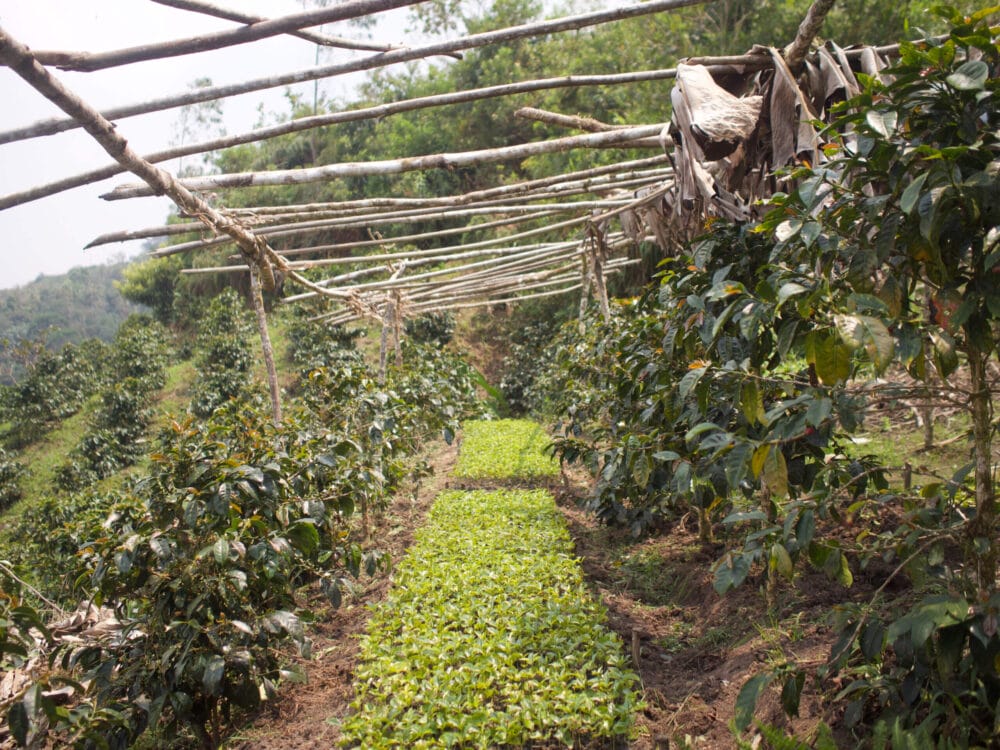
The Huabal District, within Jaén, has 701% of its land dedicated to agriculture, with coffee occupying the majority of the area. Altitudes range from 1,200 to 2,100 meters. Huabal has already made a name for itself in the specialty coffee circuit: a producer from the district won the first Peruvian edition of the Cup of Excellence with 92.25 points.
Finca Las Cañas is located in the same district. It comprises one hectare between 1,630 and 1,669 meters above sea level. Jose Neiver Quispe cultivates Caturra grapes, processing them by washing and sun-drying for 18 days. With a farm of this size, the margin of error is minimal and the control is total.
Caturra is a natural mutation of Bourbon. When coffee rust struck Peru in 2012 and 2013, the government promoted resistant varieties. Many growers refused and kept their traditional plants. That decision has a real cost in productivity, but at altitudes like those in Las Cañas, Caturra develops a defined acidity and a clean profile that resistant varieties cannot replicate. Washing removes pulp and mucilage through fermentation in water, exposing the bean's structure. Sun-drying for 18 days completes the process.