Posted on

Water-Coffee Ratio and Extraction Time

Water-Coffee Ratio and Extraction Time

The beverage we adore, in its most basic form, is the fusion of meticulously ground coffee beans with water. What distinguishes a sweet, balanced, and complex coffee from a bitter or acidic one lies in two fundamental pillars: the quality of the beans and water, and the alchemy with which we intertwine them. This latter aspect often involves a level of meticulous attention: grind size, precise timing, water temperature, brewing method, and other rituals that converge in our final cup.

However, we can't overlook the crucial importance of proportion in this process. The ratio of ground coffee to water plays a vital role in the strength, mouthfeel, and other nuances of our beverage. Now, let's explore in-depth how these ratios become the key to creating an exceptional coffee experience.

Why relationship is so important

The flavor of a coffee will vary depending on the recipe. Yes, the recipe: making coffee is like making a cake. The amount of each ingredient you use matters. Adding or decreasing the amount of water or coffee can alter the coffee's flavor, viscosity, and other factors.

This is why many baristas and coffee enthusiasts use scales and timers when making coffee.

Some baristas use recipes like "50 grams of coffee per liter of water for this many cups." But others will talk about ratios, such as 1:14 – 14 ml of water for every gram of coffee – or 1:16 – 16 ml of water for every gram of coffee.

Whatever the preparation ratio, what most of the baristas They try to keep it consistent. This allows them to work more effectively and efficiently. They also know that if they like how a coffee turns out, they can replicate it in the future.

Importance of Ratio in Espresso:

Flavor: The ratio determines the concentration of the espresso. A higher ratio of coffee to water will result in a stronger, more intensely flavored espresso, while a lower ratio will produce a weaker espresso.

Consistency: Maintaining a consistent ratio recipe is essential to ensuring that every cup of espresso has the same flavor and quality. This is critical in the specialty coffee industry.

Optimal Extraction: The correct ratio also influences coffee extraction. An incorrect ratio can lead to under- or over-extraction of the coffee, which will negatively affect the flavor.

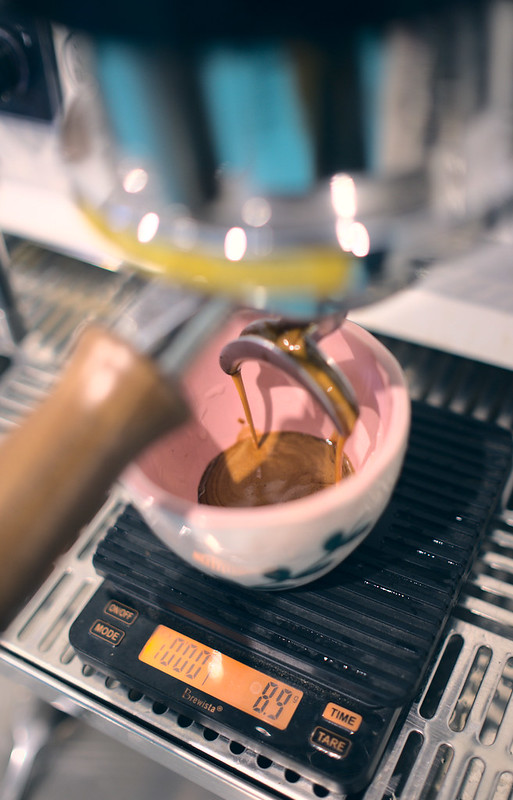
Importance of Extraction Time: Extraction time refers to the amount of time water spends passing through the ground coffee in the portafilter. This factor has a significant impact on the flavor, intensity, and overall quality of the espresso. Generally speaking, it's recommended to keep extractions within the range of 24 to 30 seconds. However, it's important to note that there are exceptions to this rule, depending on the type of coffee, the roast level, and personal preferences.
Water-Coffee Ratio and Extraction Time

Define an Espresso Ratio Recipe:

To define an espresso ratio recipe, follow these steps:

Choose a base ratioA common ratio is 1:2, which means one part ground coffee to two parts water. This is a good starting point, but you can adjust it based on your preferences and the type of coffee you're using.

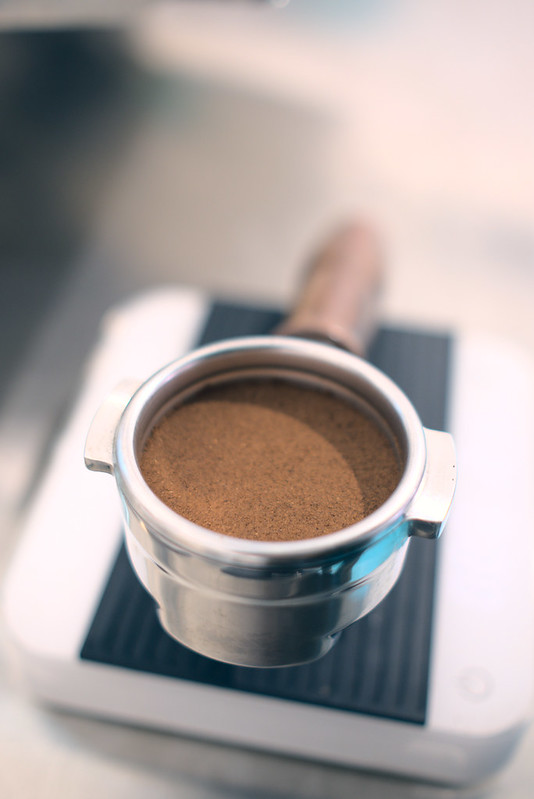
Weigh the coffee: Weigh the desired amount of ground coffee into the portafilter basket. For example, if you use 18 grams of coffee, this would be your starting point.

Weigh the water: Carefully calculate the amount of water you'll use for extraction. For example, if you're using 18 grams of coffee, you can aim for 36 grams of espresso in your cup, which is equivalent to a 1:2 ratio.

Adjust according to taste: Extract the espresso and adjust the ratio according to the flavor you get. If the espresso is too strong, you can use more water, and if it's too weak, you can use less.

Daily Maintenance and Decisions:

It's essential to maintain your recipe daily and make decisions based on the flavor and quality of your espresso. As factors such as coffee freshness, ambient humidity, and temperature change, you may need to adjust the ratio to maintain a consistent and delicious espresso. The key is balance and constant attention to detail to perfect your recipe over time.

Posted on

Why are some people more sensitive to the taste of coffee?

Why are some people more sensitive to the taste of coffee?

Why can experienced coffee tasters distinguish many coffee flavors, but the vast majority of users can't describe the notes they perceive? Or why can they describe some notes, but not as accurately as coffee tasters? These questions are frequently asked in the industry. Let's analyze how the sense of taste works and how the brain analyzes flavor.

For starters, it's hard to know whether something tastes good or not, as many factors influence how we perceive things, such as smell, pharmacological effects, temperature, vision, environment, atmosphere, etc. Some people also have different tastes due to their genes, which is why some people may hate cilantro or cauliflower.

Just like wine tasting, many factors influence the flavor of coffee, such as the origin of the beans, the production method, and the type of processing. By tasting different types of coffee, you can appreciate the differences in the flavor and quality of the beans. Just as a wine connoisseur can distinguish between different regions and grape varieties, a coffee connoisseur can appreciate the differences between different origins and different production processes.

Human taste is basically divided into five categories: sour, sweet, bitter, salty, and umami (the taste of amino acids and proteins). In addition, there is spiciness, which is a kind of painful sensation and can be very different depending on the food that produces it, but it is not a taste. It produces a dryness or tightness in the mouth, which is what we feel when oral protein breaks down.

The human body has between 4,000 and 5,000 taste buds, half of which are located at the root of the tongue. There are also between 2,000 and 5,000 taste buds from the depths of the mouth to the throat.

Understanding how our brain interprets the taste of coffee.

When coffee reaches your mouth and touches your taste buds, it sends signals to your brain, which then interprets these signals to determine whether the coffee tastes sour, sweet, or bitter. However, we often say that a cup of coffee tastes like honey or flowers—how can that be if there are only five flavors? This is primarily due to your sense of smell. Although the human sense of smell isn't as keen as a dog's, it's still very sensitive. The flavors in coffee evaporate and combine with the olfactory organs at the back of your nose to create what we call "flavors." The combination of smell and taste signals is very complex, and your brain requires long-term training to distinguish all the combinations of signals in detail. This is why coffee tasters and chefs have specialized training in recognizing different flavors and smells.

If you're unable to detect the subtle flavors of coffee or can't taste some of the flavors in dishes mentioned by others, it's not necessarily because your sense of taste and smell are impaired. It's simply because your brain doesn't recognize or interpret those smells. For example, if I tell you that a cup of coffee smells like Earl Grey (a type of black tea, usually of Indian origin, flavored with bergamot essential oils), you may not know what I'm talking about. Therefore, the brain needs training to be able to recognize and distinguish different flavors and smells, which is also part of the training for coffee tasters.

The rise of the coffee flavor wheel.

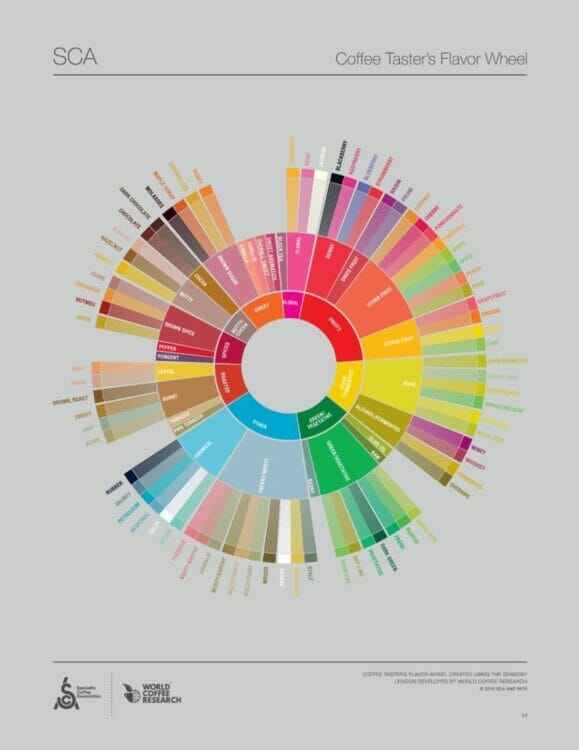
Basically, the problem that the color red we see can be different for each person also applies to the sense of taste. When we eat something with the same flavor, we may have different interpretations of how that food tastes. To solve this problem, the coffee industry has created something called a "flavor wheel" that helps everyone communicate and better understand what they are drinking or smelling. In 2016, the SCA made some changes to the original flavor wheel published in 1995. This helps everyone speak the same language when referring to the different flavors of coffee.

Why are some people more sensitive to the taste of coffee?

The coffee "flavor wheel" has been carefully designed to show which flavors are closest to each other and which are less similar. Typically, adjacent flavors on the map are more closely related to each other, while opposite flavors are less similar. If you're not sure how to describe the flavor of a cup of coffee, you can use the flavor wheel as a guide to help you find the right words. It's a useful tool to ensure we're all speaking the same language when referring to the different flavors of coffee.

How to expand your flavor vocabulary.

When coffee tasters evaluate the flavor of a sample, they often sip the coffee vigorously to turn the liquid into many small droplets that coat all the taste buds in the mouth. However, this can be very noisy and may be inappropriate in a coffee shop, as the shop owner or other customers may think you're a professional or trying to be annoying. Instead, it's recommended to sip the coffee slowly, allowing the liquid to flow throughout your mouth and moisten every cell.

To improve your flavor vocabulary and learn to better describe what you're drinking or eating, you can practice tasting different foods and fruits in your daily life, such as oranges, grapes, mangoes, berries, plums, peaches, lychees, red wine, nuts, caramel, and honey. It's also important to have an open mind and be willing to try unusual or unfamiliar foods that may come your way.

Why are some people more sensitive to the taste of coffee?

The Flavors of Coffee: Why Is Bitterness King?

In the book "THE CRAFT AND SCIENCE OF COFFEE," it is mentioned that bitterness is one of the main components of coffee flavor. Humans, who originally rejected bitterness and acidity, have learned to enjoy these flavors through culture and experience. Each person has a different tolerance for bitterness and can accept various levels in different foods. For example, Taiwanese are accustomed to eating fermented foods like soy sauce or fermented tofu, so they can easily accept the fermented flavor of some types of coffees with natural processes and more exotic profiles. Westerners, on the other hand, tend to place a greater emphasis on the original flavor of foods and prefer cleaner, more acidic, and brighter flavors.

In the past, most people drank Arabica coffee beans, which have a variety of fruity and acidic flavors. However, over time and under the influence of marketing, people began to associate the taste of coffee with bitterness, and coffee is expected to have a strong, bitter taste. As a result, the original Arabica coffee beans with acidic flavors are considered strange.

Subjective taste and smell in specialty coffee: Why it's important to be open to trying different flavors.

The acidic taste of specialty coffee can cause saliva to be released, which can help the taste buds perceive more flavors. When the liquid enters the mouth, it is washed away by saliva. If it is washed away more quickly, it will have a clearer taste, and if it is washed away more slowly, it will have a lingering aftertaste. Some flavors, such as sweetness and acidity, are very prominent in coffee and disappear quickly after being perceived, which can provide a refreshing sensation. Other flavors, such as jasmine aroma, grapefruit flavor, and nutty flavor, will have a lingering aftertaste.

Acids can be divided into good acids and bad acids. The good acids we like in our specialty coffee are those that resemble fruits. A bad acid would be, for example, the acid from a defective bean. Some people don't like the acidity of specialty coffee. Others simply don't like acidity.

Finally, it's important to keep in mind that coffee's acidity and sweetness are two characteristics that can significantly affect its flavor and should be considered when choosing and preparing the perfect coffee for each person. It's also important to remember that taste and smell are two very subjective senses and can vary greatly from person to person. Therefore, it's important to be open to trying different flavors and be willing to learn more about them in order to fully enjoy coffee and all its complexities.